

We lit that last violet candle on the Advent wreath this weekend, and it didn’t give me any sense of joy that the earth is about to receive her king. Instead, it made me think that once again, this year’s Advent has come and nearly gone, and once again I’m ill-prepared. Even more than disappointment in my own lack of spiritual work to ready my heart, I hate that it was a mommy-fail, with basically nothing to help my little ones focus on the season. Shoot, we even had to give away the Christmas tree since it set off my husband’s allergies!
Having gone through this before, however — and sure, there are always excuses … the pretexts of this year involve a surgery and the fact that even 10 months postpartum, I’m still floundering in adjusting to the new systems that a new little one requires — I find in this last week of Advent that a time of prayer with St. Joseph a few years ago continues to be balm for my soul.
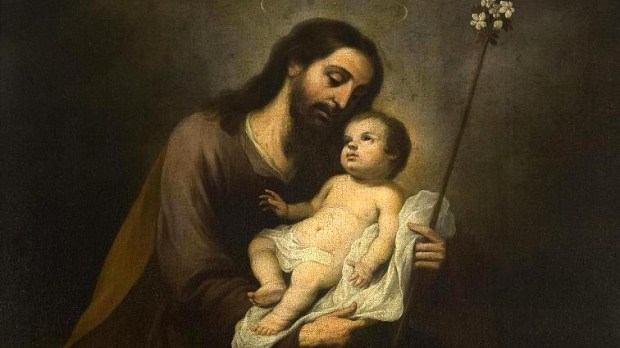
When I consider St. Joseph’s feelings on Christmas night, I suspect that he too felt ill-prepared. It wasn’t his fault, of course (stupid census), but surely he must have felt that the big day had arrived and he wasn’t ready for it — that he had a mission to do as a husband and father and, despite his best efforts, he wasn’t succeeding at it. I imagine him fighting manly tears of desperation as he reports back to Mary about yet another rejection from yet another innkeeper, and Mary, ever-sinless, doing what she can to assuage his frustration. But perhaps she couldn’t do much.
I grew up on a farm, so the idea of being born in a barn doesn’t hold much romance for me. Above all, the smells. And the flies. But as a makeshift solution, it was better than nothing. I’m sure Joseph did what he could to create a space as suitable as possible — but it was last minute and sorely lacking … not at all what he would have dreamed of three weeks ago, at the start of his own first Advent.
Yet upon this scene entered the Word made Flesh, which this year we are considering especially as the Merciful One.
One of the truly awe-inspiring facets of the power of God’s mercy is how soundly he is able to claim victory over evil. Suffering and death entered the world through sin, so it is precisely through suffering and death that God brings salvation. He wrests the weapons from the Prince of Darkness and turns them right around to vanquish him, in the process enshrouding the very weapons in light.
This is why St. Paul can say, “We know that in everything, God works for good” (Romans 8:28). And why the Catechism explains that “Christ’s inexpressible grace gave us blessings better than those the demon’s envy had taken away. … There is nothing to prevent human nature’s being raised up to something greater, even after sin; God permits evil in order to draw forth some greater good” (CCC 412).
When I place myself in contemplation with Joseph in the stable, it’s easy for me to consider the animals with their accompanying stench (and flies!) as symbols of the many vices that I’d like to chase off.
But washed in the mercy of this tiny infant, these very animals come to offer their contribution to the wee child. Artists depict the warmth of their breath shielding his sweet head from the cold. Benedict XVI considered them even as “an image of a hitherto blind humanity which now, before the child, before God’s humble self-manifestation in the stable, has learned to recognize him.” (The Pope Emeritus has a page-long reflection on the symbolism of the ox and ass in Jesus of Nazareth: The Infancy Narratives, 69.)
My very ill-preparedness is sufficient gift to him, and to give that gift I don’t need Advent to magically stretch any longer. This is indeed reason to sing “Joy to the World.” And this experience of mercy gives energy and serenity for these last few hours of Advent, warding off any temptation to sulk in remorse or needless worry.
(Cf. Pope Francis’ address to the Roman Curia when he said: “St. Ignatius taught that ‘it is typical of the evil spirit to instill remorse, sadness and difficulties, and to cause needless worry so as to prevent us from going forward; instead, it is typical of the good spirit to instill courage and energy, consolations and tears, inspirations and serenity, and to lessen and remove every difficulty so as to make us advance on the path of goodness.’”)
Read more:
Gifts under the tree might not surprise you, but pope reveals how to find surprise this Christmas