

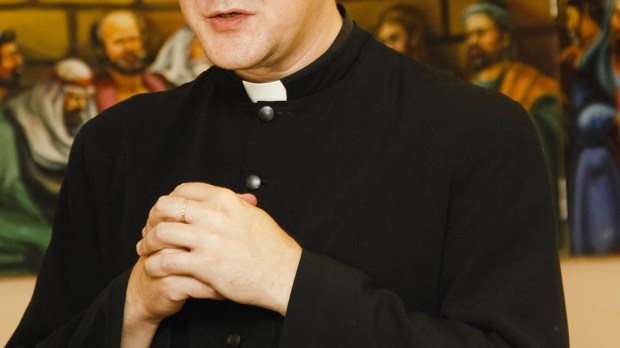
In the Catholic Church, many priests are called “pastor,” though not all priests have this official title.
The title is primarily used to denote priests that lead a local parish and are appointed by the bishop.
The Catholic Encyclopedia gives a brief explanation of a pastor’s duties.
They must preach and take care of the religious instruction of the faithful, especially of the young, supply their spiritual needs by the administration of the sacraments, reside in their parish or mission, administer diligently the property entrusted to their care, watch over the moral conduct of their parishioners, and remove, as far as possible, all hindrances to their salvation.
When the parish is too large for a single pastor, he is typically assisted in his duties by other priests.
The title “pastor” is actually the Latin word that means “shepherd.”
Good Shepherd
The title pastor is a direct reference to the fact that all priests are called to imitate Jesus, the Good Shepherd.
Pope Benedict XVI pointed this out in a homily for the ordination of priests on Good Shepherd Sunday in 2006.
Jesus now proclaims that this time has come: he himself is the Good Shepherd through whom God himself cares for his creature, man, gathering human beings and leading them to the true pasture.
St. Peter, whom the Risen Lord charged to tend his sheep, to become a shepherd with him and for him, described Jesus as the “archipoimen” – “Chief Shepherd” (cf. I Pt 5: 4), and by this he meant that it is only possible to be a shepherd of the flock of Jesus Christ through him and in very close communion with him.
Being a pastor in the Catholic Church is a weighty task, one that requires a close relationship with Jesus in order to guide his “sheep” to eternal life.

 And today we celebrate...