

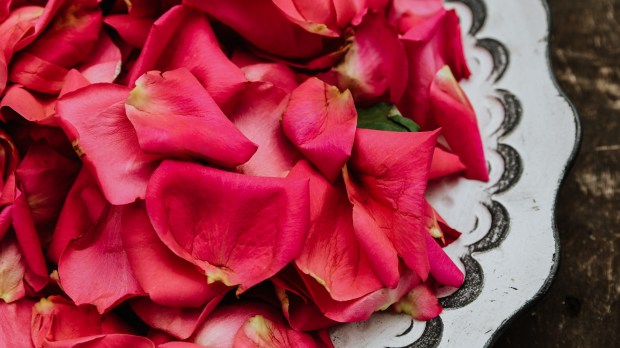
In the city of Rome, but also in other places of the world, the feast of Pentecost is called “Rose Sunday.”
The Catholic Encyclopedia explains the history of this custom.
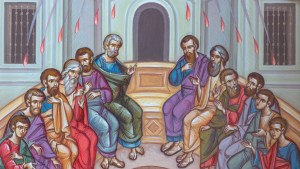
In Italy it was customary to scatter rose leaves from the ceiling of the churches to recall the miracle of the fiery tongues; hence in Sicily and elsewhere in Italy, Whitsunday is called Pascha rosatum. The Italian name Pascha rossa comes from the red colors of the vestments used on Whitsunday.
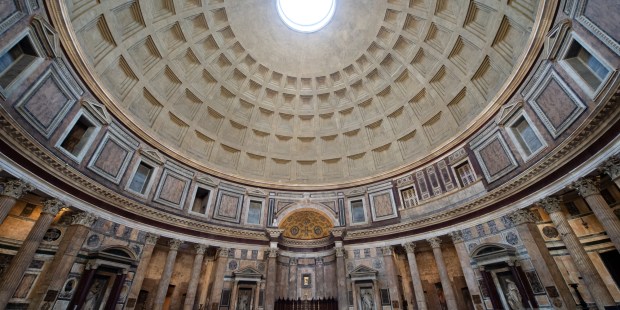
The most famous church that continues this tradition is the Church of St. Mary and All Martyrs (also known as the Pantheon) in Rome.
[I]n Rome it was called Sunday of the Roses (“Pascha rosarum” or “rosatum”), since in the Pantheon, rose-leaves were thrown from the rotunda into the church.
It is said that this tradition dates back to 609. It occurs at the conclusion of Mass on Pentecost Sunday.
The custom is a beautiful way to celebrate the coming of the Holy Spirit, and many who have witnessed it say the church is filled with the scent of roses.

 And today we celebrate...