The name "John" is an ancient Hebrew name that foreshadowed St. John the Baptist's ministry as a precursor to Jesus Christ.
One of the most common names in the Western world is "John," a name that can even act as a generic name for someone who isn't identified ("John Doe").
Yet, it is a deeply spiritual name, one that predates St. John the Baptist and has rich symbolism behind it.
"John"
Zechariah received the name of his son while serving in the Temple, given to him by the Archangel Gabriel:
Do not be afraid, Zechari′ah, for your prayer is heard, and your wife Elizabeth will bear you a son, and you shall call his name John. (Luke 1:13)
This name was not something new or invented by the angel, as it was used throughout the Old Testament. There was a "Jonathan" in the book of Judges, as well as the book of Samuel. The book of Maccabees also mentions a man with that name, who is the brother of Judas Maccabeus.
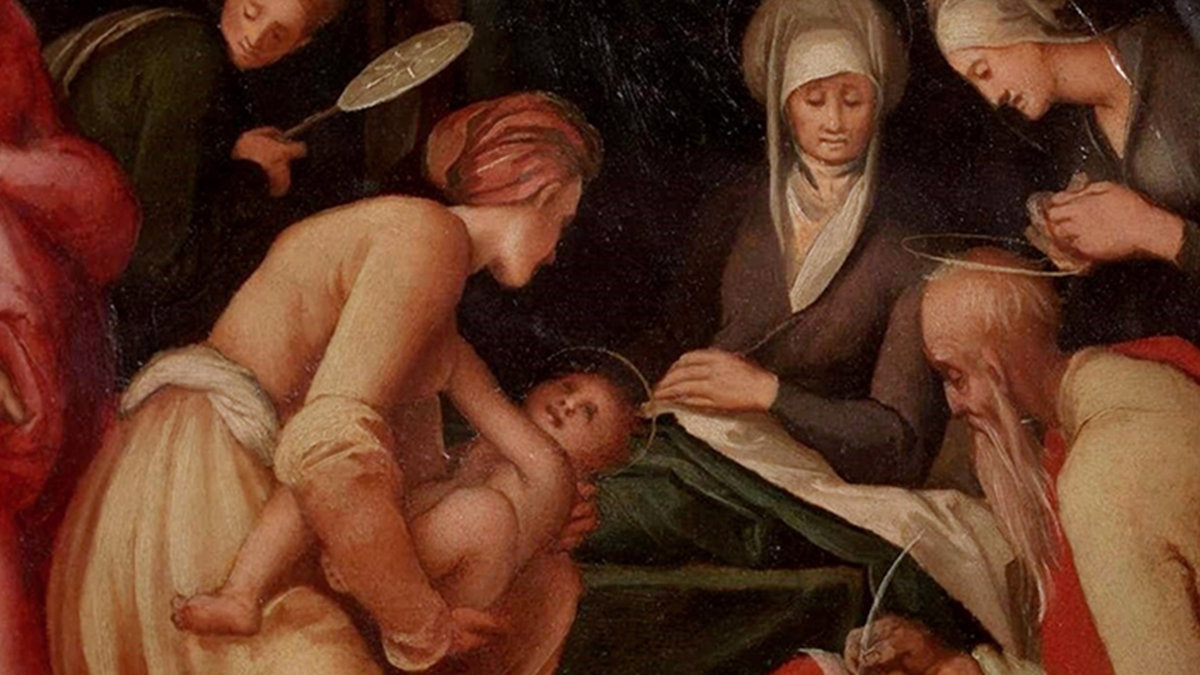
Interestingly, Zechariah's family was surprised by that name as, "None of your kindred is called by this name" (Luke 1:60). They even had to get out a writing tablet to confirm with Zechariah the name of the newly born son. Even though it was not used by his family, "John" was common among the Jewish people.
It is a Hebrew name that has a profound spiritual significance. The Catholic Encyclopedia provides a brief explanation behind the name and its symbolism:
They were not aware that no better name could be applied (John, Hebrew; Jehohanan, i.e. "Jahweh hath mercy") to him who, as his father prophesied, was to "go before the face of the Lord to prepare his ways; to give knowledge of salvation to his people, unto remission of their sins: through the bowels of the mercy of our God" (1:76-78).
Those last lines are normally translated as:
And you, child, will be called the prophet of the Most High;
for you will go before the Lord to prepare his ways,
to give knowledge of salvation to his people
in the forgiveness of their sins,
through the tender mercy of our God,
when the day shall dawn upon us from on high (Luke 1:76-78)
John from the very beginning was destined to proclaim the mercy of God and prepare the world for the coming of the Messiah, who would be Mercy itself.