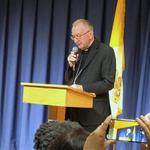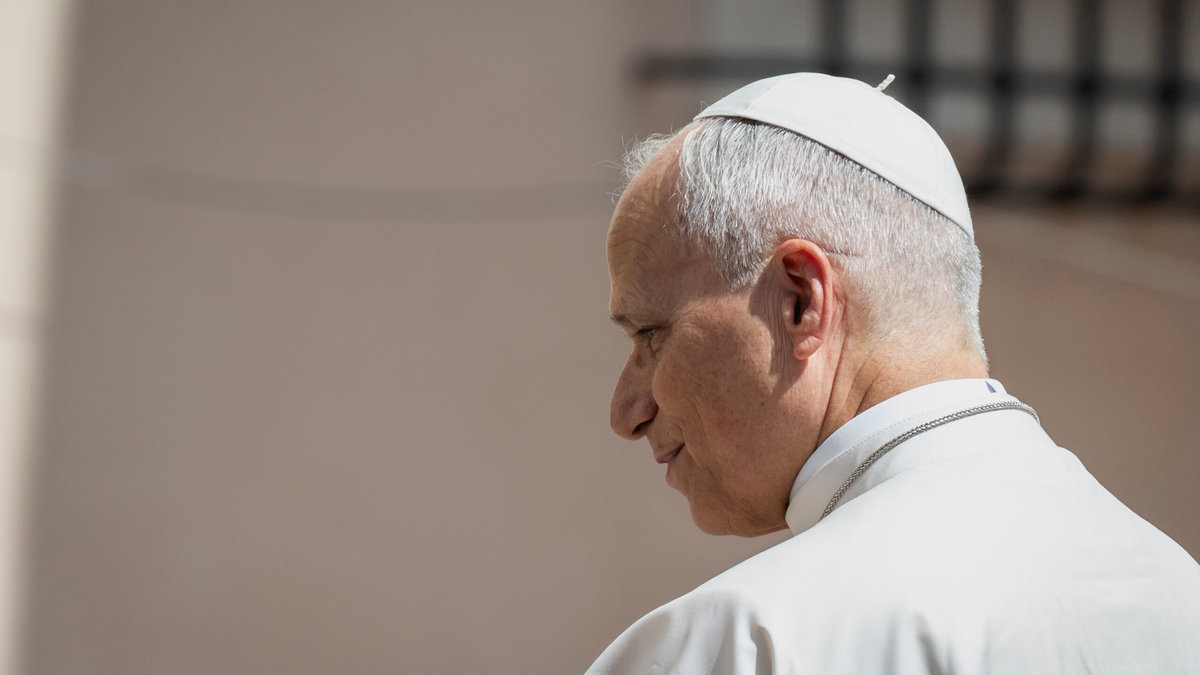
Speaking to seminarians, Leo XIV emphasized the importance of learning to be with the Lord and experiencing God’s love in order to proclaim it to others.
We live “in a world that’s in a hurry and that looks with suspicion on every long pause,” Pope Leo XIV told Italian seminarians in an audience on Thursday, September 3. In this context, some people could think that the years of seminary formation are “a luxury,” or an “outdated institution,” he said. However, “that’s not the way it is,” he explained; this period of preparation, silence, and prayer is needed “today no less than yesterday.”
Leo XIV, who spent years as a seminary formator, pointed out that “precisely because our time is fast and noisy, we need a place and a period of life in which we learn to stand still.” This time is a period for learning “to discern, to let ourselves be formed without shortcuts.”
Answering Jesus’ call
The Pope chose to highlight a key element of priestly formation: the seminarians’ “relationship with Him who has called [them].” He pointed out that other important aspects, such as “study, discipline, and the stages of the journey” only have worth “if founded upon [the seminarians’] relationship with God.”
To illustrate, Leo XIV quoted the Gospel of Mark (3:13-14) where Jesus calls the Twelve Apostles: “He went up the mountain and called to him those whom he wanted, and they came to him. And he appointed twelve, whom he also named apostles, to be with him, and to be sent out to proclaim the message.”
When it comes to understanding a vocation, “everything is already present in these few words,” the Pope explained. And this is “valid for every calling, for every person who wants to understand more deeply the truth of their own vocation.”
The first element of this passage that he points to is the “mountain that must be climbed” in order to “reach Christ.” It is a place where “above all, we can be with Him.” This process of “learning to be with the Master, the Lord Jesus,” is the “heart of the seminary experience.”
The second element is the fact that the vocation is a call from Jesus, based not on any merit of our own, but on his free choice. “There isn’t a competition,” the Pope pointed out, “nor is it written that he chose the best.” Instead, the Lord “chose those whom he wanted.” It’s a “free choice on the part of God the Father,” the fruit of “freely given love” that takes the initiative and “never lets us down.”
A sign of hope
The very presence of seminarians is “a sign of hope for the entire Church,” he explained, because it reaffirms the certainty that “the Lord always calls.” Indeed, God “never tires of whispering to the heart of young men,” inviting them to see “the beauty of giving their lives for Him and for the Church.”
However, for men to hear this call, they need to spend time “in silence and in prayer,” key parts of seminary life. “Every vocation is born from intimate dialogue with God,” Leo XIV explained. “That’s where everything is decided.”
And this, he said, is why seminary formation is as necessary as ever. It’s not a postponement of the mission, the Pope clarified; “it’s the condition” for the mission to take place.
The importance of community
Leo XIV returns to the image of the years of seminary formation as a mountain that must be climbed. “Sometimes this can be tiring,” he admitted, and we can start to be “short of breath without yet seeing the summit.”
It’s key not to try to climb this mountain alone, he explained: “The weariness of the spiritual life is supported [...] by the beauty of fraternity and by sharing the mission.” Seminarians shouldn’t think of their vocation as “a private path with the Lord”; they should “always feel and experience the beauty” of living their vocation within and through the Church.
Descending from the mountain
Jesus called the Twelve, not to stay on the mountaintop, but to send them out and proclaim the message. This is what the Pope described as “the last step”: going down from the mountain after this “experience of God” to proclaim “to the world this newness of life.”
Priests are “sent to all people to proclaim to all the beauty of faith in Jesus Christ, the good news of our salvation,” Leo XIV said.
This salvation “was given to us through Mary,” he added, inviting the seminarians to entrust themselves to her. She was the first “to do what today is asked of you,” he told them. “Ask Mary for the grace of learning to say your ‘yes’ to the Lord Jesus every day,” he concluded.