The Society of Jesus has produced some of the most important scientific minds in history. Here are three you should know.
The popular narrative of science and religion runs something like this: the Church suppressed inquiry, science liberated it, and the two have been in tension ever since. The history of the church offers a considerably more complicated picture, and that of the Society of Jesus undoes plenty of those anti-scientific tropes. Founded in 1540, the Jesuits became within decades one of the most important scientific institutions in the world — running observatories, mapping the heavens, reforming the calendar, classifying the stars, and corresponding with every major scientist in Europe. Three figures from that tradition deserve to be far better known than they are.
Christopher Clavius, the man who gave you your calendar
Every morning when you check the date on your phone, you are using a system designed in large part by a Jesuit mathematician from Bamberg. Christopher Clavius (1538–1612) was head of mathematics at the Collegio Romano in Rome, called the “Euclid of the 16th century” by his contemporaries, and regarded so highly that even his scientific opponents admitted they would rather be criticized by Clavius than praised by anyone else. In 1579, Pope Gregory XIII commissioned him to oversee the reform of the Julian Calendar — which had accumulated a 10-day error over the centuries, causing the dates of Easter and the equinoxes to drift out of alignment.
Clavius chaired the commission, worked through the mathematics, adopted the proposals of the physician Aloysius Lilius with modifications, and defended the resulting Gregorian Calendar in several thousand pages of rigorous publication against attacks from Protestant theologians and rival mathematicians. The rule he established — that years divisible by 100 are leap years only if also divisible by 400 — is still in use, and no further reform of the calendar will be necessary for many thousands of years. The calendar you use every day is, in substantial measure, the work of a Jesuit priest.
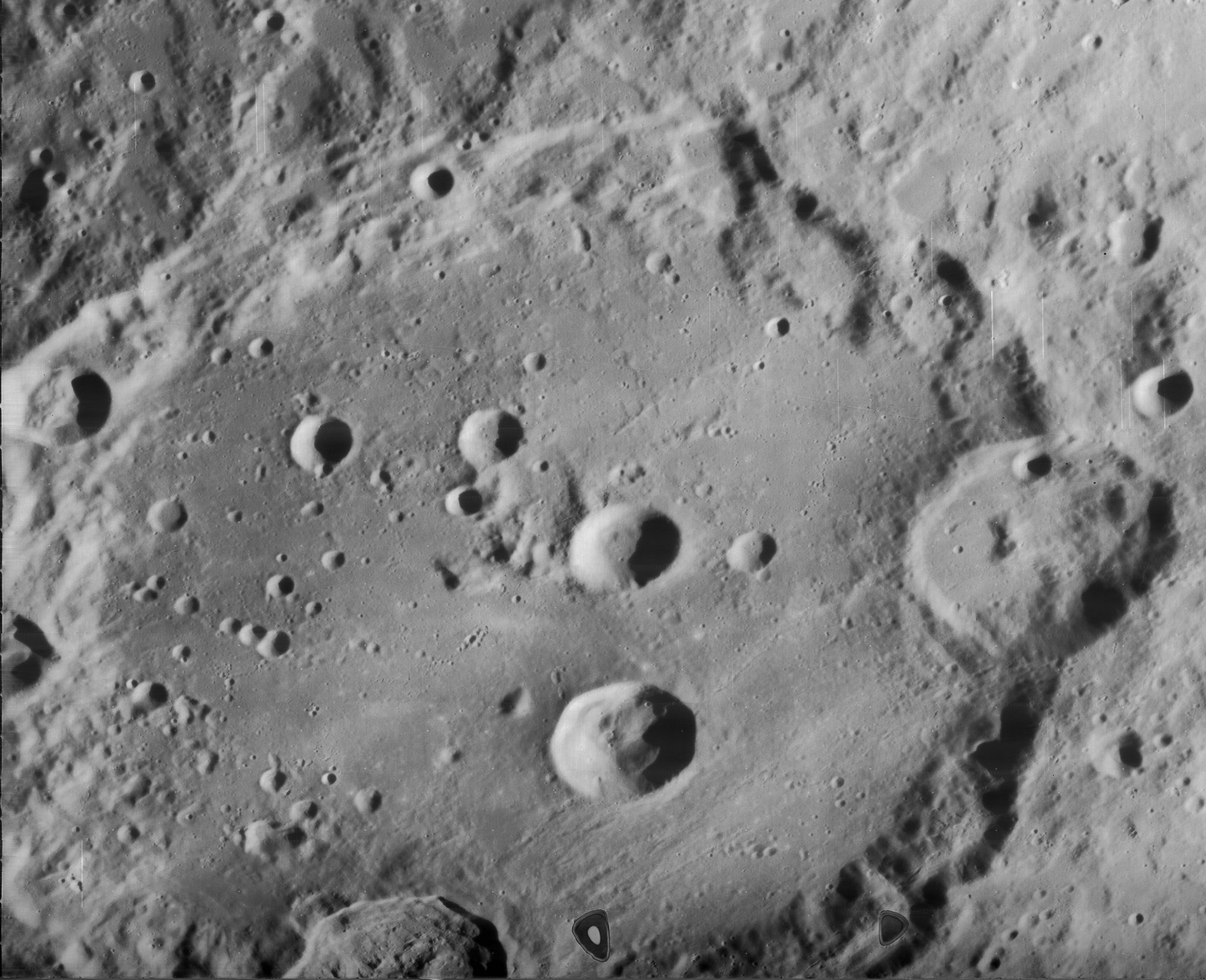
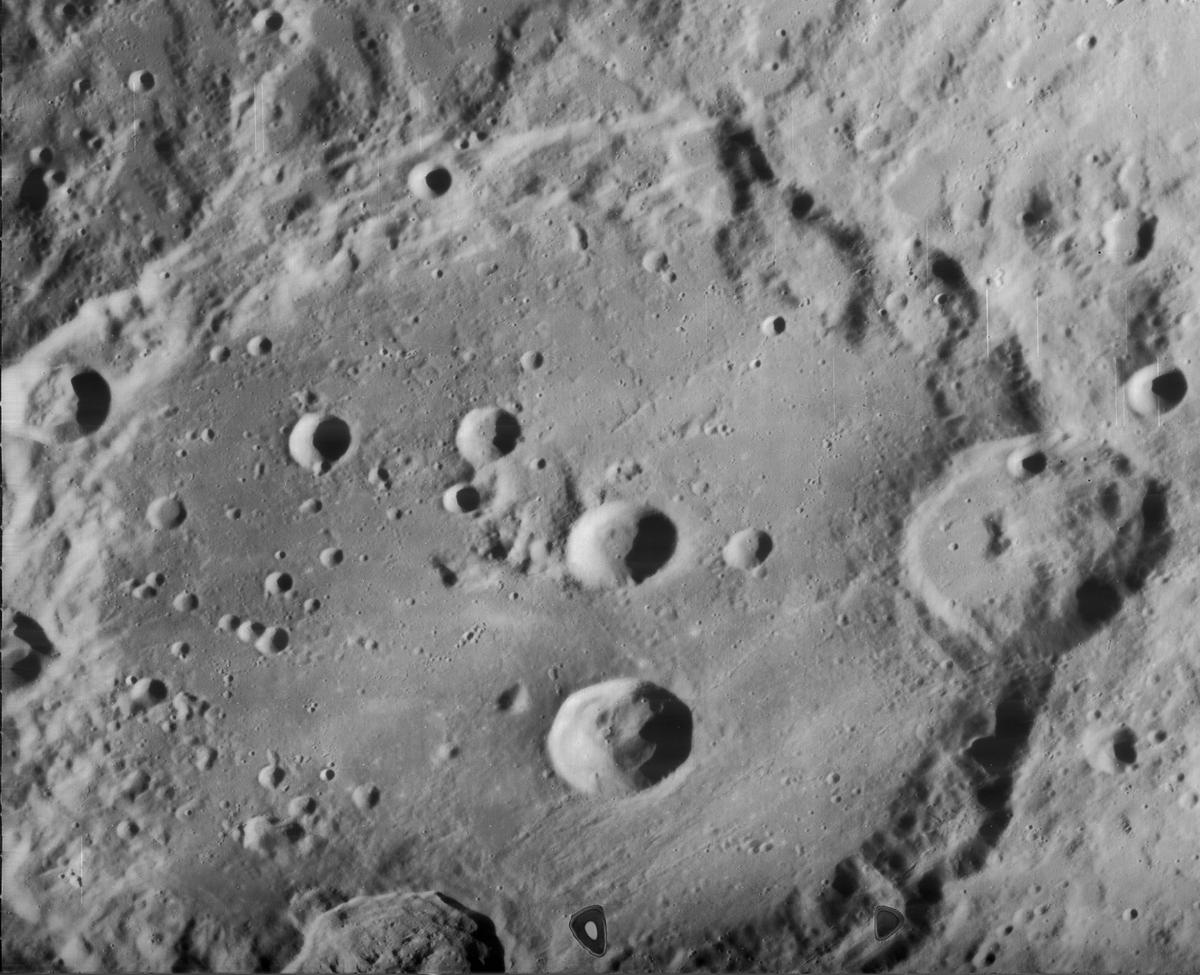
Clavius also did something of lasting institutional importance: he was almost single-handedly responsible for the adoption of a rigorous mathematics curriculum in Jesuit schools at a time when mathematics was widely dismissed by philosophers as a minor discipline. The mathematical education of an entire generation of European scientists passed through the system he built. Oh, and a crater on the Moon is named after him.
Athanasius Kircher, the last man who knew everything
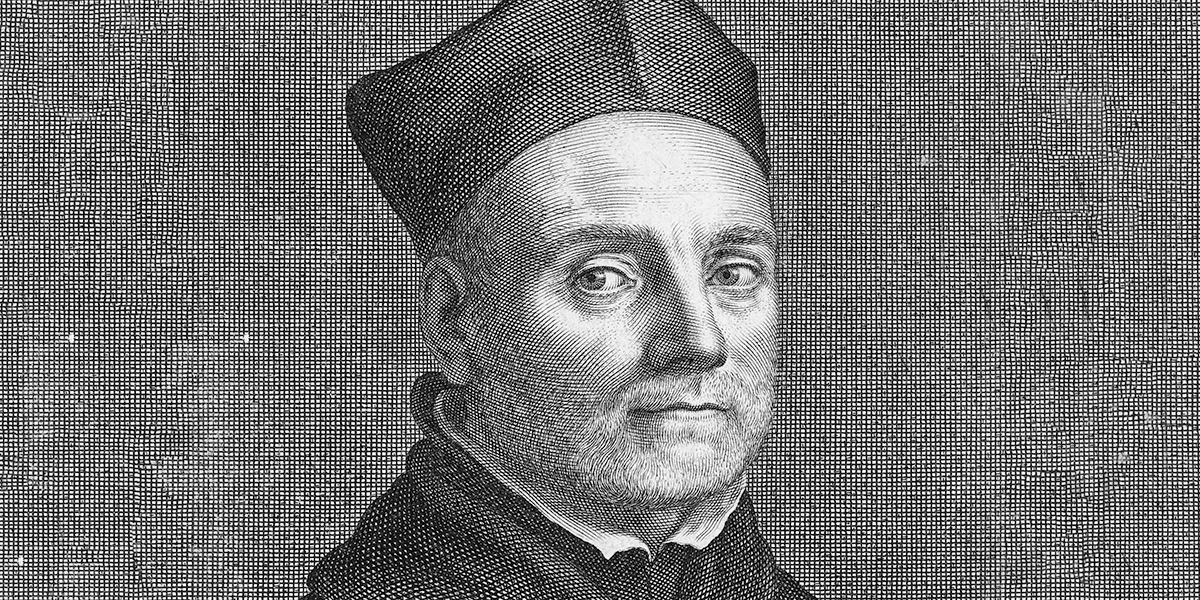
Athanasius Kircher (1602–1680) is one of the most extraordinary figures in the history of Western thought — and one of the most difficult to categorize. Born in Germany, he fled the Thirty Years’ War and settled in Rome, where he spent the rest of his life at the Collegio Romano functioning as, in the words of one biographer, “a one-man intellectual clearinghouse for cultural and scientific information gleaned not only from European sources but also from the far-flung network of Jesuit missionaries.” He published more than 40 major works on virtually everything: Egyptology, geology, magnetism, music, optics, linguistics, medicine, comparative religion, the cultures of China and Egypt, Noah’s Ark, the Tower of Babel, and the interior of the earth.
He was called “the last man who knew everything” — and also “a man of misconceptions,” which is equally accurate. His scientific contributions were largely hit-or-miss: he attempted to decipher Egyptian hieroglyphics and got almost everything wrong; he built elaborate theories of subterranean fire that were wrong in their details but pointed in a productive direction; he proposed a germ theory of disease that anticipated Pasteur without providing adequate evidence. But his influence on those who came after him was enormous. Leibniz read him. Huygens read him. There is a reasonable argument that Newton read him. By proposing questions, publishing data from the global Jesuit missionary network, and making connections across disciplines that specialists had not thought to make, Kircher created the conditions in which more rigorous thinkers could do better work.
His most famous moment of personal research involved lowering himself into the crater of Mount Vesuvius shortly after its eruption in 1631 to take measurements. He survived. And yes, there is a crater on the Moon named after him too.
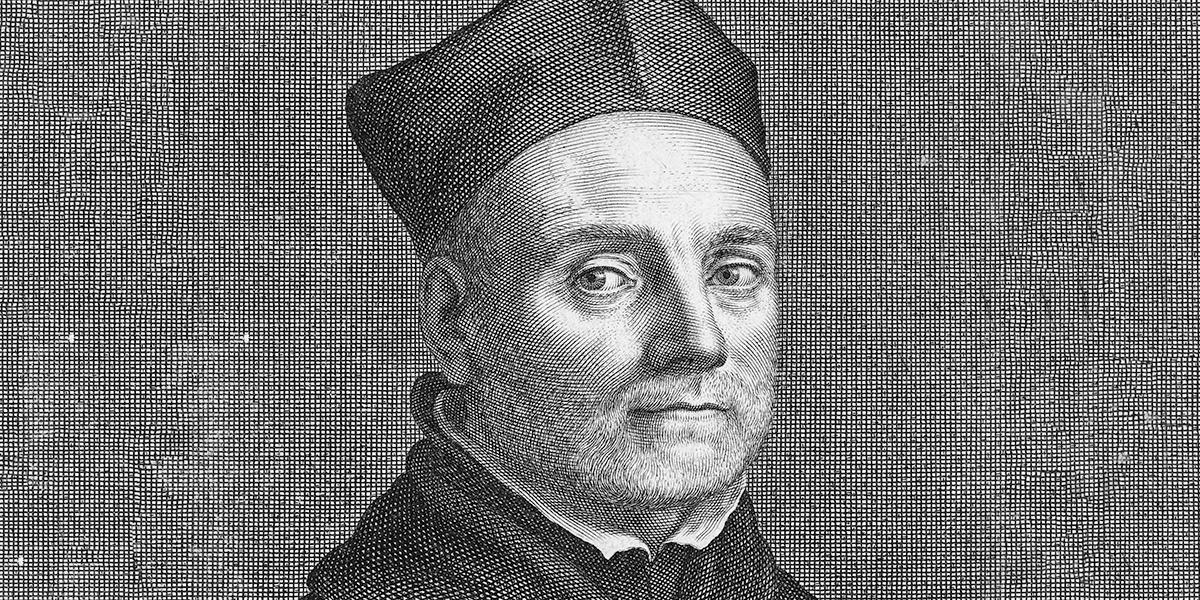
Angelo Secchi, the father of astrophysics
By the mid-19th century, astronomy was a discipline defined by position and motion: telescopes charted where celestial bodies were and where they were going, but had little to say about what they actually were. Angelo Secchi (1818–1878), an Italian Jesuit priest and director of the observatory at the Roman College, changed that.
Secchi was one of the first astronomers to apply the new technique of spectroscopy — the analysis of light split through a prism into its component wavelengths — to the systematic study of stars. Working from an observatory he had built on the roof of the Church of Sant'Ignazio in Rome — directly above the space where he and his fellow Jesuits celebrated Mass daily — he studied and classified the spectra of more than 4,000 stars, proposing a system of stellar types based on their spectral characteristics that remained the standard classification until Harvard University developed an improved version in the early twentieth century. He is considered one of the founders of astrophysics — the branch of astronomy concerned with the physical nature of celestial bodies rather than merely their positions.
He also made major contributions to solar physics, terrestrial magnetism, meteorology, and oceanography. In 1870, when Italy was unified and Rome was incorporated into the Kingdom of Italy, Secchi refused to transfer his allegiance from Pope Pius IX to King Victor Emmanuel II. He was illustrious enough by then that the new Italian government chose not to force the issue — he remained director of his observatory by threatening to leave the country entirely and take up one of several offers he had received elsewhere in Europe. The observatory was nationalized after his death in 1878, but was resurrected in 1891 as the Vatican Observatory, which continues to operate today. A pair of space-based solar observatories currently in orbit — the STEREO spacecraft — carry an instrument package named SECCHI in his honor.
Three priests, three centuries, three disciplines. A calendar, a volcano, a star map. The story of Jesuit science is worth knowing — in part because it complicates a narrative that is too simple to be useful, and in part because Clavius, Kircher, and Secchi are simply extraordinary human beings whose work changed what their contemporaries knew about the world.