During Memphis' deadly yellow fever epidemic, a former slave refused to let the Dominican friars face the city's dangerous streets alone.
Samuel Henderson must have been a determined and courageous man. During the devastating yellow fever epidemic of 1878, the Dominican friars at St. Peter Catholic Church in Memphis repeatedly urged him to stop accompanying them on their rounds. The city was dangerous, the disease was deadly and, as a Black man walking the streets of the post-Civil War South, Sam hardly needed another threat to his life. Yet he apparently had absolutely no intention of listening.
Instead, when darkness fell, he picked up his lantern and accompanied the priests as they visited the sick and brought the sacraments to the dying. Almost 150 years later, the parish has shared that Memphis has decided those streets should remember the man who walked them.
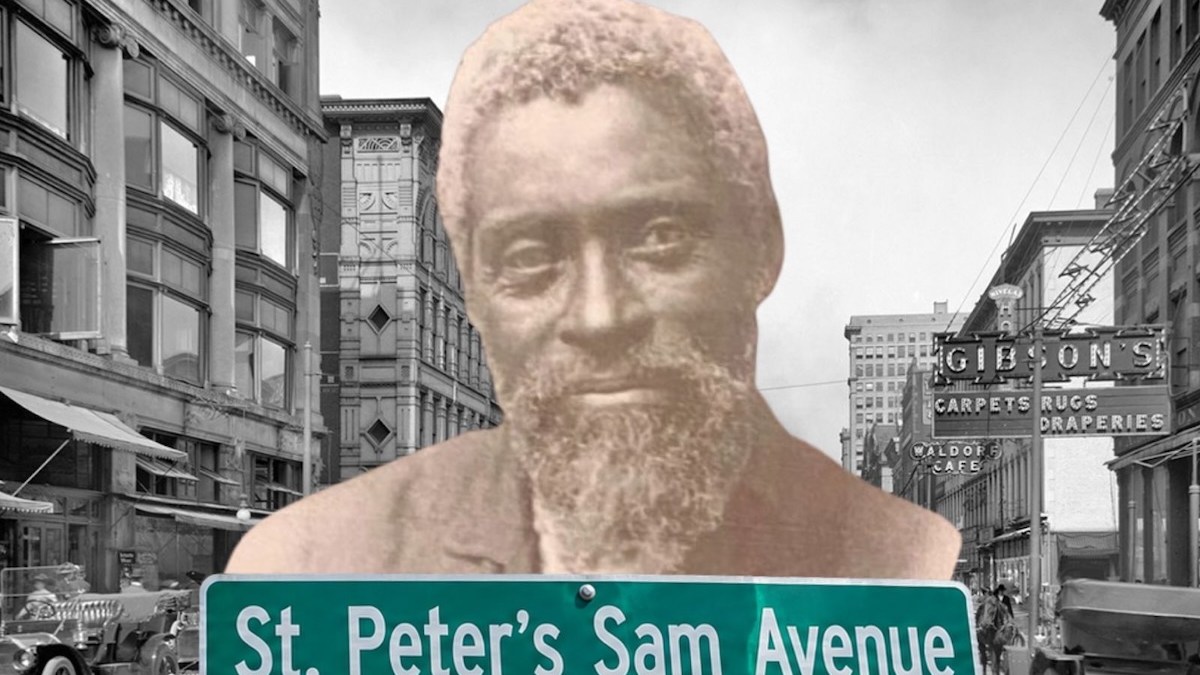
On August 18, the Memphis City Council voted unanimously to give part of Adams Avenue the honorary name “St. Peter's Sam Avenue.” Three signs are planned, including one close to the entrance of the St. Martin de Porres Shrine Chapel.
It's a remarkable honor for a man whose life began in slavery around 1822 and whose relationship with Catholicism appears to have involved a little holy borrowing.
After emancipation, Henderson ministered to a small Baptist congregation near St. Peter's and began slipping into the parish's early Sunday Mass to hear the Dominican friars preach. Apparently impressed, he would take inspiration from their homilies and return to preach to his own congregation. Somewhere along the way, listening became believing. Sam and his wife converted to Catholicism, and he joined St. Peter's as a handyman, remaining there for more than 30 years.
When Memphis emptied
By 1878, Sam's adopted city was in catastrophe. Yellow fever had swept through Memphis before, but that year's epidemic was devastating. An estimated 25,000 people fled, civil government effectively collapsed and only seven of the city's 41 police officers remained fit for duty. Schools became hospitals, orphanages and eventually morgues.
Those without the means to escape were left behind, along with some extraordinary people who chose to remain with them. Rabbis, Episcopalian sisters and Catholics worked alongside one another, and 45 priests, religious brothers and sisters ultimately died while caring for the sick. In one particularly lovely detail preserved in the parish history, a rabbi who encountered a dying Catholic ran to St. Peter's for a priest, then accompanied him back so the man could receive Viaticum.
Sam, meanwhile, seems to have decided that the Dominicans were his responsibility. He became their unofficial protector, escorting them after dark with his lantern as law and order deteriorated around them. Night after night, he entered homes where people were dying from a disease nobody yet understood how to prevent, despite the friars themselves pleading with him to take fewer risks.
Eventually those same priests began falling ill, and the man who had walked beside them nursed them as they died. He then performed one final service for his friends, cleaning the bodies of nine priests and dressing eight of them in the white Dominican habit for burial. Against rather extraordinary odds, Sam survived.
St. Peter's Sam
He remained at the parish for another three decades, by which time “Uncle Sam” had become “St. Peter's Sam.” When he died in 1907 at the age of 80, the church was packed for a Solemn Requiem Mass, after which eight Dominican friars carried the former slave and church handyman to his grave. His monument still bears the name by which Memphis had come to know him: “St. Peter's Sam.”
Some Dominicans believe that memorial shouldn't be the end of his story. Dominican historian Fr. John Vidmar, O.P., has described Henderson as “indomitable” and is among those who believe a cause for his canonization should be opened.
Whether or not that ever happens, Memphis has now found another way to make sure Sam isn't forgotten, and it's difficult to imagine a more appropriate one.
Soon, people walking that same stretch of Memphis will be able to glance upwards and see the name “St. Peter's Sam” above them. Some will know exactly who he was; others might pause and wonder about the man behind the unusual name, and perhaps discover the remarkable story of someone who spent his life quietly carrying the light of Christ to others. Nearly 150 years later, Sam may find himself lighting the way once again.