For the World Day of Migrants and Refugees on September 27, the Pope calls Christians to treat displaced minors as their own sons and daughters.
Pope Leo XIV's message for the 112th World Day of Migrants and Refugees, to be observed on September 27, 2026, draws attention to migrant and refugee minors. The theme — “Even just one of these children” — spotlights the most vulnerable group within global migration movements, and grounds the call to action in a direct citation from the Gospel of Mark: “Whoever receives one such child in my name receives me” (Mk 9:37).
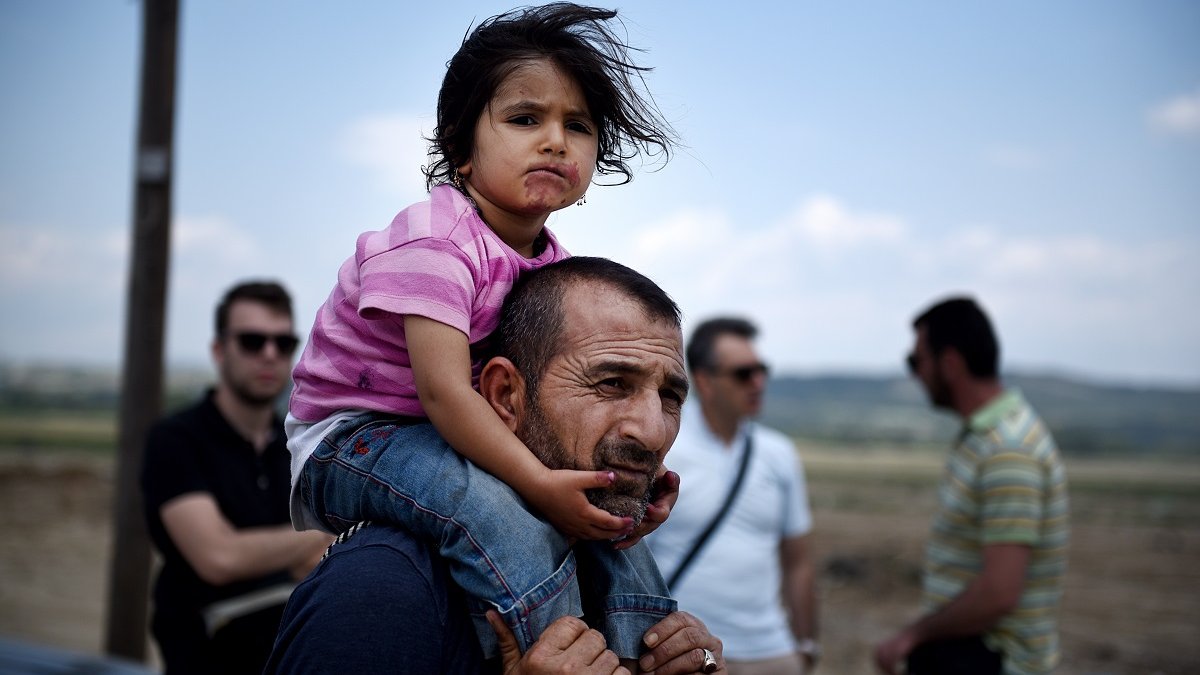
The Pope opens by describing the scope of the crisis without softening its edges. “Every year, millions of children and adolescents are forced to leave their homeland because of war, poverty, violence, environmental disasters and other tragedies,” he writes.
“Sadly, their number continues to grow.” He enumerates what displaced children face beyond the initial displacement itself: “deaths along migration routes, trafficking and exploitation, the recruitment of minors for use in armed conflicts, sexual violence, forced marriages, and the atrocities they have suffered or witnessed during their travels. Their dignity is trampled upon in countless ways.”
The Gospel logic at the center
Leo refuses to frame the issue in terms of numbers or policy. “It is not a question of numbers or statistics,” he writes. “The Gospel invites us not to calculate: even one. Every child, every human being, possesses an infinite dignity. Each is created in the image and likeness of God; each is a presence of the Lord.” The phrase “even just one” recurs throughout the message as a structural refrain — directed at individuals, at the Church, at religious communities, and at civil institutions in turn.
He connects the situation of displaced children to the cry of the enslaved people in Exodus: “The cry of displaced children rises to God today, just as did the cry heard in the Book of Exodus: ‘I have observed the misery of my people who are in Egypt; I have heard their cry on account of their taskmasters. Indeed, I know their sufferings, and I have come down to deliver them.’”
What the Church is asked to do
Leo’s address to the Church is among the most pointed passages of the message. “We cannot simply delegate this task to institutes or associations endowed with a particular charism,” he writes. The entire Christian community, he says, is called to regard displaced children “as its own sons and daughters, and to engage with the concrete story of each one of them.” He calls specifically for “new educational and spiritual paths, including personalized ones, which go beyond the mentality of mere assistance” — and for attention to “the solitude, isolation and rejection that not infrequently also affect the children of migrants.”
On interreligious dialogue, Leo notes that “the vulnerability of the young knows no religious boundaries” — making care for migrant children “fertile ground for a concrete interreligious dialogue, in which believers, drawing upon their own sense of transcendence, cooperate in weaving networks of protection.”
A call to civil institutions
The message addresses governments and public institutions directly, calling for “an urgent change of perspective”: “The focus of the debate must shift from the mere management of migration to the full and immediate protection of human rights.” He calls for effective legal instruments of protection, the promotion of family reunification, and the prevention of trauma caused by separation — quoting his own address to the Spanish Parliament in Madrid on June 8, where he called for “a coordinated, supportive and effective response, capable of guaranteeing protection, welcome and genuine opportunities for integration to those who migrate.”
The message was signed on August 11, the Memorial of Saint Clare of Assisi, and closes by entrusting displaced children to the protection of the Virgin Mary, who “together with Saint Joseph and the child Jesus experienced the cruelty of Herod’s violence and the tragedy of exile in Egypt.”
The World Day of Migrants and Refugees has been observed by the Catholic Church since 1914. It is celebrated on the last Sunday of September.