One year after Carlo Acutis was canonized by Pope Leo XIV, his mother, Antonia Salzano, reflects on the impact of his sainthood and the testimonies received.
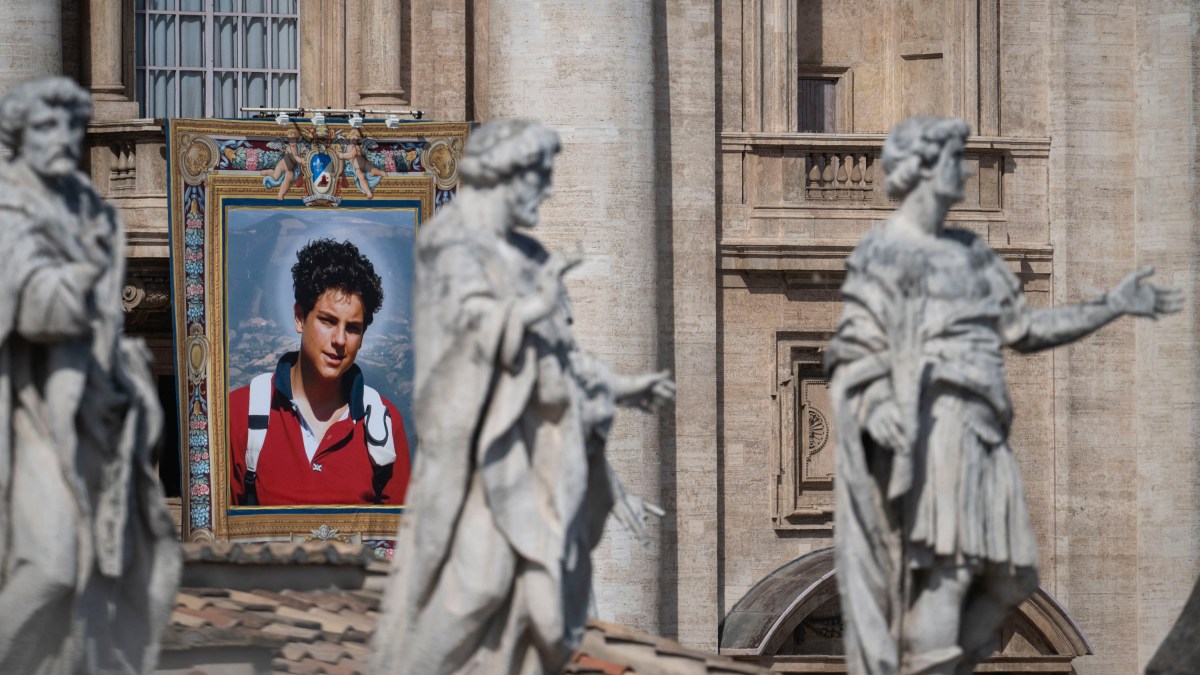
By now, Carlo Acutis hardly needs an introduction. On September 7, 2025, Pope Leo XIV canonized Carlo Acutis alongside Pier Giorgio Frassati. Initially scheduled for a few months earlier, the ceremony was postponed following the death of Pope Francis. This canonization was highly anticipated by many of the faithful around the world.
Since then, the projects, churches, chapels, youth centers, and schools bearing his name continue to multiply, along with initiatives supporting people in need. But above all, testimonies of conversion and healing attributed to the young Italian saint's intercession continue to pour in, as his mother, Antonia Salzano, notes.
Official recognition
Aleteia: A year has passed since Carlo’s canonization. What has changed since that day for you, your husband, and your two children?
Antonia Salzano: We are comforted by the fact that the Church, which is obviously very important to us, officially recognized his holiness. In a certain way, through canonization, the Church makes a supernatural commitment by affirming that Carlo is in heaven. That’s precisely what canonization means. But apart from that, nothing has really changed.
Since Carlo’s death, we’ve received many signs, as well as testimonies of miracles and conversions. For us, the only thing that has changed is that the Church officially declared its approval by confirming Carlo’s holiness. It was important to us. But for us, Carlo was already a saint.
A joyful culmination
When you think of the day of the canonization, what is the first memory that comes to mind?
Antonia: Let’s just say the story was somewhat eventful. Carlo’s canonization was supposed to take place during the Jubilee of Teenagers. Then Pope Francis passed away, and it ultimately wasn't possible to celebrate it on that date. We were very sad for the thousands of young people who had come to Rome for Carlo’s canonization.
Finally, the new date arrived, September 7, and it was somewhat of a relief for us. I consider this canonization the culmination of a very demanding journey, but also the beginning of a period bearing abundant fruit: many miracles, many conversions, and much light brought to people worldwide.
On the day of the canonization, the most moving moment was when Pope Leo XIV declared Carlo a saint. We were very happy. We were also thrilled to see Carlo canonized alongside Pier Giorgio Frassati, a figure we love very much and who is particularly dear to us.
A shared Eucharistic life
Did your son Carlo know about Pier Giorgio Frassati?
Antonia: Yes, Carlo knew about him. He was a very important figure for him, because Pier Giorgio was one of the young saints who inspired him. He was a profoundly Eucharistic saint. Carlo started going to Mass every day and practicing Eucharistic adoration.
For me, Pier Giorgio is a bit like Carlo’s big brother. He had a great love for those in need; he was an apostle in a way. Like Carlo, he spoke to young people. I don’t think it’s a coincidence that these two figures were canonized together. I see Pier Giorgio as a sort of mirror for Carlo.
What unites them most profoundly, I think, is their intense Eucharistic life, especially adoration. The Eucharist is the sacrament of love. It’s the sacrament that helps us grow in love, and love God above all things, as well as our neighbor as ourselves.
A more mature faith
In your opinion, what are the most beautiful fruits that Carlo’s canonization has borne during this first year?
Antonia: We continue to receive testimonies of miracles, healings, and conversions almost every day, just as we did before. This movement is still going strong, as it has been since the very day of his funeral. From that day on, we have received testimonies of graces attributed to his intercession. But above all, Carlo is an instrument God uses to lead us toward a more mature spirituality in our daily lives.
I believe Carlo has revived a more mature, consciously lived faith in many young people, as well as in adults, priests, seminarians, and religious sisters. That’s certainly his great merit. Everything he did, he did for Jesus and with Jesus. He lived the profound union with God to which all Christians are called.
The holiness of youth
After Carlo’s canonization, several causes were opened for young people from roughly the same period who died with a reputation for holiness, such as Marco Gallo and Pedro Ballester. Why do you think the Church has this growing interest in the holiness of young people?
Antonia: Previously, the Church was hesitant regarding young people. There were practically only martyrs. Then things began to change with the little shepherds of Fatima. People understood that holiness was also possible from a very young age.
But young saints have always existed. It’s simply that the Church has become more open [to recognizing them], and new causes have come to light. They can certainly help young people, like the cause of Blessed Chiara Luce Badano. There are also many examples of young religious sisters, priests, and seminarians who died with a reputation for holiness.
Some causes advance, while others remain pending. However, these people remain beautiful examples, regardless of their official recognition. In a world where young people are sometimes lost and faith is lacking, it’s clear that these persons—whether canonized or not—are flowers the Lord places on our path. They show us there are other ways to live our lives. It’s possible to do good as a young person living in God's light.