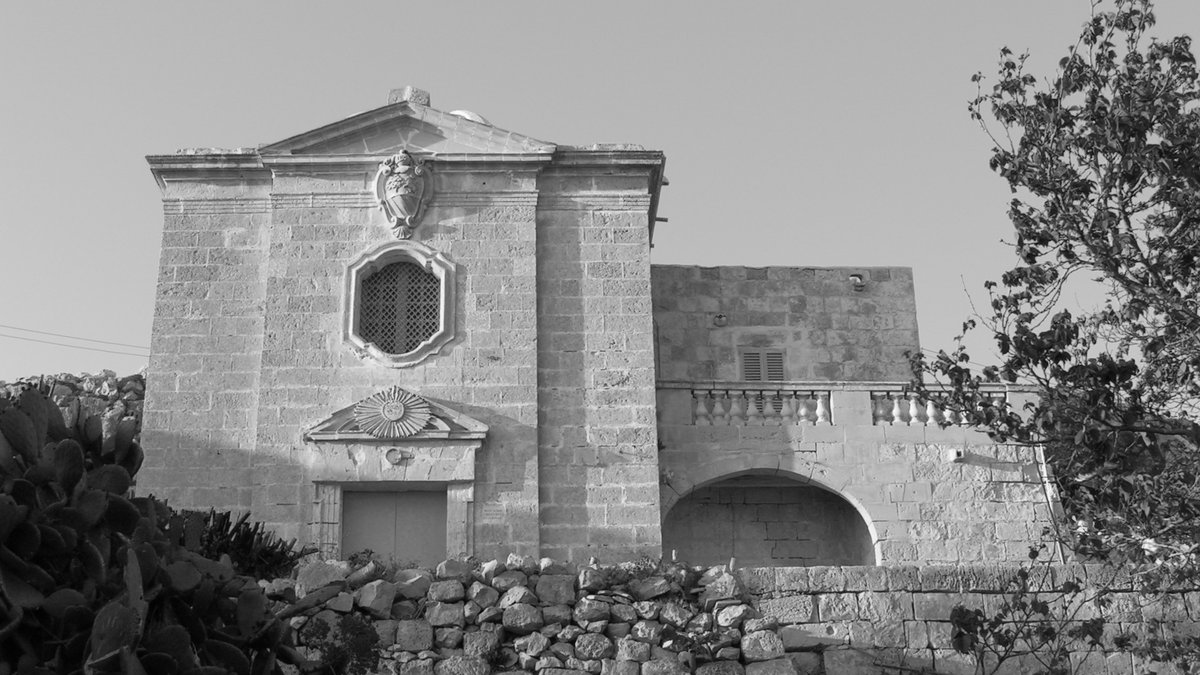
Deep in a valley, this Chapel of Our Lady of Mount Carmel rises above a medieval spring — and sits beside one of Malta's most forgotten stories of martyrdom.
The stretch of land between Siggiewi, Rabat, and Dingli, in Malta, is known as “tal-Fawwara.” The origin of this name is an ancient spring (fawwara meaning "gushing spring"). Throughout the ages this land offered an abundance of water.
Besides sheltering Malta from strong northerly and northwesterly winds, the hills of Żuta and Ġebel Ċiantar (Ċiantar Hill) in the southwest of Malta are a source of captured rain water. As this water slides toward the sea, it encounters a layer of clay that prevents it from sinking deeper into the rock. From above this clay layer emerges the generous Fawwara spring.
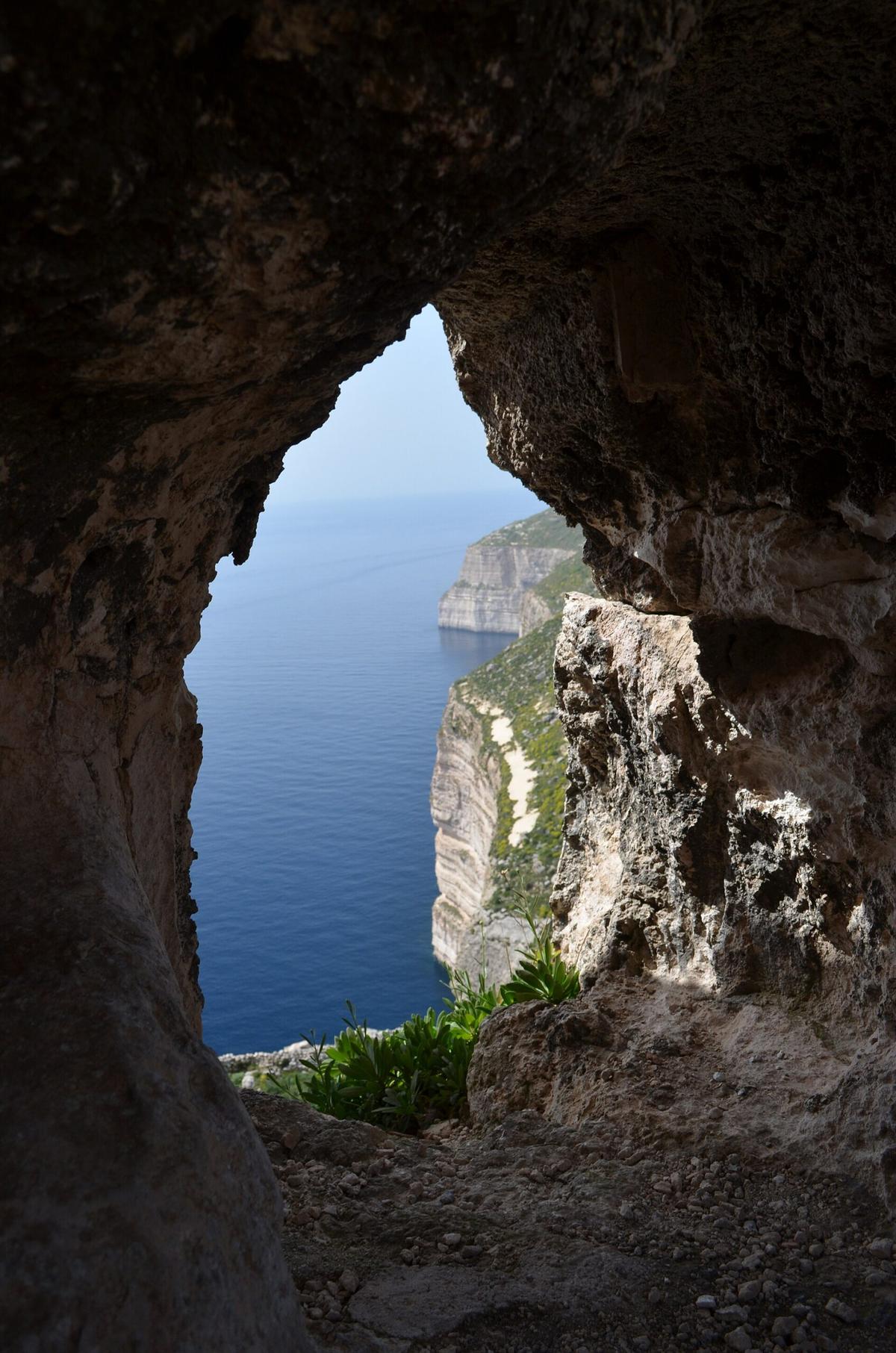
In this area we find two small churches: one dedicated to the Annunciation of the Virgin Mary (in Maltese L-Lunzjata), and the other, built further inside the valley, dedicated to Our Lady of Mount Carmel. This church is built directly over the miraculous spring, while the Chapel of the Annunciation is built adjacent to a troglodytic chapel with distinctive Roman features, dedicated to St. George, forming a two-tiered religious complex nestled into the cliffside of Ġebel Ċiantar. The Annunciation Chapel is a free-standing masonry church, while St. George’s Cave Shrine is hewn into the rock face. The age of this cave-church is unknown. The devotion to St. George at this site likely dates back to the Byzantine or pre-Norman times (5th to 8th century).
Fawwara – a prehistoric site
It is noteworthy that while the immediate Fawwara cliffside is predominantly known for medieval troglodytic shrines, there are notable prehistoric elements, for instance:
- Ġebel Ciantar: This area includes a megalithic mound and elevated vantage points overlooking the Fawwara valley. This is where St. George’s cave-church is carved into rock.
- Artefacts from a Bronze Age settlement: Acting as a natural fortress, the site utilized sheer cliff edges for defense and features ancient rock-cut water and wheat silos alongside an old access road.
- Cart ruts and their surroundings: The surrounding garigue landscape contains mysterious man-made grooves and paths near the Chapel of Our Lady of Mount Carmel.
The 13th-century seven young martyrs of Fawwara
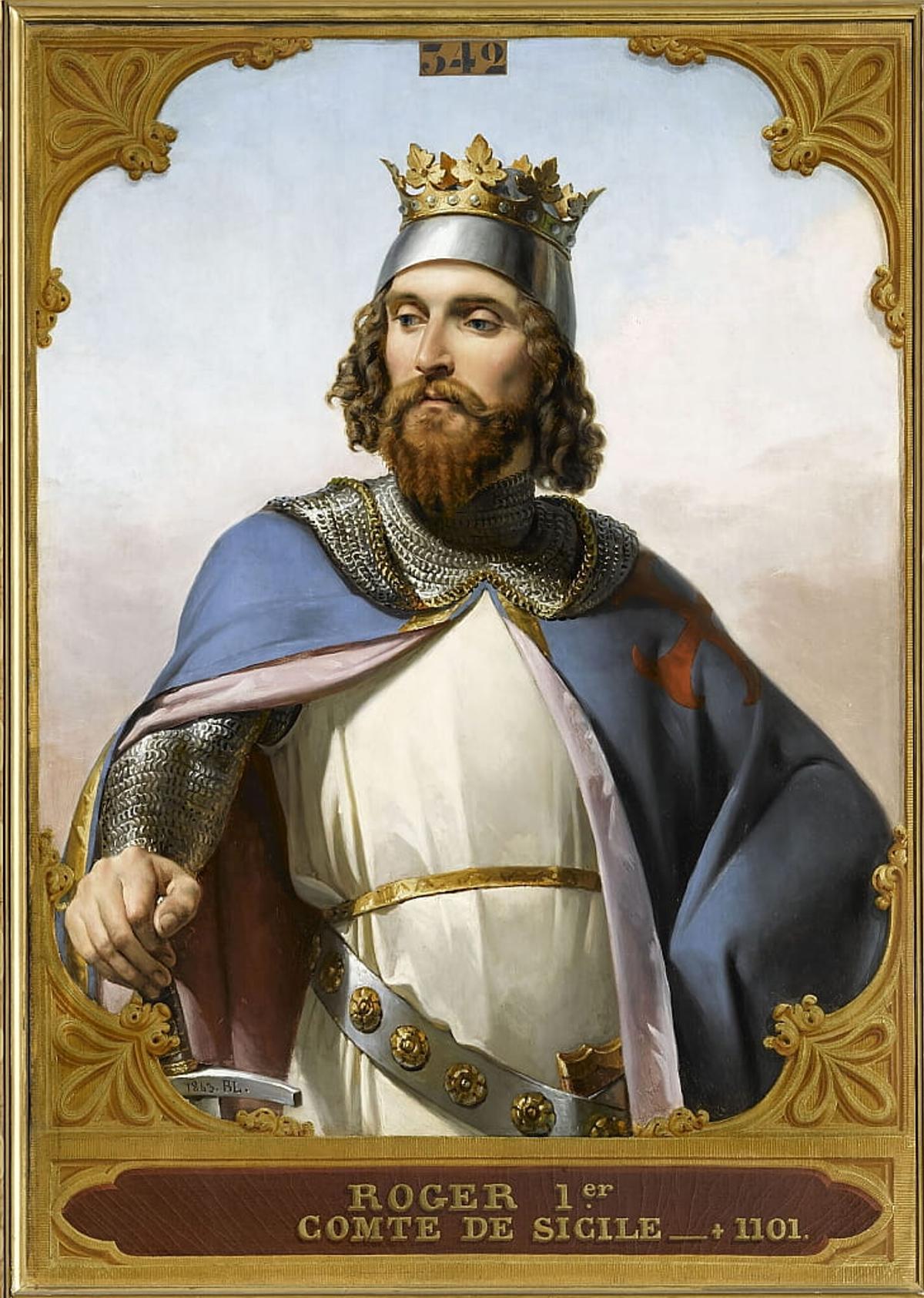
Apart from water, Fawwarra offers a spring of very ancient stories, originating from a period where history weaves together with strong tradition. One such story dates back seven centuries. In the archives of the Mdina Metropolitan Cathedral, two pages were found among the writings of a certain Father Franġisk Cilia, who died in 1864. His writings record the deaths of several young women from the region who were killed in the late 1200s on the orders of the cruel and ruthless Ali Sid, one of the last Arab commanders left by the Normans following their arrival in Malta.
(Historical note: The Normans did not immediately expel all Arabs from Malta; they incorporated Malta into their kingdom and selected certain Arab commanders, requiring them to pay heavy taxes to manage the island until their departure. Ali Sid was one of these. In cities and densely populated areas, these commanders followed Norman orders, but in remote and isolated villages, no one prevented them from persecuting those who did not hold the Islamic faith.)
Father Cilia provides several gruesome details about the fate of these girls and young women living in Fawwara around 1270:
- Genesia (16 years old): Beheaded on March 7, 1270, after being held for 25 days on bread and water while beaten with iron rods for refusing to renounce her Christian faith.
- Cherubina (13 years old): Starved for two weeks and then hung upside down by one foot until she died.
- Aurelia (25 years old): Killed by receiving 143 dagger stabs across her body.
- Genesia, Cherubina and Aurelia were buried under a fig tree in a place called il-Minkeb, near three stone steps as a marker.
- Verdina (14 years old): In 1276, starved and deprived of water for 15 days before being passed beneath a spiked iron wheel that crushed her.
- Teodora: Beheaded in 1274.
- Anastasia (12 years old): Died in 1280 after receiving a fatal blow to the head with an iron bar.
- Domitilla (12 years old): Rolled down the entire side of a nearby hill.
All were buried in fields within the Fawwara limits. Fr. Cilia also recounts that over a thousand Maltese men and women died as martyrs under the tyranny of Ali Sid.
Our Lady of Mount Carmel in Malta
The Feast of Our Lady of Mount Carmel, celebrated annually on July 16, is among Malta’s most cherished Marian devotions. Deeply rooted in the archipelago’s culture and history, this feast is yet another witness of Malta’s enduring trust in Mary.
The Carmelites brought this devotion to Malta in 1418. They established their first priory at Lunzjata Valley, near Rabat (not the same as the Lunzjata Chapel). Over the centuries, they built several churches, including the iconic Carmelite Basilica in Valletta, which today dominates the city’s skyline with its monumental dome. This basilica houses the revered altarpiece depicting Mary giving the Brown Scapular to St. Simon Stock while comforting souls in Purgatory. The painting is the first in Malta to be crowned by the Vatican Chapter in 1881. The Brown Scapular originates from St. Simon Stock’s vision in 1251, connecting the faithful to the promise of salvation and renewal. In Malta, this devotion extends beyond individual prayer. The Maltese people have historically turned to Our Lady of Mount Carmel during times of crisis. During plagues, sieges, and wars, processions and prayers to Mary were central to the nation’s collective plea for protection.
The Valletta Basilica has witnessed countless expressions of faith and miraculous stories. One of the most notable involves San Ġorġ Preca, Malta’s first saint. As a child, he nearly drowned but was saved by a boatman en route to the Carmelite church’s feast. Later in life, San Ġorġ became a Carmelite tertiary and a fervent promoter of the Brown Scapular, further cementing the devotion’s significance in Malta. Other miraculous occurrences include the survival of the Fawwara chapel and spring during a drought, attributed to a vow made to Our Lady of Mount Carmel. These miracles serve as reminders of Mary’s constant care for her devotees, fostering trust and gratitude among the faithful.
A vow, a chapel – the miracle of the Fawwara spring
For centuries, as long as history records, and most probably way before, the Fawwara spring was known for its abundant flowing water used to irrigate local fields. Flowing water collected in a reservoir pit (ġiebja) in front of the spring's cave entrance -- located directly beneath today's church.
A story of the Church of Our lady of Mount Carmel, passed from generation to generation, holds that in the early 17th century, a severe drought struck the region. The spring's reservoir dried up completely, and the flow ceased. Faced with the loss of their livelihoods, the local farmers were filled with grief and on the verge of giving up. Ġlorma Ciantar, a noblewoman who owned vast areas of farmland, made a solemn vow to the Virgin Mary -- if water returned to the spring, she would build a chapel in one of her fields in Her honor. Shortly, water gushed from the spring -- more abundantly than before! True to her vow, through a notarial deed published on March 5, 1616, Ġlorma provided the funds to erect a small chapel dedicated to Our Lady of Mount Carmel on the current site. She placed the chapel under the administration of the Confraternity of Our Lady of Charity (Fratellanza della Carità), based in the Collegiate Parish Church of St. Paul’s Shipwreck in Valletta.
An inscription in Latin on an exterior wall commemorates this vow:
"Hoc templum Beatissimae V. de monte Carmelo dicatum quod anno dni. MDCXVI aedificaverat quondam domina Hieronyma Ciantar juxta voluntatem marii et Frederici ejus patris et fratris raedieicaverat ven. Confrat. Virginis Mariae Charitatis urbis Vallettae procuratore Pasquale Bonanno MDCLXIX et procuratore Antonio Palma MDCCLXI"
Since this event, the hill overlooking Fawwara, Ġebel Ċiantar, bears the surname of this pious and faithul noblewoman. Ġlorma also established a bequest providing a dowry for any young woman bearing the Ciantar surname who married on a specific feast day.
The present chapel
Rebuilt in 1669 by the Confraternity of Our Lady of Charity, the chapel achieved its current appearance following 1756 modifications. The small, square building features a central dome on four corner pillars, a belfry with a single bell, and an adjoining two-story residence housing a sacristy below and a retreat flat above. Its facade displays the Confraternity's Charitas emblem and the restored Ciantar family coat of arms.
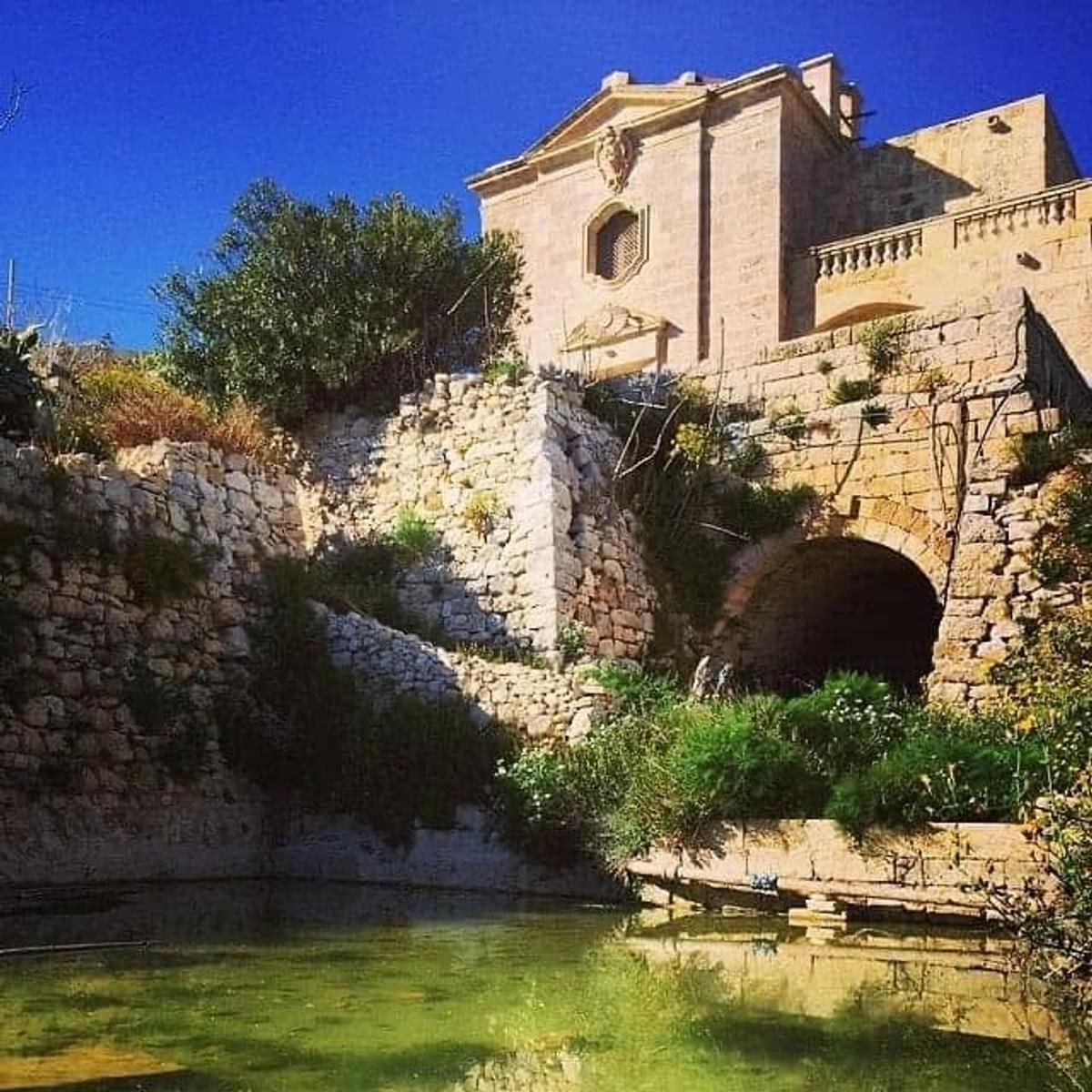
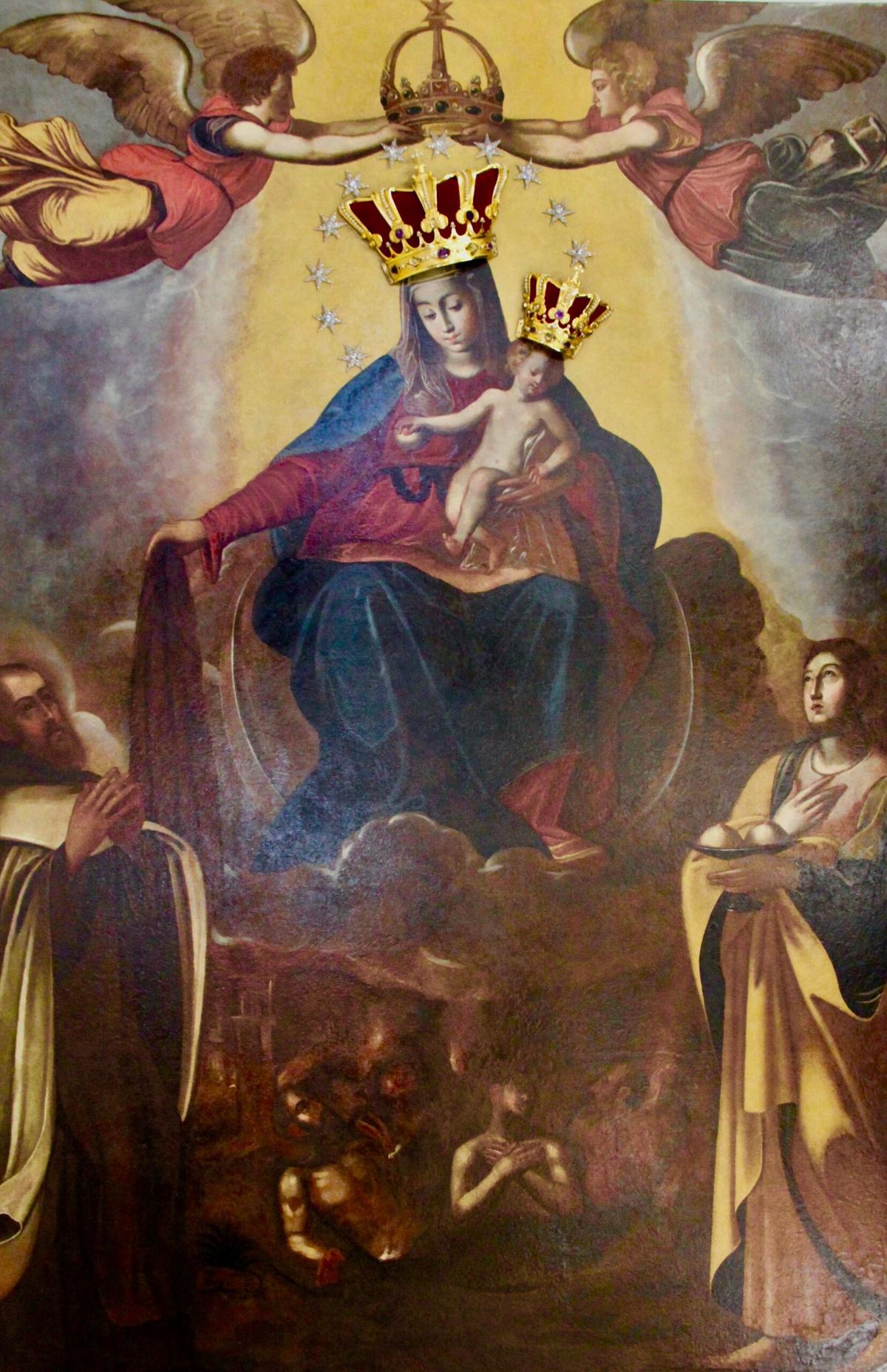
A window above the main door lights the interior, while an elevated forecourt offers views toward the tiny islet of Filfla. The interior features exposed limestone walls and a single stone altar dedicated to Our Lady of Mount Carmel. The altar frame bears the Charitas emblem and a Regina Decor Carmeli inscription. To the left sits an ungilded 20th-century wooden statue of Our Lady of Mount Carmel in Carmelite habit, crafted in Bolzano, Italy. The 1674 anonymous titular altarpiece depicts the Virgin and Child offering scapulars, flanked by St. Jerome, St. Catherine of Alexandria, and veiled Confraternity members. It features the Ciantar coat of arms. Historically, the painting held strong local devotion, reflected by attached silver crowns and ex-voto offerings stored in the sacristy, which houses other historic artefacts:
- An 1893 Vatican certificate authenticating a first-class relic from Mary's tomb.
- Official Vatican documentation permitting the installation of the Via Crucis.
- 14 mother-of-pearl Stations of the Cross set in wood.
- Historical processional equipment, an antique stone lavabo, and festive candlesticks.
The annual feast occurs on the Sunday following Valletta's Mount Carmel feast in July, featuring Mass, scapular distribution, and gatherings.
A final thought
Fawwara reminds us that God's provision often flows quietly, like water rising from beneath the rock, easy to overlook until it is threatened or withdrawn. The young martyrs who died here for their faith, the drought that brought a whole community to its knees, Ġlorma Ciantar's vow answered by a miracle — all point to the same truth: that this land has long been a place where people met God in their need and found Him faithful. Indeed, the chapel standing over the spring is a living witness that Our Lady of Mount Carmel continues to intercede before her Divine Son for those who seek His mercy in times of scarcity, and that the ever-flowing water beneath this church is a sign of grace that has never run dry.
Rev. Prof. Jonathan Farrugia is an associate professor of patrology and paleochristian archaelogy at the University of Malta.