On the 300th anniversary of the canonization of St. Turibius of Mogrovejo, a pope who served as a missionary bishop in Peru writes to his brother bishops from the inside.
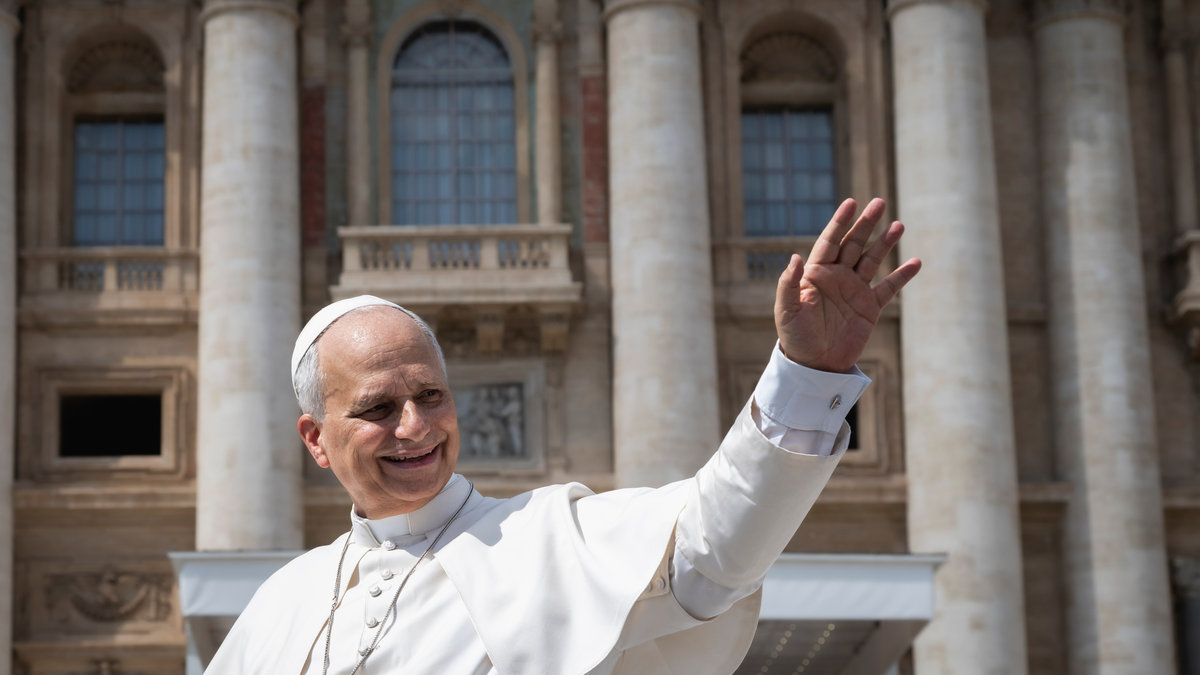
On September 8 — the feast of the Nativity of the Blessed Virgin Mary — Pope Leo XIV addressed a letter to all the bishops of Latin America and the Caribbean on the occasion of the third centenary of the canonization of St. Turibius of Mogrovejo, the 16th-century Archbishop of Lima venerated as the patron saint of the bishops of Latin America. The letter is organized around an unexpected structuring principle: the liturgical rite by which a bishop is installed in his cathedral church.
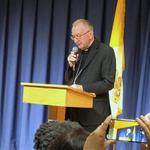
Leo XIV served as a missionary bishop in Peru before his election. He recalls this at the outset, and it shapes the register of everything that follows. This is not a letter from Rome to Latin America. It is a letter from someone who has lived and worked there for decades.
St. Turibius and the Apostle of the Andes
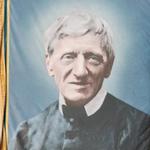
St. Turibius of Mogrovejo was a layman and a lawyer when Philip II of Spain appointed him Archbishop of Lima in 1580. He learned Quechua and other indigenous languages, walked thousands of miles on pastoral visits, convened the Third Council of Lima — which produced the first catechism printed in the Americas — and died in 1606 after 25 years of continuous pastoral labor. He was canonized in 1726.
Leo describes how his own time in Peru brought him close to this figure: “That experience brought me particularly close to St. Turibius, who also came from afar to a land that he eventually made his own through pastoral charity.”
The installation rite as a program for episcopal life
The letter’s organizing device is the Caeremoniale Episcoporum — the liturgical rite by which a bishop is installed in his cathedral. Leo reads each gesture as a permanent dimension of the bishop’s mission, not a one-time ceremony.
At the cathedral door, the new bishop is welcomed by a community that precedes him. “He enters into a history that did not begin with him and becomes bound, through his ministry, to a specific people.” This is the foundation for what Leo calls the obligation of pastoral presence: “Certain aspects of a diocese are hard to grasp from behind a desk. The ministry of a successor to the Apostles demands living with our heart in heaven and our feet on the road.”
The bishop receives a crucifix and kisses it — a promise, in Leo’s reading, of self-sacrifice: “The hired hand calculates what he might lose; the shepherd knows that he must give something of himself to remain faithful.” He receives holy water and is reminded that he is a disciple before he is a shepherd: “The holiness of the shepherd cannot be taken for granted. Those who have been entrusted with the task of sanctifying others still need to be sanctified themselves.”
He kneels before the tabernacle. “Bishops come and go; Christ always remains.” Leo draws from this a concrete pastoral priority:
“I would invite you to make Eucharistic adoration a pastoral priority. I am convinced that the Lord’s holy presence, faithfully welcomed and adored, sustains what our own strength cannot achieve and opens paths that no plan can conceive.”
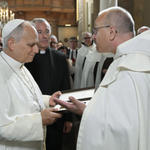
He goes to the cathedra, where the document of his appointment is read aloud — a reminder that episcopal authority is received, not self-generated. The faithful approach to show reverence, and Leo turns this into a direct word about the relationship between bishops and their priests: “Let us stand by our priests. Let us ensure that no priest feels that he can only approach his bishop when there is a problem to be resolved. Episcopal fatherhood is often recognized when a priest knows that he can confidently knock on the door of the bishop’s residence.”
Only after all of this does the bishop speak for the first time. Leo notes the order deliberately: “Up to this point, the liturgy has encouraged him to adopt an attitude of openness and listening, and led him into the silence of adoration. Only now does he speak. May no urgency or pastoral task, however necessary it may be, cause us to neglect prayer, which is a necessary preparation for preaching.”
A school of shepherds
The letter closes by placing Turibius within what Leo calls “a veritable constellation of bishops” venerated as saints and blesseds across Latin America: Sts. Anthony Mary Claret, Ezekiel Moreno, Raphael Guízar, and Oscar Romero, and Blesseds Juan de Palafox, Jacinto Vera, Mamerto Esquiú, Enrique Angelelli, Jesús Jaramillo and Eduardo Pironio.
“Their lives reveal how the same mission can take different forms according to times and circumstances and they form a school of shepherds born of our ecclesial history. Indeed, the saints continue to form saints.”
The letter was signed on the feast of the Nativity of the Blessed Virgin Mary and entrusted to the intercession of Our Lady of Guadalupe.