Turning down a dinner invitation can be awkward enough. Pope Leo XIV shows how to do it on a presidential scale.
Most of us will never face the awkward task of turning down a state dinner, a Republican Guard escort, and the Légion d'honneur. But as Pope Leo XIV prepares for his first apostolic visit to France, he may have something surprisingly useful to teach us about the delicate art of saying no.
Ahead of the pontiff's arrival in Paris on September 25, President Emmanuel Macron had reportedly hoped to give his guest the full honors of a state visit. The Vatican preferred something simpler. A state dinner at the Élysée Palace was declined, along with a decoration and the ceremonial welcome that would normally accompany a state visit.
Macron had also hoped to accompany Leo around the restored Notre-Dame Cathedral and introduce him to some of those involved in its magnificent reconstruction. Again, the answer from Rome was a polite non merci.
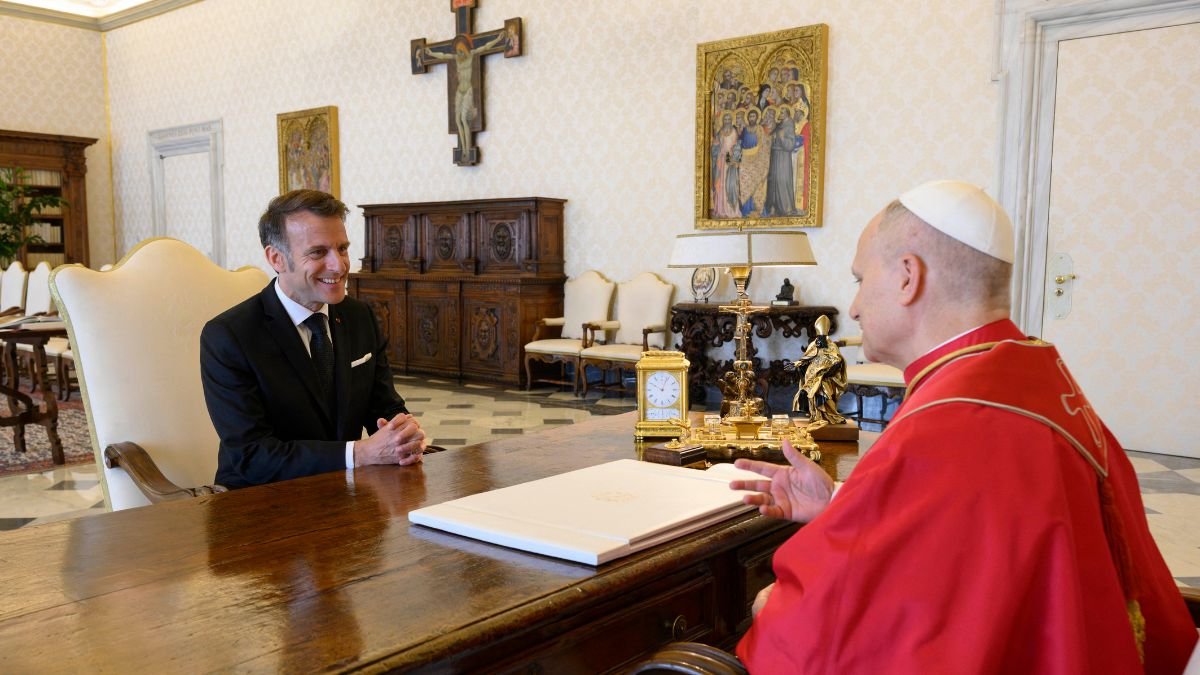
Importantly, though, Leo XIV isn't avoiding the French president. Far from it. Macron will welcome the Pope to the Élysée, where the two men will meet and Leo will address political leaders, civil society and the diplomatic corps. His packed schedule in Paris also includes UNESCO, vespers at Notre-Dame, a youth vigil at the Stade de France, and Mass at the Place de la Concorde, before he continues his visit to Lourdes and Metz.
In other words, this wasn't a no to Macron. It was a no to some of what Macron was offering. And for anyone who has ever accepted a dinner invitation they didn't really want, agreed to a weekend that was already making them tired three months in advance, or found themselves writing a paragraph-long WhatsApp explanation for why they can't make drinks on Thursday, there might be something worth borrowing from the papal approach.
1A no doesn't have to mean rejection
This is perhaps the most useful distinction of all. Leo can decline a state dinner and still sit down with Macron; he can say no to a presidential tour of Notre-Dame and still pray vespers beneath its newly restored roof.
Ordinary life offers plenty of less diplomatic versions of the same problem. Sometimes we would genuinely love to see the person inviting us, but we don't want the late dinner, the entire weekend, or the party involving three changes of public transport and a return home at 1 a.m.
Saying no to the plan doesn't necessarily mean saying no to the person. “I can't manage dinner, but I'd love to have coffee with you next week” can preserve both the relationship and the precious evening you desperately needed at home.
2Generosity doesn't create an obligation
It can be particularly difficult to decline when somebody has made an effort. They have cooked, booked, organized, or come up with something they genuinely think we'll love, and suddenly saying no feels almost ungrateful.
Macron's proposals were hardly half-hearted. France was offering the Pope some of the highest honors at its disposal, which makes Leo's apparent preference for a simpler apostolic visit all the more interesting.
A generous invitation deserves gratitude, but gratitude doesn't always require acceptance. The friend who has lovingly planned a weekend away deserves warmth and honesty, not our reluctant presence followed by two days of secretly wishing we were at home.
3You don't need a defense lawyer
Then comes the explanation. Or, in some cases, the witness statement.
Many of us find a simple “I'm so sorry, I can't make it” almost impossibly abrupt, so we add the work deadline, the children's activities, the relative arriving from out of town and a detailed account of why the following morning is going to be complicated. By the end, we're no longer declining dinner; we're submitting evidence.
Courtesy matters, of course, particularly when someone has gone to trouble on our behalf. But a gracious no can also be a clear one. Thank the person, decline warmly and, if appropriate, suggest another way of seeing them. Most invitations don't require a 14-point justification.
4Know what you're saying yes to
Perhaps the most interesting part of Leo's pared-back Paris visit is that his diary hardly looks empty. The Pontiff will visit the Maison Bakhita center supporting migrants and refugees, meet catechumens and newly baptized Catholics, celebrate Mass in Paris, pray at the grotto in Lourdes, meet sick people and contemplative religious sisters, and travel to Metz for interreligious meetings before returning to Rome -- a huge number of engagements for a man of 71.
His no, therefore, makes room for a considerable number of yeses. And that is useful well beyond papal scheduling. Every invitation accepted occupies a little piece of life, and sometimes declining something perfectly lovely allows us to give our time and attention to something that matters more. The difficult part is accepting that we don't need to prove the rejected invitation was somehow bad in order to justify choosing differently.
5And occasionally, just say "non merci"
There will undoubtedly be plenty to analyze when Pope Leo XIV arrives in Paris, from his meeting with Emmanuel Macron to his words at Notre-Dame, UNESCO and the Place de la Concorde. His decision to favor an apostolic visit over some of the grander trappings proposed by the Élysée may also tell us something about the priorities of this still relatively new pontificate.
But on a much smaller scale, it offers a useful reminder before the invitations begin piling up again. A "no" can be warm without becoming apologetic, appreciative without becoming reluctant, and firm without being unkind.
Most importantly, saying no to one invitation leaves us free to give a wholehearted yes somewhere else.