There are a variety of requirements for the Catholic Church to officially declare an authentic miracle.
When being introduced to the Catholic faith, apologists will often point to the reality of Eucharistic miracles as a visible sign that what the priest says at Mass is not a set of empty words.
Yet, sometimes the vast number of Eucharistic miracles that exist, which were once catalogued by St. Carlo Acutis, can be confusing, as they are not all the same.
What precisely is a Eucharistic miracle? What happens during such a miracle?
The anatomy of a Eucharistic miracle
First of all, it all starts with the Mass, during which the priest repeats the words of Jesus at the Last Supper, "Take this, all of you and eat of it: for this is my body, which will be given up for you."
The Catechism of the Catholic Church explains what happens at this point in the Mass: “By the consecration of the bread and wine there takes place a change of the whole substance of the bread into the substance of the body of Christ our Lord and of the whole substance of the wine into the substance of his blood” (CCC 1376).
This means that while the appearances of bread and wine remain, the substance is changed (through the power of God) completely to the body and blood of Christ.
We could say that the substance is the underlying "being" of the thing. Before the words of consecration the host is simply "bread," but afterwards it is substantially changed into the "body of Jesus."
At Mass, the substance of the host is changed, but typically the "accidents" or "appearances" do not change. This means the host still looks, tastes, and smells like bread. The external part of the bread is not changed by the words of the priest.
Sometimes, teachers might compare this to the way that, say, a girl could change the color or the cut of her hair or get a tan in the summer. She looks different but is still the same girl.
So what is a Eucharistic miracle?
This change of the substance of the Eucharist is certainly miraculous at every single Mass, in the sense that God changes a thing from what it was into something it was not -- from bread to his body. However, miracles are generally considered things visible to our human senses, and in the case of what happens at every Mass, our human senses perceive nothing. We can't see, feel, or taste the difference that is happening.
An English translation of the way that Thomas Aquinas beautifully and poetically summarized this says: "What the senses fail to fathom, let us grasp through faith's consent."
But this is where Eucharistic miracles come in.
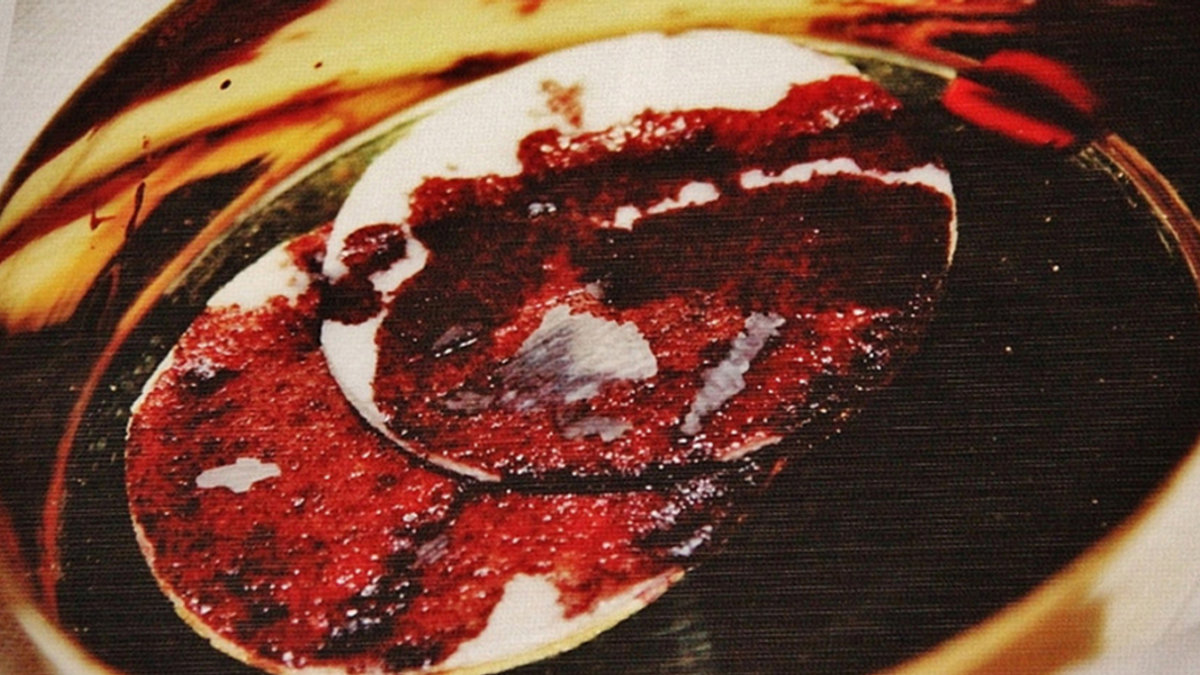
On rare occasions both the substance and the accidents change, through the power of God. The veil is lifted and God changes the bread into Jesus' body in a visible way. When tested, the human tissue that becomes visible is often a portion of a human heart. Typically blood appears in such a miracle, as the appearances of bread and wine are miraculously changed into visible body and blood.
Does it really happen?
As with all miracles, Eucharistic miracles are investigated first by the local bishop. He will initially determine whether or not what is reported is actually nothing more than red bread mold, which is a common occurrence and can easily be confused with an authentic Eucharistic miracle. That is why the bishop will also appoint a team of experts to study the events from every angle, gathering all relevant data. This will include priests, theologians, canon lawyers, medical professionals, molecular biologists, and others.
Only after an unbiased study, conducted by a panel of experts, will the local bishop consider declaring a Eucharistic miracle. If the bishop does, it is for the benefit of the faithful to see that God still works miracles in our age and that the Eucharist is always much more than a piece of bread, whether or not we can see that with our eyes. The Eucharist is the body, blood, soul and divinity of Jesus Christ, whether we can see that with our eyes or not.
While Catholics are not required to believe in Eucharistic miracles, the Church continues to invite the faithful to witness the awe-inspiring power of God and to affirm Jesus' presence in the Eucharist at every Mass.