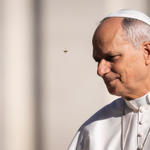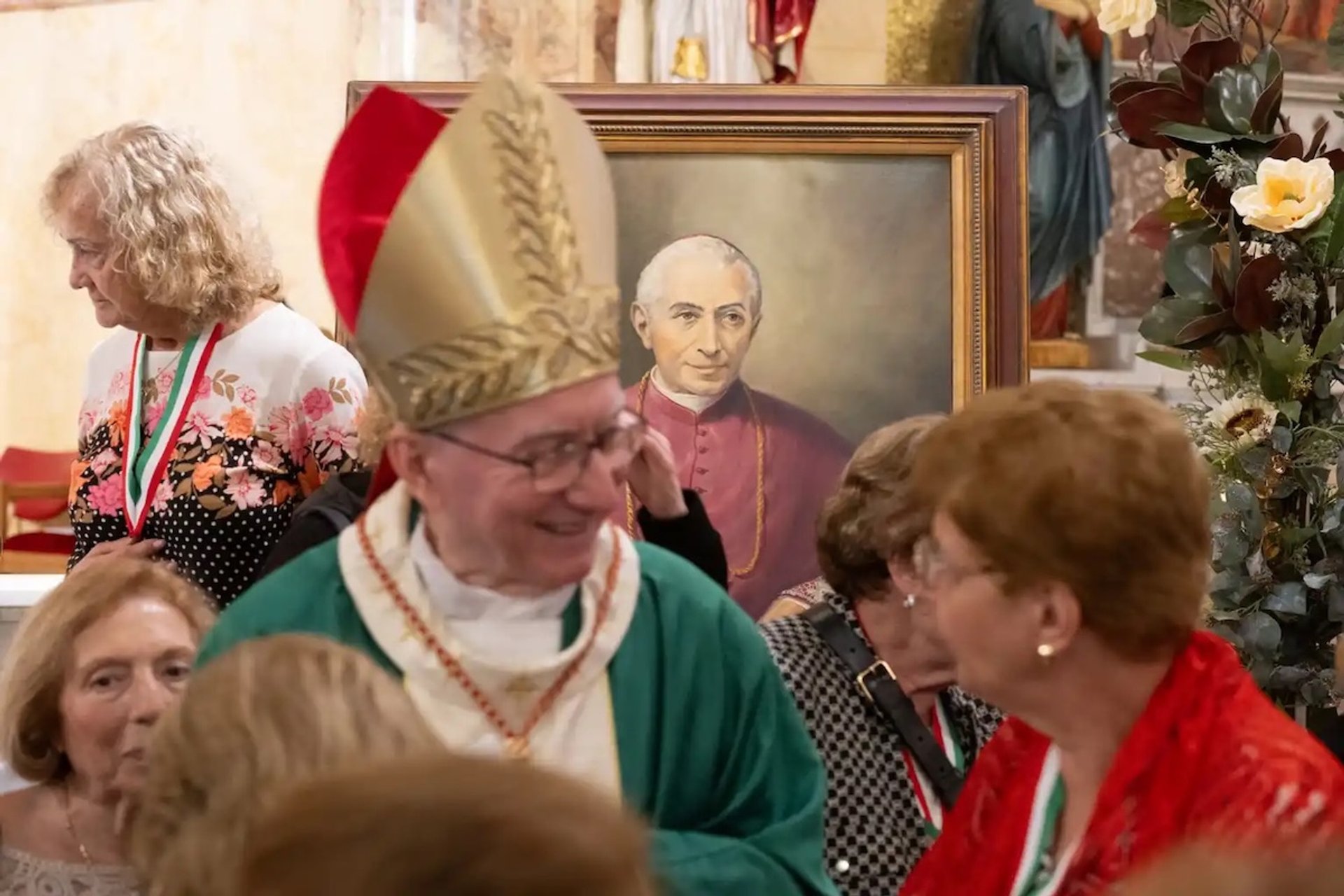
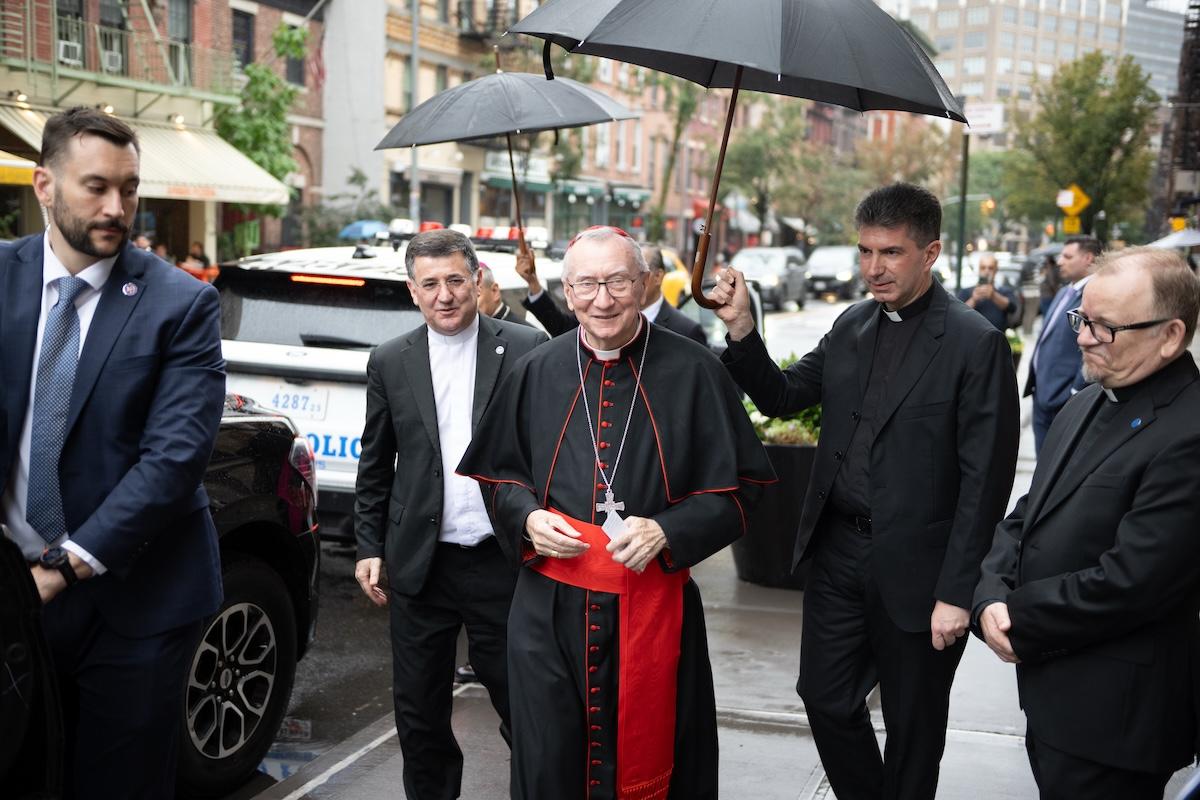
Cardinal Pietro Parolin, appointed Secretary of State by Pope Francis in 2013, and still in that role under Pope Leo, is in New York City this week leading the Holy See’s delegation to the United Nation’s General Assembly.
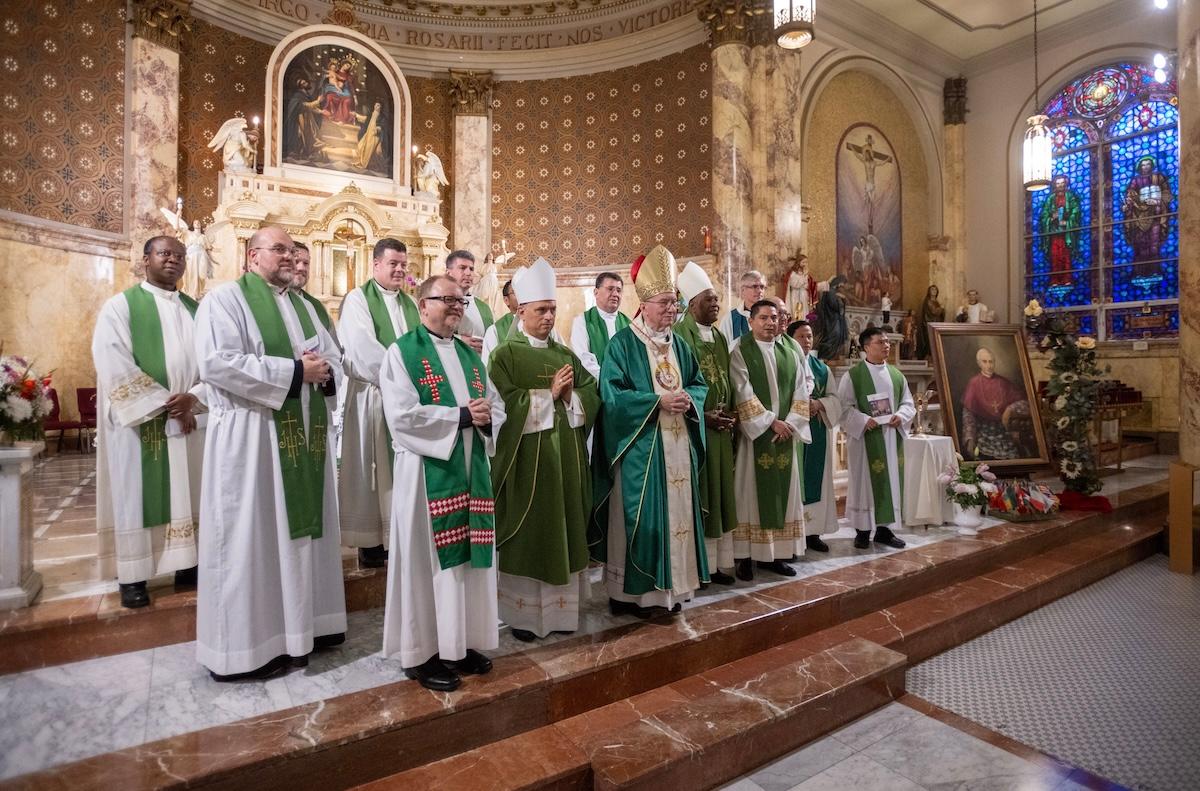
The longtime Vatican diplomat concelebrated a special Mass on Sunday, September 20, at the Shrine Church of Our Lady of Pompeii in Manhattan. The historic Catholic community began as a chapel for Italian immigrants in 1892, with the current church building celebrating its centennial in October.
While Sunday’s guest of honor was Cardinal Parolin, the gathering was a celebration for the 125th anniversary of the visit of St. John Baptist Scalabrini to the United States. This Mass was one of many events around the country commemorating St. Scalabrini’s journey to the U.S. The final event is a Mass on October 25 with Cardinal Robert McElroy in Washington, D.C.
The Italian bishop and founder of both the Missionaries of St. Charles Borromeo priests (or Scalabrinians) and the Mission Sisters of St. Charles was a visionary man of mission, dedicated pastor and intrepid apostle. Given that transcontinental travel was highly unusual in his day, his 1901 apostolic visit set a precedent for other Church leaders into the 20th century.
Cardinal Parolin confessed feeling deep emotion, “addressing you in this Church, thinking that 125 years ago the holy bishop John Baptist Scalabrini spoke to the Italian immigrants from this very place, in the same language.” He thanked Scalabrinian’s Superior General, Fr. Leonir Chiarello, CS, for “the kind invitation,” and greeted all present. He acknowledged his brother bishops and priests, the Scalabrinian Fathers and Sisters and the Missionary Sisters of the Sacred Heart.
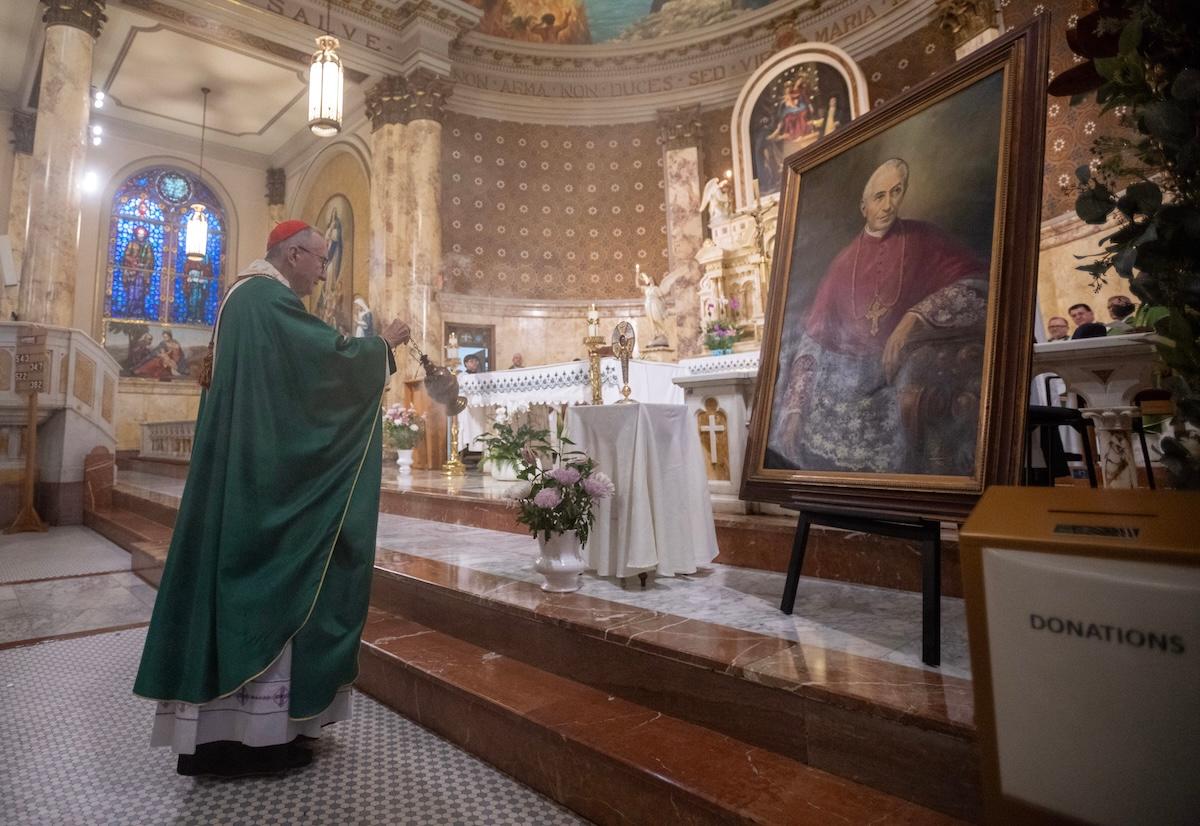
The bishop-saint who turned Mother Cabrini’s gaze west
The attendance of the Missionary Sisters of the Sacred Heart, the religious institute founded by St. Francis Xavier Cabrini, was a nod to the two saints' interwoven stories.
Although St. Scalabrini is less known to American Catholics, without him Mother Cabrini might never have had Pope Leo XIII redirect her missionary zeal, “not to the East, but to the West.” The renowned “first American saint” founded her Missionary Sisters within the Diocese of Lodi, but geographically her convent in Codogno was just north of Piacenza, the seat of Bishop Scalabrini’s diocese.
He invited her to found a convent in his diocese, and with their missionary orders in geographic and chronologic proximity, Bishop Scalabrini quickly saw the potential for collaboration with Mother Cabrini. The bishop would begin his own order of Sisters in 1895, but in the late 1880s he had the ear of Pope Leo XIII, who was receptive to the dire situation of their compatriots in America. It was Scalabrini who arranged for the encounter between Mother Cabrini and the Holy Father.
While Pope Leo XIII played a pastoral and prominent role in the Angel network’s 2024 release “Cabrini,” EWTN’s 2019 production “Mother Cabrini” more fully tells the history. In the “Mother Cabrini” script, Bishop Scalabrini’s intermediary role is more clearly shown.
Providential plan
St. Scalabrini’s vision was to care for the Italians leaving their homeland in the late 19th century for new opportunities in the Americas. As Pope Francis stated in the homily of his Mass of Canonization (October 9, 2022), Bishop Scalabrini “used to say that in the shared journeying of emigrants we should see not only problems, but also a providential plan.”
In one of a series of posts by the Scalabrinians’ St. Charles Borromeo Province, it was shared, “For Scalabrini, care for migrants could not begin only after they had settled in a parish. It had to accompany them throughout the entire migration journey … Migration was never about crossing an ocean. It was about accompanying a person from uncertainty toward a place where a new life could begin.”
Although Scalabrini’s initial vision focused on Italian immigrants, the international reach of the Scalabrinians’ mission was visible at this week's New York City Mass. Among those in attendance were Archbishop Christophe El-Kassis, the newly appointed permanent observer of the Holy See to the United Nations, diplomatic dignitaries representing Italy and the Philippines, and faithful of many nationalities.
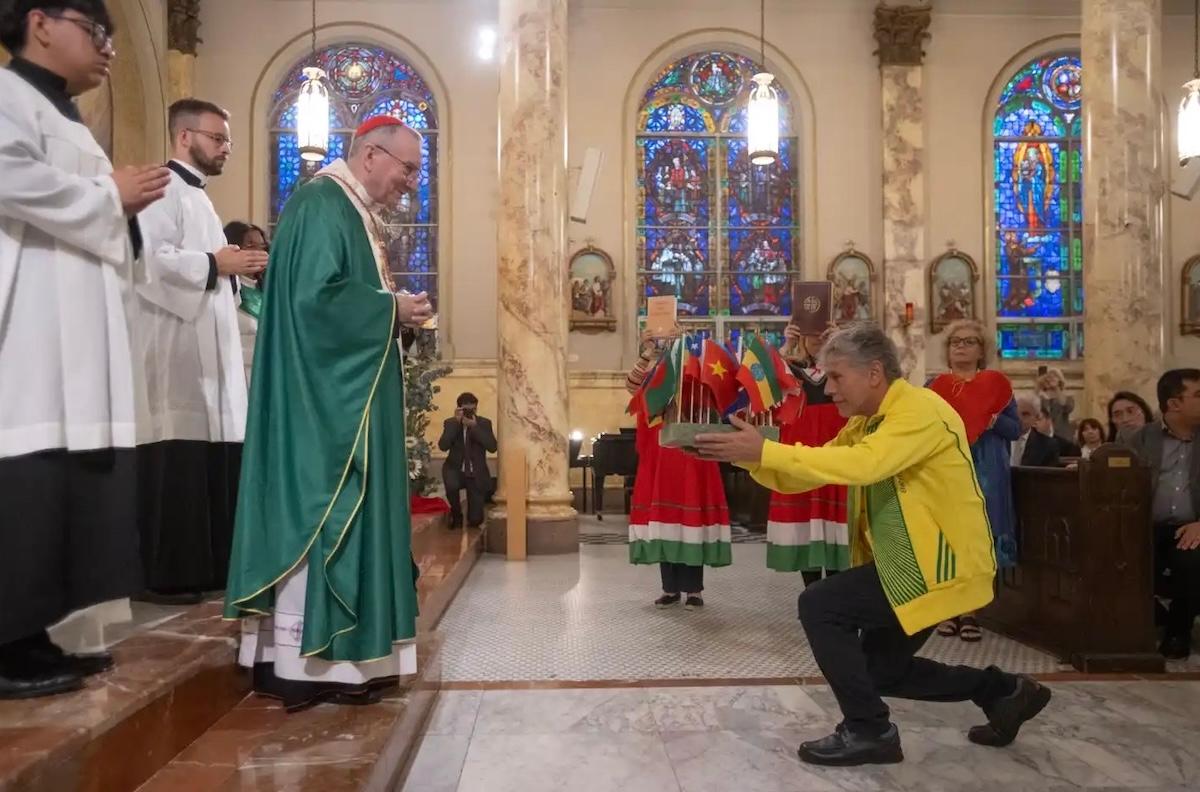
With the desire of accompanying the Italian emigrants, in July 1888 Bishop Scalabrini sent the first group of his missionaries simultaneously to the United States and Brazil.
At Sunday’s Mass, parishioner Leonardo Maciel, a parishioner of Our Lady of Pompeii, shared, “As part of the Brazilian community, I have been coming to this church for 10 years. It was important to be present for this celebration of St. Scalabrini, who came to this country 125 years ago to help immigrants. Back then it was mostly Italian, but eventually all of us.”
Scalabrini’s “far-sighted vision”
Reflecting on the first reading and Gospel parable of the workers in the vineyard (Matt. 20:1-16a) Cardinal Parolin said God’s love “surprises us because it contrasts with the logic of common sense, which measures everything according to merit and proportion.” He said that the parable isn’t Jesus’ denial of justice, but a revelation of “the gratuitousness of God’s love and mercy toward all.”
God looks at history with a different gaze from ours: where we see borders, God sees people; where we see categories, God sees faces; where we see strangers, God sees children; where we see problems to be managed, God sees people to be met, accompanied, and loved.
This was Scalabrini’s gaze, which made him a surprising and still relevant figure… This evangelical gaze and his great pastoral heart led him to become personally involved and to involve the Church, society, and governments in solving the problems faced by his people.
The cardinal-Secretary of State quoted Pope Pius IX calling Scalabrini an “Apostle of the Catechism” because he formed catechists and founded the first magazine of catechesis and the first Catechetical Congress in Italy.
He described the saint as an advocate for the disadvantaged “for whom he established social works.” Naturally, his gaze turned towards the Italians boarding trains and ships for a better life.
What the bishop saw, Cardinal Parolin said, was not only “a demographic phenomenon and a social problem, but, moved and with the gaze of faith, he saw a people on the move, he saw his children who, because of poverty and driven by the hope of a better future, were leaving for distant lands. He understood that the Church could not remain still while her people were on the move.”
“Father of Migrants”
“Faced with this situation, driven by his far-sighted vision, determined personality, practical intelligence, energetic will, and pastoral and missionary sensitivity, Bishop Scalabrini was the principal ideator and practical initiator of a holistic and multifaceted action in favor of migrants. He launched initiatives for their protection in the various stages of the migratory journey—at the beginning of the journey, during the journey, and upon arrival…,” the cardinal continued.
It was St. Scalabrini who wrote of these issues to multiple popes and, before the turn of the 20th century, proposed the establishment of a Pontifical Commission for the pastoral and social care of migrants.
Cardinal Parolin noted that Saint John Paul II recognized him as the “father of migrants” at his November 9, 1997, beatification. He expressed the sentiments of two other popes for the celebrated saint. When Pope Francis canonized John Baptist Scalabrini he said, “Scalabrini looked beyond, he looked ahead, to a world and a Church without barriers, without strangers.”
The cardinal quoted Pope Leo XIV in the Encyclical Dilexit Te, paragraph 74, where he affirmed his predecessors' connection made between the “father” and “mother” of migrants, Saint John Baptist Scalabrini and Saint Frances Xavier Cabrini.
The American-Peruvian Pope asserted that Scalabrini founded the Missionaries of Saint Charles “to accompany migrants in the communities of destination, offering them spiritual, legal, and material assistance. He saw in migrants the recipients of a new evangelization, warning against the risks of exploitation and loss of faith in a foreign land…”
Cardinal Parolin surmised, “Scalabrini looked beyond, beyond the categories with which the society of his time classified emigrants, beyond the boundaries of his Diocese, beyond the frontiers.
“Driven by this looking beyond and by his commitment to involve all people of good will in the care of migrants, in 1901… Scalabrini came… and crossed the country to meet the migrants, his missionaries, priests, religious, bishops, civil authorities, and representatives of American society.”
“In this one-hundred-day journey, Scalabrini did not limit his action” to meeting bishops, which included Archbishop Corrigan of New York, the bishops of Brookly and Buffalo, Cardinal James Gibbons of Baltimore, and Archbishop John Ireland of Saint Paul. The cardinal spoke of the saint’s meetings with leaders of civil society and the economic world, which extended to being received by President Theodore Roosevelt on October 10, 1901, in Washington, DC.
Cardinal Parolin concluded by reiterating the sentiments of Popes Francis and Leo, “Scalabrini did not only look beyond, ‘but looked ahead, to a world and a Church without barriers, without strangers.’ Scalabrini promoted a theological vision, a vision of faith of migrations, recognized as an instrument of God’s Providence through which His plan of uniting all peoples in the one human family is realized.”
Looking beyond, looking ahead
Speaking to the Catholic Club in New York on October 15, 1901, Bishop Scalabrini expressed his admiration for the United States and affirmed that the greatness of migration and the greatness of the United States are, the cardinal quoted, “two greatnesses made to merge into one … While peoples fall, rise again, and are renewed … there is maturing here below a work far vaster, far nobler, far more sublime: the union in God through Jesus Christ of all people of good will.”
The cardinal echoed Jesus’ personal and communal call today, “I still need you.”
“What is there to do?” Parolin answered, “To transform a world that risks forgetting God’s great design, that risks forgetting that a new humanity can be built, that risks forgetting that migrants are part of this great work because they are not exploiters but builders of a humanity.”
He recognized that in the 125 years since Scalabrini’s visit, societies, circumstances and the causes of migrations have profoundly changed, but the Vatican official invited all “to look beyond borders and political differences and to look ahead and to commit ourselves to building a world and a Church without barriers, without strangers.”
Referencing his participation in the UN’s General Assembly, he said, “It is a place where the Nations meet, dialogue, seek convergences and, not infrequently, confront one another on the great wounds and the great hopes of humanity…
“Migrations remind us that no nation can face alone the great challenges of our time. Migrations require international cooperation and far-sighted policies to address the root causes that drive people to leave. They call for regular and safe pathways, as well as protection for the vulnerable and policies and programs of integration.”
In Mary's hands
Cardinal Parolin directly addressed the Scalabrinians,
I invite you to renew your gaze. I invite you to look beyond and to look ahead, to recognize the new frontiers, to listen to the new migrants and accompany them in their vulnerabilities and, above all, to announce that even in migrations God continues to write a history of salvation …
Saint John Baptist Scalabrini did not simply leave us a pastoral method with migrants, but a vision of an open Church, which crosses borders, which recognizes Christ in the poor, and which considers … all as brothers and sisters.
Cardinal Parolin prayed, “May this Eucharist, celebrated 125 years after Scalabrini’s passage through this land and this Church, make us capable of transforming memory into mission, diversity into communion, borders into bridges, and fear into hope. Then we will be able to say, with Saint Paul, as we heard in the second reading: 'For me, to live is Christ.'"
He entrusted that mission to Mary, worshipping in the Church dedicated to Our Lady of Pompeii. “She who knows the journey, with its uncertainties and fears, and who with Joseph and Jesus knew the experience of migration, may she also accompany us on our journey.
“Saint John Baptist Scalabrini, pray for us.”