The Vatican once viewed France’s total separation of Church and State with deep suspicion. This perspective has evolved into a more nuanced dialogue.
“That the State must be separated from the Church is a thesis absolutely false, a most pernicious error.” A few months after the official separation of Church and State in France, a cornerstone of French laïcité (secularism or secularity) going back to the bloody French Revolution, Pope Pius X wrote these words in his 1906 encyclical Vehementer Nos. This document marked the papacy’s absolute opposition to the new regime of secularism instituted by the Third Republic in France.
More than a century later, the painful memory of the clashes between the Republic and the Church remains vivid in the French collective conscience. But over the decades, the words and tone that popes have employed in this regard have profoundly changed.
After World War I, the re-establishment of relations between France and the Holy See allowed for a more conciliatory approach. This was aided by the development of French case law that was more favorable to the Church. The popes progressively recognized French secularism as a legitimate framework, provided it truly guaranteed religious freedom and didn't transform into a militant form of secularism hostile to religion in general.
A shifting perspective
A Vatican source who has served under several pontificates says that the popes and those who work closely with them have never had a “monolithic” view of French secularism. At the end of the Cold War, the French stance could still be perceived as an infringement on religious freedom. However, a gradual shift occurred at the turn of the 21st century, she notes. In a context of religious pluralism, and particularly of a greater public expression of Islam and other religions, French-style secularism began to be seen “as, on the contrary, a safeguard against excesses.”
French officials working in the Roman Curia contributed to defending this model. They presented it as “a good solution that, in the current situation, actually helps to avoid excesses.” Faced with the risk of growing Islamism in countries such as Syria, some Christian voices even came to promote a form of secularism, viewing it as a constitutional guarantee of religious freedom.
Secularism and the European Constitution
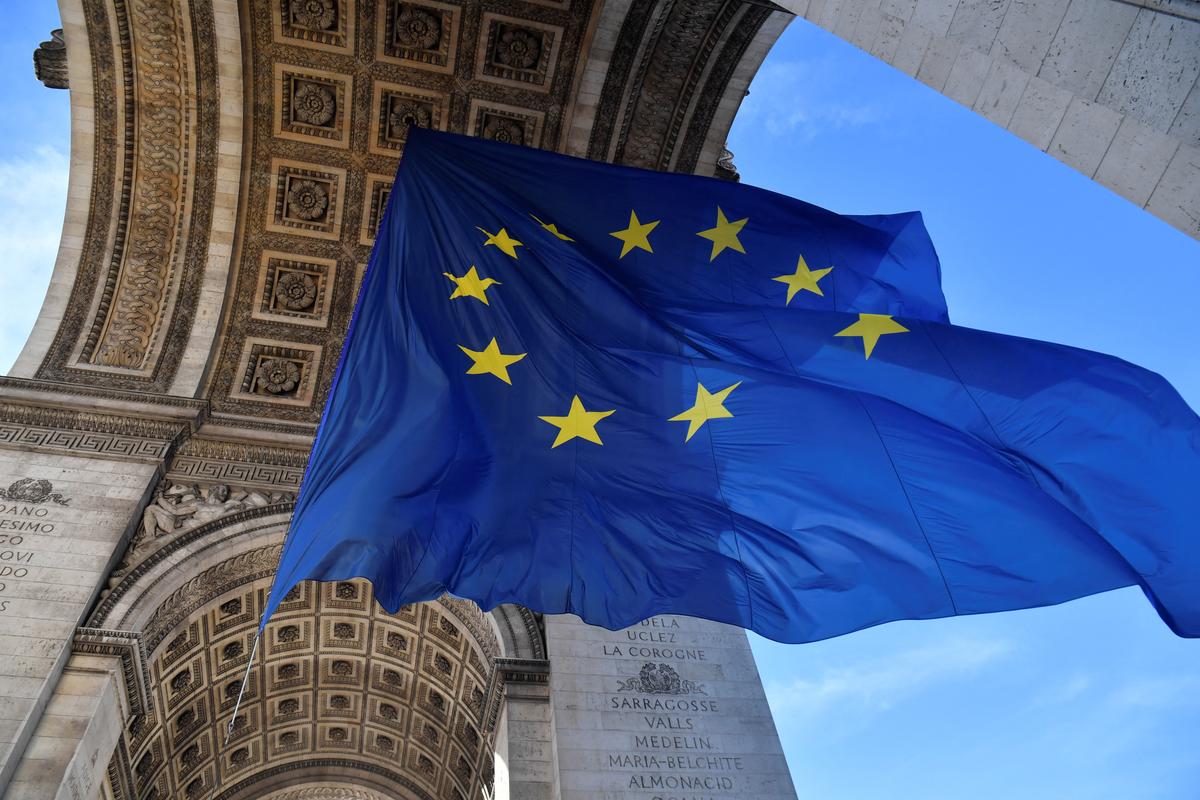
Serious disputes nevertheless arose again in the early 2000s. During the drafting of the proposed European Constitution, France defended an extremely secular orientation. This was pushed by a joint effort from President Jacques Chirac and Prime Minister Lionel Jospin. Against the advice of some of their counterparts, they rejected the mention of the “Christian roots of Europe” in the draft European Constitutional Treaty. The treaty was ultimately rejected by referendum in the spring of 2005.
Tensions between France and the papacy then rose sharply. These manifested particularly in heated exchanges between Dominique de Villepin, the French minister of foreign affairs at the time, and his Vatican counterpart, Archbishop Jean-Louis Tauran, who was also French. “France let the Holy See down,” our Vatican source says, noting that this issue is still an open wound.
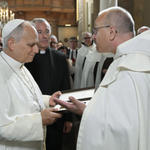
Then-Prime Minister Jean-Pierre Raffarin represented France during the 2003 beatification Mass of Mother Teresa. Pope John Paul II directly reprimanded him during their handshake at the end of the celebration. Although exhausted, the Polish Pope straightened up and told him in French, “Do not forget the Christian roots.” John Paul II had made advocacy for this recognition his final battle.
John Paul's position was often criticized. However, rather than merely defending a Christian heritage, he was concerned about promoting values the Holy See considered as stemming from Christian culture and benefitting the entire population. These included respect for individual freedoms, the dignity of every person (even the guilty in criminal proceedings), and opposition to war and the defense of human life. “Human rights, fundamentally, have Christian roots”: this conviction largely structured John Paul II’s magisterium.
The Church's evolving position
John Paul II suffered when he saw his convictions misunderstood by French leaders. However, the final years of his pontificate also allowed him to give useful guidelines for his successors regarding the understanding of secularism.
Less than two months before he died, John Paul II wrote a February 11, 2005, letter to the bishops of France for the centenary of the country’s law of separation between Church and State. In it, he called the law a “painful and traumatizing event for the Church in France.” He reproached it particularly for having “relegated the religious factor to the private sphere” and for having “failed to acknowledge the place of religious life and the Church institution in society.” The Church's social doctrine shows the problems with creating such a false division.
But this historical condemnation no longer meant a refusal of the contemporary institutional framework. John Paul II noted, on the contrary, that “negotiation and cooperation” had begun in 1921. This eventually led to efforts “involving all the forces of the Country for the common good, each in its own province.” Mutual understanding and peace were “acquired little by little” and had “already become a reality to which the French are deeply attached.” The bishops themselves had come to appreciate this form of secularism.
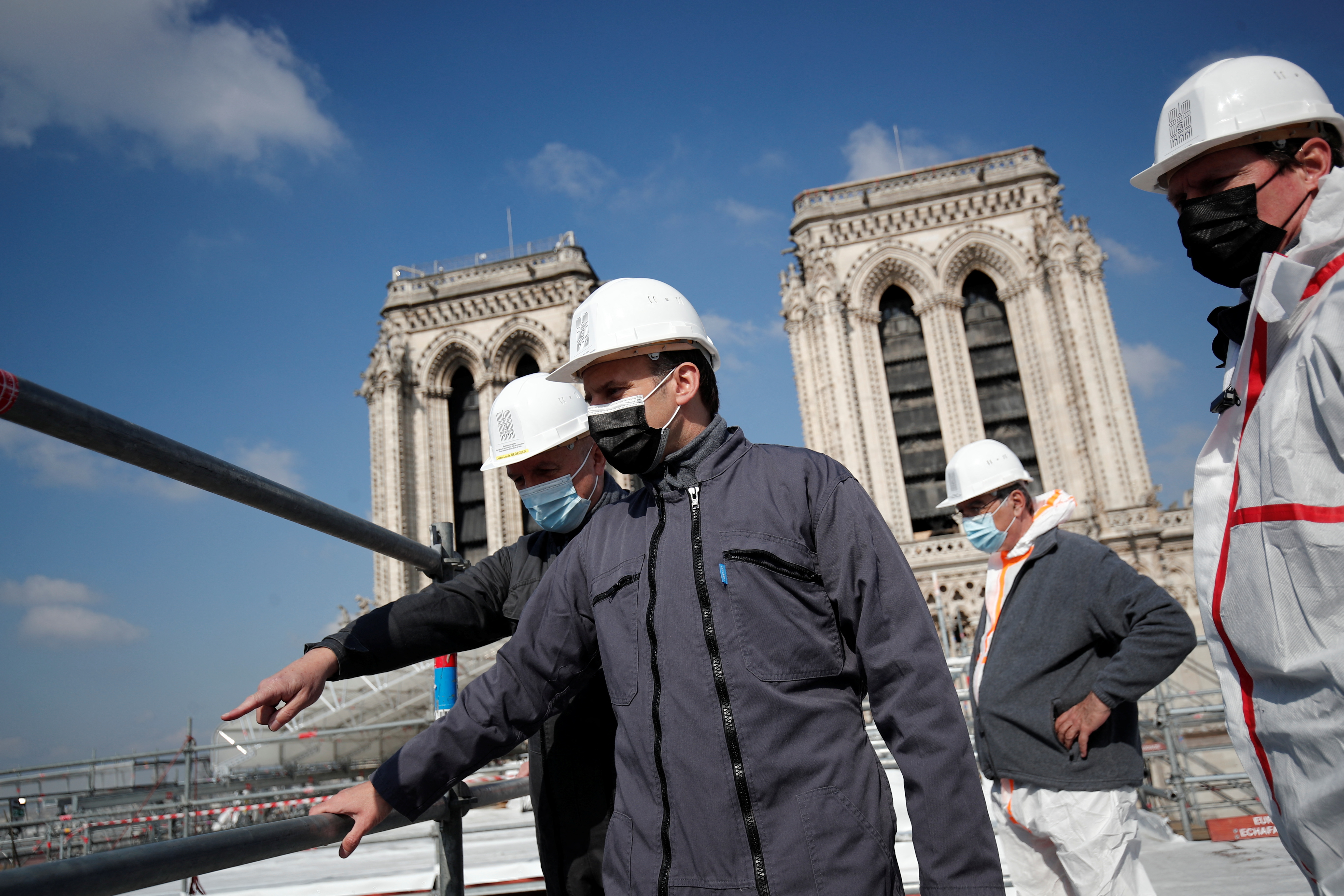
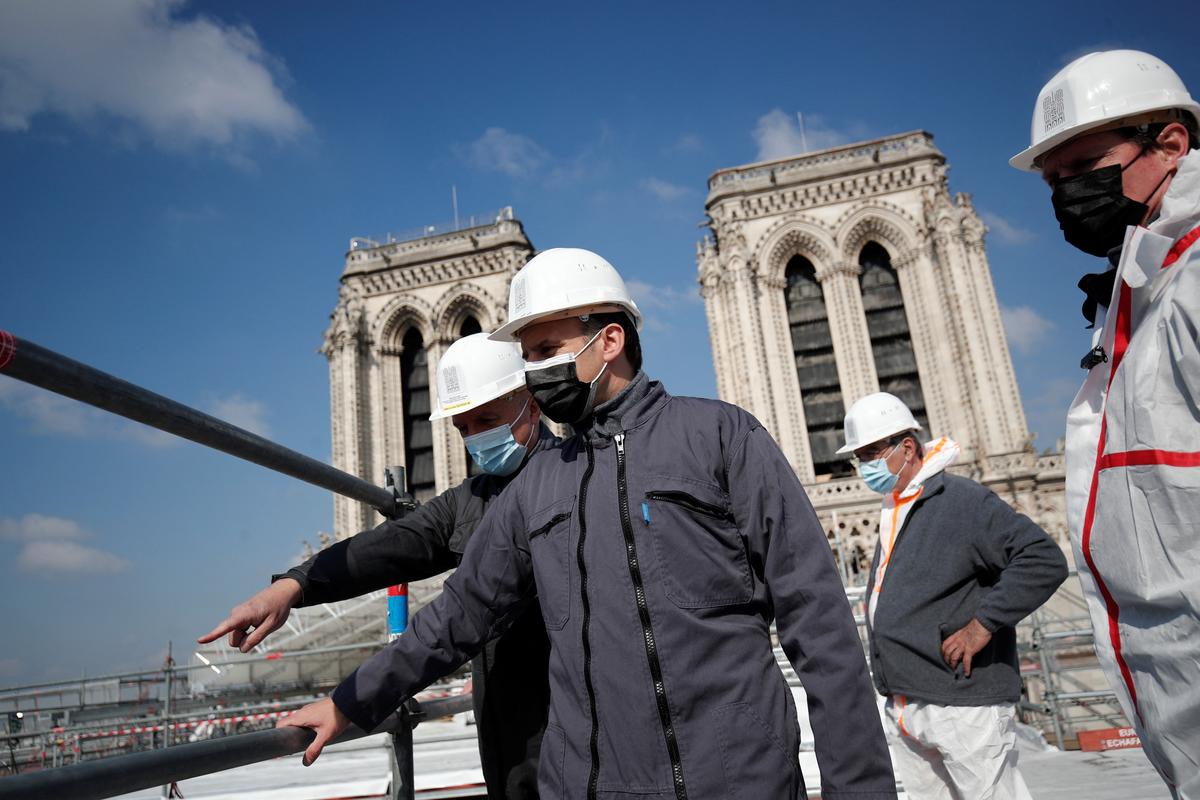
The 1905 law also left many Catholic churches built before that date in public ownership. This met with great resistance at the time but is now largely accepted. Public authorities are responsible for maintaining these buildings. Notre-Dame Cathedral, for example, belongs to the French state, which oversaw its restoration after the devastating fire of 2019.
“In reality, we were saved by this system, because otherwise, we’d have to assume the financial burden of all our churches built before 1905, and that wouldn't be tenable,” notes one French bishop with pragmatism. During their visits to Rome over the decades, the bishops of France were thus able to explain the advantages of this system to their interlocutors at the Curia.
A fruit of the faith
“Correctly understood, the principle of laïcité (secularity), to which your Country is deeply attached, is also part of the social teaching of the Church,” John Paul II wrote. He linked this arrangement to the “need for a clear division of powers” and to the evangelical distinction between what belongs to Caesar and what belongs to God.
During his trip to France in September 2008, Pope Benedict XVI clarified this thought even further. “It seems to me obvious today that secularism in itself is not in opposition to the faith,” the German pontiff said on the plane taking him to Paris. He even went so far as to say that it can be “a fruit of the faith,” since Christianity has distinguished religion and politics from its origins - think of Jesus' famous line, Give to God what is God's and to Caesar what is Caesar's.
In his speech at the Élysée Palace, Benedict XVI built upon President Nicolas Sarkozy’s call for a “positive secularism.” He recognized that France now benefits from a “regime of freedom” and that historical mistrust has transformed into a “serene and positive dialogue.”
Pope Francis, during his December 15, 2024, trip to Corsica, invited people to develop “a concept of secularity (laïcité) that is not static and fixed, but evolving and dynamic.” This secularism must be “capable of adapting to different and unforeseen situations,” he explained. It should promote “constant cooperation between civil and ecclesial authorities,” with each remaining “within the limits of its own competences and areas of activity.”
A secularism sometimes misunderstood
The first speeches of Leo XIV to French groups already show that he feels free to critique the difficulties of secularism. On August 28, 2025, he received a delegation of political representatives from Val-de-Marne. He explicitly recognized the difficulty of living the faith publicly within the French framework. “It is not easy in France, for an elected official, due to a sometimes-misunderstood laicité, to act and decide in accordance with one's faith in the exercise of public responsibility,” he said.
Excesses in the application of secularism clearly continue to concern the Vatican. The recent debates regarding certain stages of the Pope’s trip to France, particularly in Paris and Metz, continue to inspire spirited debate. Similarly, the 2021 law on the control of religions in the public space worried not only Muslims, who were the primary targets, but also Christians. They understood that it could “harm all religions” and affect “all freedoms,” Vatican observers note.
The debate, therefore, is not closed. Pope Leo XIV’s speech at the Élysée Palace this Friday morning will be closely scrutinized to see how the pontiff approaches this complex theme.