The Vatican's first journey toward an Oscar begins with an unlikely young star, a mountain village, and a rather wonderful way of looking at life.
The road to the Oscars has begun in some unusual places over the years, but a small village in the Italian Dolomites, with a 22-year-old catechist who sells eggs on the side, must surely be up there. Yet this is where the Vatican's first journey towards an Academy Award begins.
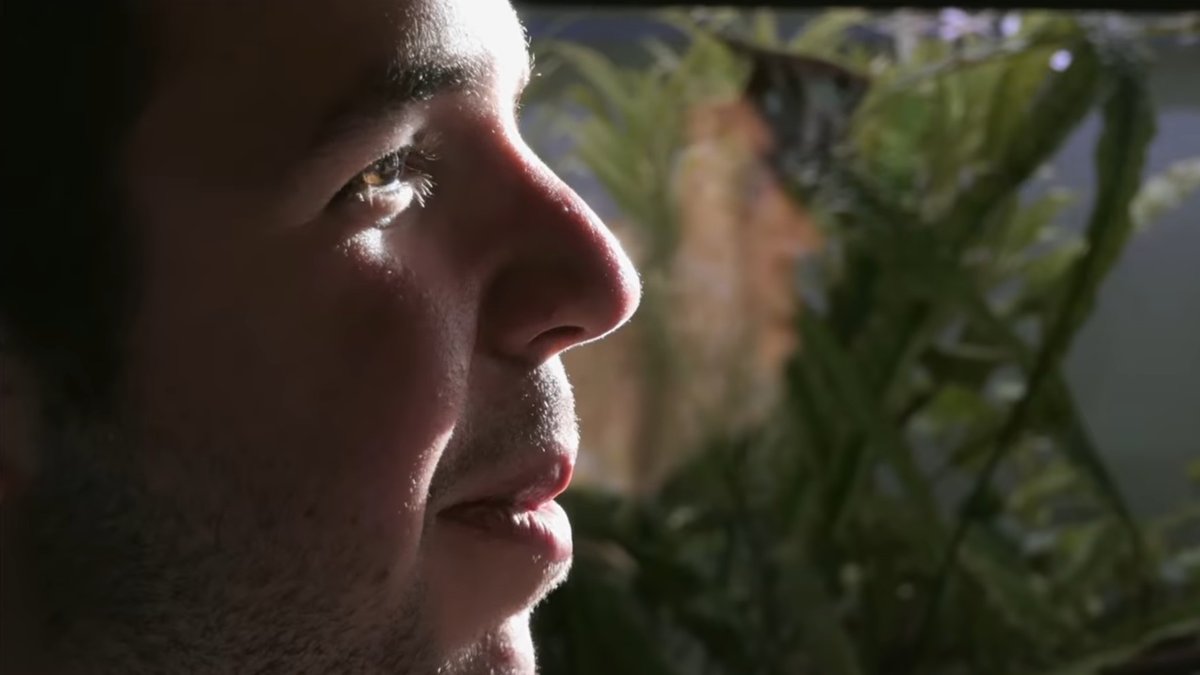
The film is Green Lava, and at its center is Giacomo Mattivi, who seems to have packed an impressive amount into his 22 years. He studies sociology, writes poetry, loves cinema, music, nature and soccer, teaches catechism, and runs a small egg-selling business, as shared by Vatican News.
It sounds, in many ways, like being 22: friends, football, studying, faith, trying to earn a little money and having no shortage of things to be interested in. Except Giacomo's experience of being 22 is far from ordinary.
He has Duchenne muscular dystrophy, a progressive condition that means he uses a wheelchair and needs assistance to breathe. And he knows the cruelty of the disease in a way no medical explanation could ever teach him. His older brother Mattia had Duchenne too. Giacomo watched the disease progress in someone who was just a few years ahead of him in life, and in January 2022, he had to say good-bye.
That shared diagnosis must have made the usual relationship between younger and older brother unusually complicated. As is often the case, older siblings often provide a preview of what lies ahead: the next school, leaving home, first jobs, relationships and all those mysterious stages of adulthood that seem slightly less mysterious once somebody in the family has reached them first.
Giacomo had an older brother a few steps ahead of him, too. But when the brothers also shared a progressive illness, looking ahead could hardly have been quite so simple.
Remaining “live lava”
No one looking in from the outside can know how Giacomo thinks about his own future, and it would be unfair to imagine it for him. What we can see is how enthusiastically he seems to inhabit the life he has now.
Because this is the young man who came up with the image that gives the film its unusual title:
“Humans must be live lava so as not to petrify.”
Even without knowing Giacomo's story, it's a memorable idea. Once you do, those words carry considerably more weight.
Here is a young man living with a disease that progressively restricts his body, who has already experienced the profound grief it can bring to a family, talking about the importance of remaining alive and moving within. And the rest of Giacomo's world certainly doesn't sound petrified.
His interests spill cheerfully in every direction: sociology and poetry, catechism and cinema, soccer and nature, time with his friends and, wonderfully, those eggs.
Those apparently incidental details matter because illness has an unfortunate habit of barging to the front of a person's story. Mention that somebody has a serious disease and everything else about them can suddenly become supporting information, as though the diagnosis is inevitably the most interesting thing they have to offer. Giacomo doesn't fit very comfortably into that arrangement.
He is also surrounded by a family and community that have helped make such a full life possible. Co-director Lia Beltrami lives in the same village as the Mattivis and has spoken warmly about the mountain community that naturally gathered around Giacomo and, before him, Mattia.
Beltrami describes the brothers and the people around them as an example of “authenticity and solidarity, of the Gospel lived.” And Mattia is included in that description too. He isn't reduced to the brother who died before Giacomo's story began; he belongs to the family and community at the heart of it. The same people celebrating Giacomo's appetite for life today also loved and accompanied his brother. Mattia remains part of the story, just as he remains part of the family.
An unexpected ticket to Hollywood
And now this small mountain community has acquired an unlikely destination: Hollywood.
Directed by Beltrami and Turkish filmmaker Ali Aksu, Green Lava was produced by Emotions to Generate Change in collaboration with Vatican News, Vatican Radio, and Vatican Media. Its qualifying theatrical run at the Lumiere Music Hall in Beverly Hills has put the documentary short into contention for the 99th Academy Awards.
It marks a first for the Vatican, but the story chosen for that first is arguably more interesting than the milestone itself. There is no pope at the center of the film, no tour through the artistic treasures of Rome, and no great figure from Church history. Instead, Hollywood is being introduced to a young man from the mountains who studies, prays, writes poetry, watches soccer with his friends and happens to know far more about life's fragility than most 22-year-olds ever should.
Even Giacomo's reaction to the possibility of Oscar recognition tells us a little more about him. Rather than dwelling on what Hollywood might mean for him personally, he has spoken about what a larger audience might mean for the film, hoping that “the message reaches as many people as possible.”
Paolo Ruffini, prefect of the Vatican's Dicastery for Communication, has called Green Lava an “antidote to our clouded eyes,” and imagined it arriving in Hollywood like an “irreverent young man” knocking at the Oscars' door. It's a lovely image, although Hollywood might want to pay attention if it lets him in!
Giacomo doesn't arrive asking to be pitied, and his story doesn't pretend that a positive attitude can tidy away the realities of Duchenne muscular dystrophy. His wheelchair is real. His dependence on a ventilator is real. The empty place left by Mattia is real, too. But so are the poems, the friends, the faith, the soccer matches, the studies, and the trays of eggs.
A life bigger than its limits
The Oscars are, by their very nature, a celebration of the exceptional. The award-ceremony dresses are exceptional, the budgets can be exceptional, the careers being honored are exceptional and, for one night at least, everything is designed to look a little larger than life.
Giacomo's story comes from somewhere else entirely. Much of what fills his days is small and familiar: family, friendship, work, faith, the place where he grew up and the pleasure of being interested in the world around him.
None of that makes the harder parts disappear. Knowing about Mattia also makes Giacomo's insistence on remaining “live lava” impossible to dismiss as a cheerful slogan. He has seen at close quarters what Duchenne can take. He has grieved a brother who shared a diagnosis that remains part of his own daily life. And still, his chosen image is lava: alive, moving, and refusing to petrify.
Perhaps that's what this little film from the Dolomites will ultimately carry with it, however far its Oscar journey goes. Not the idea that physical limitations can be overcome by sheer determination, or that suffering becomes beautiful if somebody faces it cheerfully, but the reminder that a life can contain difficulty without being defined entirely by it.
Whether Green Lava eventually makes it all the way to an Oscar nomination remains to be seen. For now, Giacomo's story has traveled from his mountain village to Beverly Hills, introducing audiences to a young man who could easily be described by everything his body cannot do.
Spend a little time with him, though, and there is an awful lot else to talk about. Including, of course, the eggs.