From an army of French saints to an extraordinary silence, the Stade de France offered a night few of those present are likely to forget.
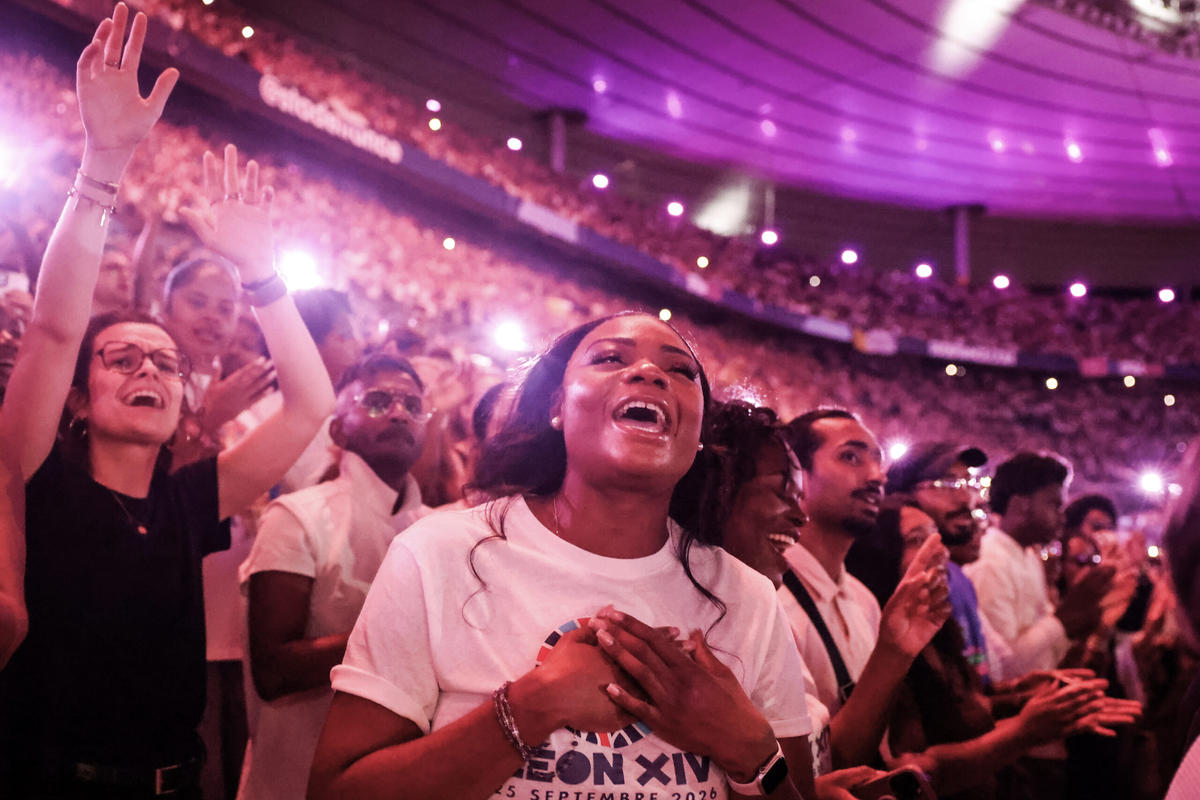
The Stade de France knows how to make a noise. It has heard the roar of World Cup crowds, hosted rugby finals and welcomed some of the biggest names in music, so 80,000 people singing at the tops of their voices on Friday night was hardly unfamiliar territory.
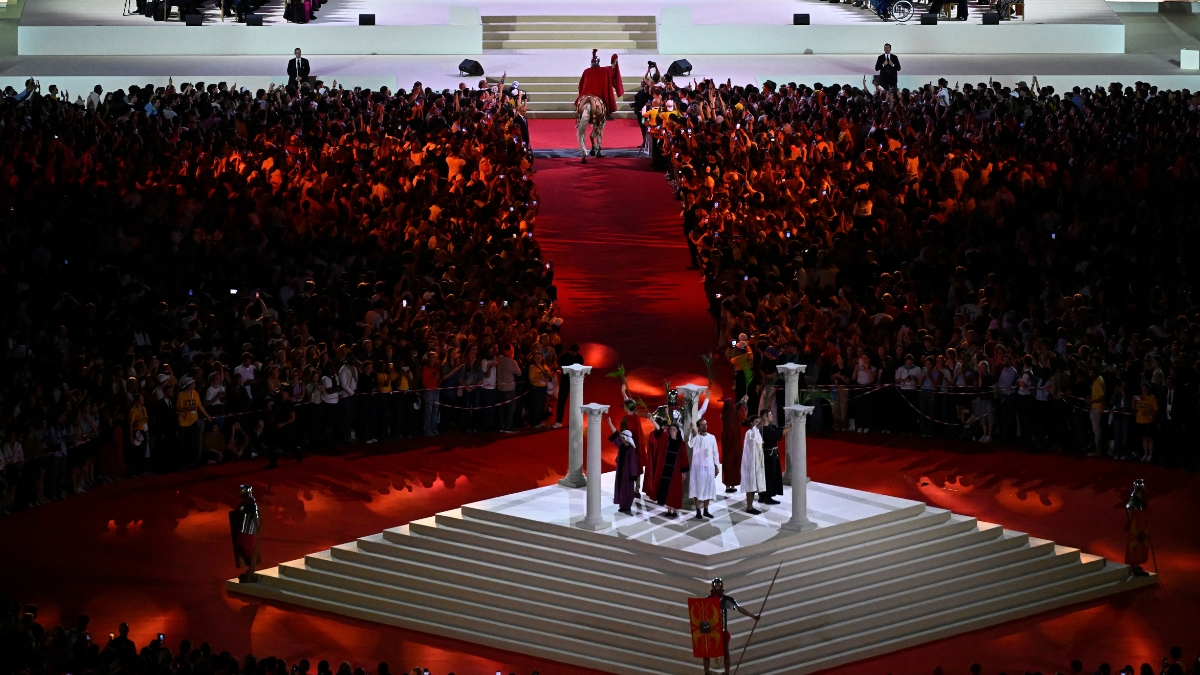
However, the sight of horses galloping across the pitch while St. Joan of Arc made an appearance was probably a first, as, presumably, was the arrival of dozens of relics, more than 150 banners and enough French saints to make several centuries of Church history feel suddenly very crowded indeed.
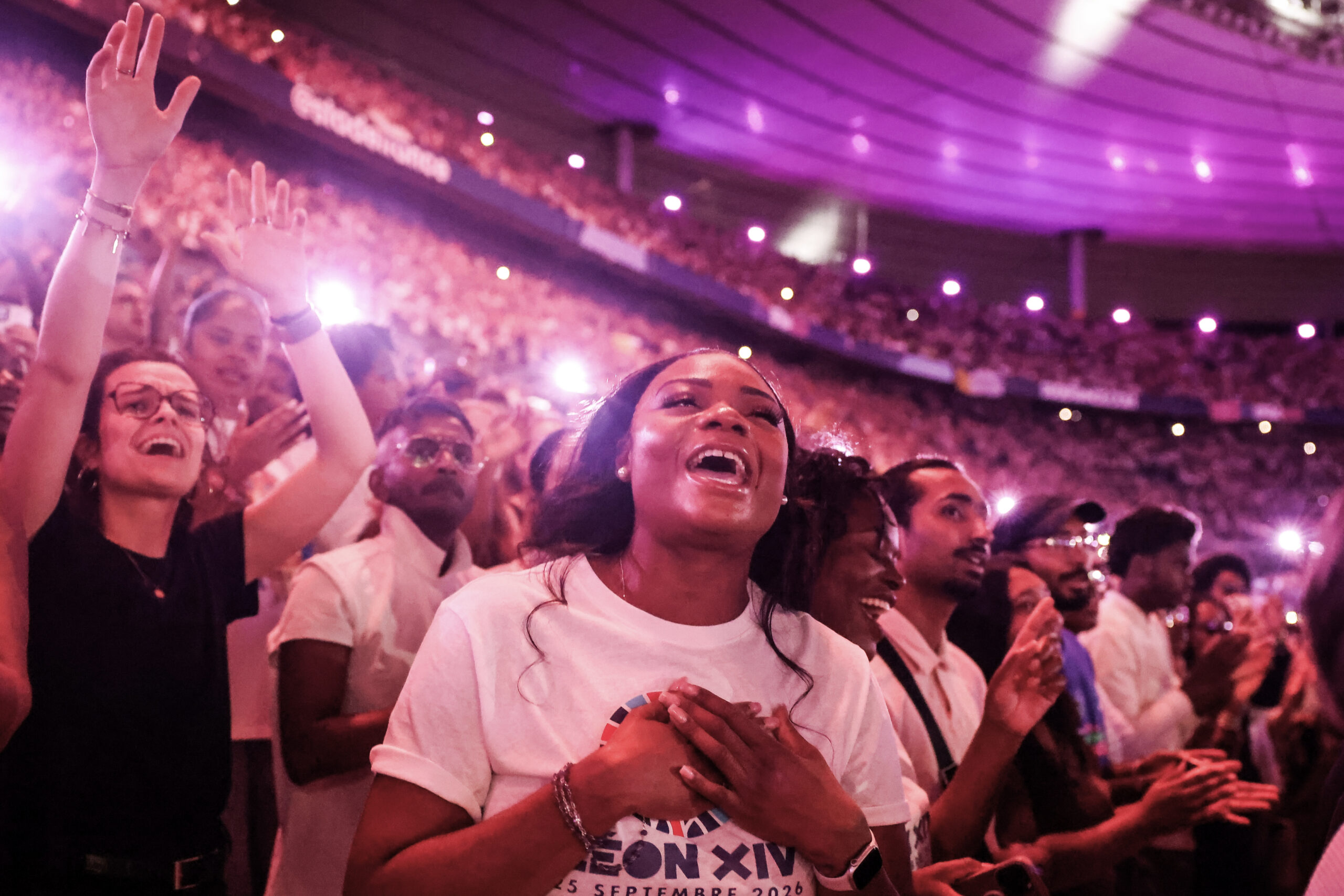
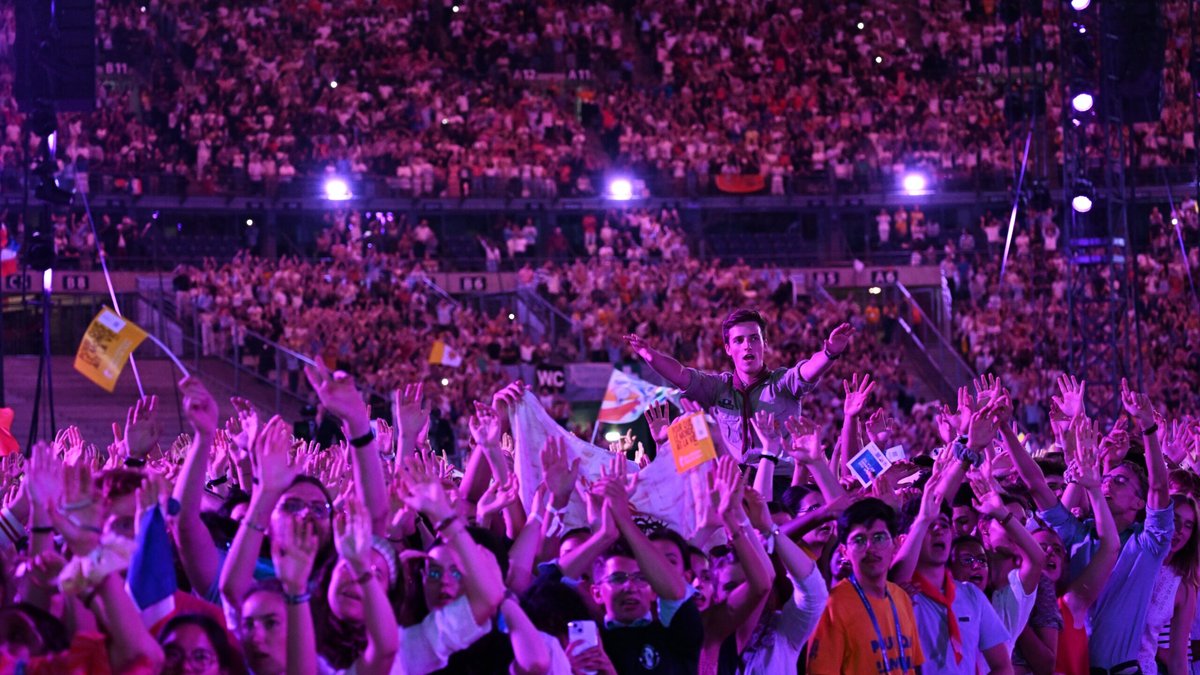
Pope Leo XIV's vigil with young people on September 25 was never going to be a quiet affair. Thousands had traveled from dioceses across France, and by the time they began pouring into Saint-Denis, many were already singing, waving flags and finding friends among the crowds. Inside the stadium, every new group seemed to bring another banner with them, until the familiar blue stands began to look considerably less familiar.
The music started around 6:30 p.m., with Natasha St-Pier, Grégory Turpin, Les Frangines, Anisha Jo, Monroe, Les Guetteurs, Tagra and Peuple Louange among those taking part. Pop gave way to rap, rap to praise, and the young people in the stands needed very little encouragement to dance along.
For Alice, Mathilde and Kiara, three friends who had traveled from Rennes, the scale of it came as a surprise. They had expected a wonderful evening, but not quite the sheer joy and energy they found when they arrived, as they shared with Aleteia France. Amid all that noise, however, came the first indication of how quickly this enormous crowd could change mood.
Seventeen-year-old Monroe began Caccini's Ave Maria, accompanied by an extraordinary 2,500 choristers. Thousands of voices that had been cheering and dancing only moments earlier were suddenly singing the same prayer, beginning a pattern that would continue throughout the evening as celebration slipped naturally into prayer and, a little later, straight back again.
And then they saw Leo
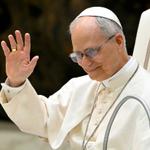
As 9 p.m. approached, the anticipation had become almost physical. Every flicker of activity near the entrance drew attention until, finally, the person everybody had spent hours waiting for appeared, and Pope Leo entered the Stade de France to an eruption of sound.
“Leo! Leo! Leo!” rolled around the stands as the crowd rose to greet him. Flags flew, phones appeared everywhere and young people crowded towards the barriers while the popemobile began its circuit of the pitch. After hours of concerts and anticipation, the person who had brought them all there was suddenly only a few meters away.
Bishop Étienne Guillet of Saint-Denis welcomed Leo to the “stadium of all France,” and looking around the stands, it was easy to see what he meant. Students and young professionals sat alongside scouts and manual workers; groups had arrived from cities, villages and rural parishes, carrying the names and colors of dioceses from across the country.
France, however, wasn't represented only by the people in the seats, because it was about to introduce Leo to some of the people who had come before them.
An army of French saints
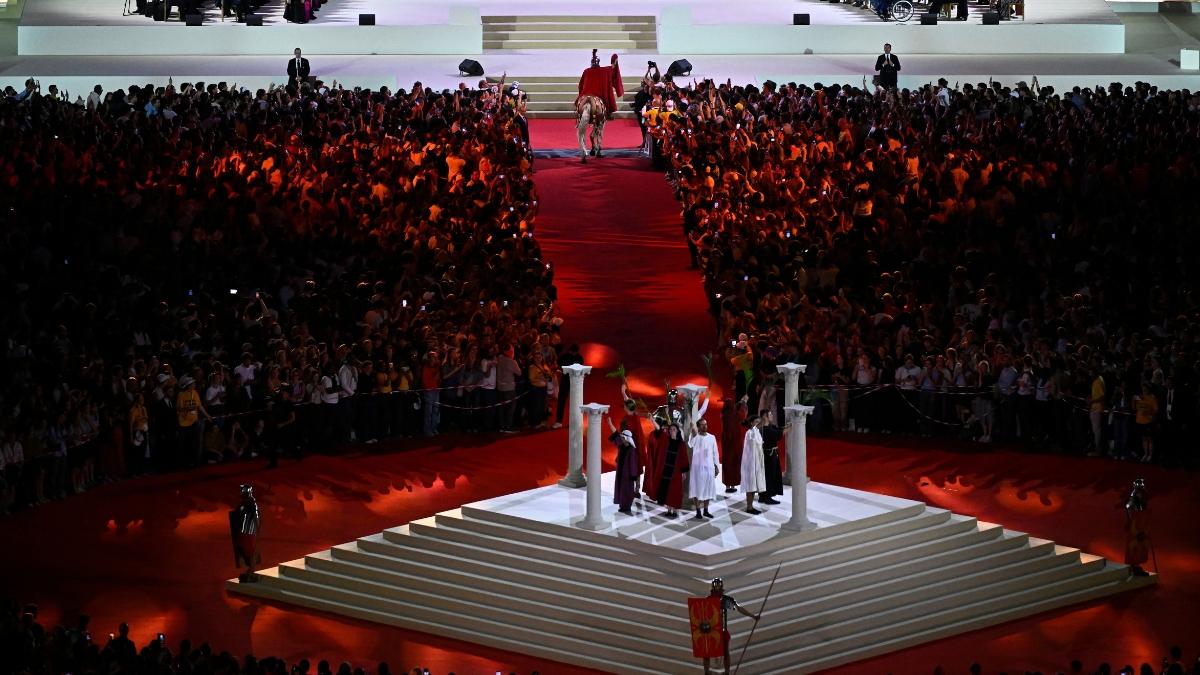
What happened next must rank among the more unusual spectacles ever to have occupied the Stade de France pitch. A boat crossed the arena, horses appeared and Joan of Arc rode into view as, one after another, figures from the history of Christianity in France began to emerge. The stadium that had felt like a concert venue only a short time earlier was suddenly playing host to several centuries of French Catholic history.
Mary Magdalene and Lazarus evoked the earliest Christian traditions of France, while later figures included Martin of Tours, Joan of Arc, Vincent de Paul, Louise de Marillac, Thérèse of Lisieux and Charles de Foucauld. Different centuries and very different ways of living the faith were brought together on the same enormous stage.
An army of French saints is not something you see every day, particularly when several of them appear to have commandeered a national sports stadium, but beneath all the spectacle was a powerful reminder of just how much good has been accumulated across centuries of Catholic life in France. These were mystics and missionaries, priests and religious, people who cared for the poor and sick, taught, evangelized and served the communities around them.
And the people watching were about to be told that this history now belonged to them.
Questions from the stands
Two young people were invited to put their questions directly to Leo. Chloé, a pharmacology student involved in disadvantaged neighborhoods, wanted to know how to share her faith while living alongside people of other religions, while François, an agronomy student from a rural background and a scout leader, asked how young people could discern where God was calling them and find the courage to commit themselves.
They were questions firmly rooted in the lives of the people sitting in front of Leo, and his answers remained there, too. He spoke about listening, fraternity and respecting those who believe differently, as well as technological change, uncertainty and the difficulty of discerning a vocation amid all the noise competing for young people's attention.
When Leo turned to those considering priesthood and consecrated life, his language became wonderfully direct: “The Church in France needs you!”
After watching generations of French Christians brought to life on the pitch, the challenge was difficult to miss. The young people had just been reminded of men and women who had found very different ways to give their lives to God and to others; now the Pope was asking whether some of the people sitting in those stands might be prepared to do the same.
When 80,000 people went quiet
If the volume of the welcome for Leo was impressive, what happened later may have been even more so. The Holy Tunic of Argenteuil, traditionally believed to be the seamless garment worn by Christ during his Passion, was brought into the stadium alongside the Cross.
The crowd that had spent hours singing, dancing, chanting the Pope's name and enthusiastically responding to almost every invitation now fell silent before them. For anyone who has ever attempted to persuade even a considerably smaller number of young people to be quiet at the same time, 80,000 of them managing it together was no small achievement, but this was not silence imposed upon them. It was prayer.
Leo invited them to contemplate the Cross, an instrument of death transformed into a sign of hope, and the Tunic associated with Christ's Passion. He spoke about the importance of silence and listening when trying to understand where God might be leading them.
The saints then returned in a different form. More than 150 banners and around 60 relics of French saints and blesseds were carried through the stadium during the Litany of the Saints, turning the history that had earlier been acted out before the crowd into something much more tangible.
Leo appeared visibly moved as the procession approached him, his expression changing as the banners and relics passed. The image itself needed little explanation: reminders of generations of French Catholics were being carried through a stadium filled with 80,000 young ones.
His own words made the connection even clearer. Thanking the young people for their courage, presence and faith, Leo told them: “You are the saints of France!”
The procession was no longer simply a celebration of what the Church in France had been; it had become an invitation to consider what the thousands of young Catholics watching might become.
Leo's final prayer continued that invitation, urging them to turn away from pride, vanity, violence and greed and instead pursue justice, faith, charity, patience and gentleness. The Christian struggle, he reminded them, isn't fought against other people, because “our only weapon is that of self-giving love.” Together, the stadium responded: “Here I am, Lord!”
When the vigil spilled out into Paris
As the evening drew towards its close, the young people joined their voices once more, this time for the Salve Regina, the ancient Marian antiphon traditionally sung at the end of the Church's night prayer. After an evening of pop, rap, praise music, cheers and prayer, it was the turn of Latin to fill the Stade de France before one final burst of fireworks.
After everything they had seen and heard, however, the evening was not going to finish neatly at the stadium doors. As the crowds poured out into Saint-Denis and onto the Métro and RER, the music came with them, with groups of young Catholics singing together in the carriages and finding harmonies as ordinary late-night passengers suddenly discovered that their journey across Paris came with an unexpected choir.
After the extraordinary scale of the Stade de France, perhaps that was the loveliest aftermath of all: no stage, no lights and no Pope in sight, just young people who weren't quite ready for the evening to end.
For a few hours, the Stade de France had offered an extraordinary picture of the Church in France, bringing together the saints who had shaped it, the relics and traditions it had inherited, a Pope visibly touched by the sight of that history coming towards him, and thousands of young Catholics wondering what part they might play in what comes next.
Eventually the screens went dark, the relics stayed behind and the Pope left the stadium, but all those young people still had to make their way home across Paris -- taking the songs with them, along with the joy, energy and renewed faith of an extraordinary evening.