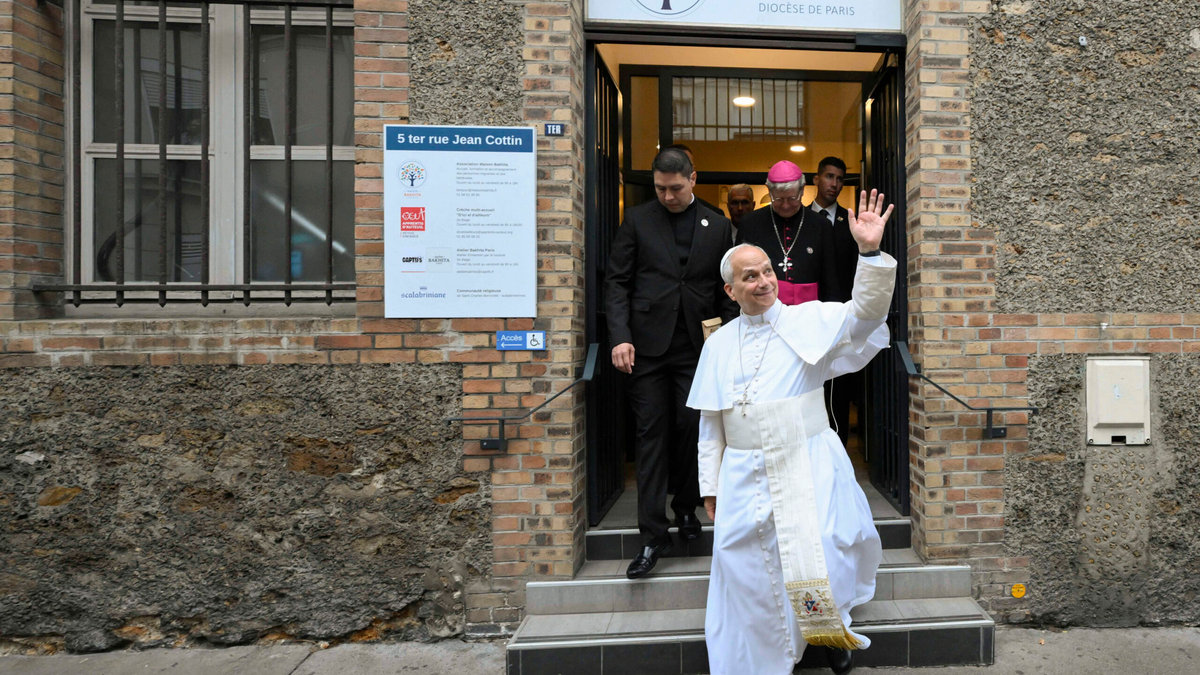
On the second day of his France visit, the Pope listened to migrants at the Paris integration center and called it a witness to the whole city.
Pope Leo XIV began his second day in Paris on Saturday morning at Maison Bakhita — the center for migrants and refugees run by the Archdiocese of Paris in the 18th arrondissement, a few steps from Montmartre. The visit was the first stop on a day that would also include a meeting with catechumens at the Institut Catholique de Paris, an open-air Mass on the Champs-Élysées expected to draw more than half a million people, and a late-afternoon journey to Lourdes.
Who is Saint Josephine Bakhita?
“A house that bears witness”
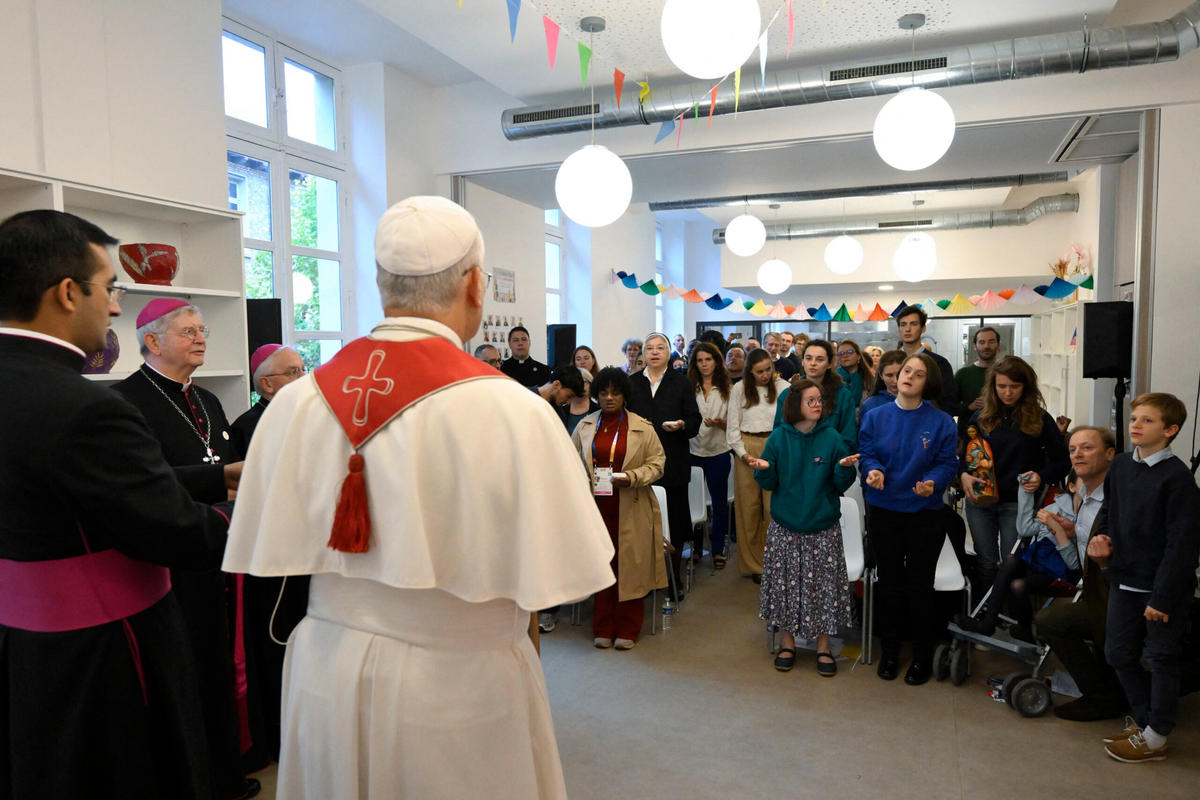
Addressing the staff, volunteers, and migrants gathered at the center, the Pope was direct from the first sentence: “I am pleased to begin this second day in Paris with you, in a house that bears witness to the whole city that it is possible to encounter one another and to live together in dignity and peace.” He thanked the Archdiocese of Paris, the Scalabrinian Sisters, and all the staff members and volunteers “who bring this place to life and serve those who find here a welcome, a listening ear, formation and friendship.”
Maison Bakhita was founded in 2018 by the Diocese of Paris as part of its pastoral response to migration, and inaugurated in September 2021 in the Goutte d’Or neighborhood. It offers language courses, professional training, legal support, and community life — and takes its name from a Sudanese woman who was sold into slavery as a child, freed, baptized in Italy, and eventually canonized. Saint Josephine Bakhita is, in the center’s own words, its model and its program.
Leo made this connection explicit. “The name of your Center for Social Support and Integration, which refers to Saint Bakhita, inspires us to recognize the fundamental role of women in building a civilization of love, which is an alternative to a culture that tears communities apart and leaves cities sick with loneliness.”
“Those who are invisible”
Before speaking himself, the Pope listened. Two people who had passed through the center — one of whom had since become a volunteer there — testified to what they had found: a language, a skill, a community, a new beginning. Their stories gave concrete weight to what Leo then said:
“Saint Bakhita invites us to see those who are invisible, to free those whom today’s economy and culture enslave, and to honor the immeasurable dignity of every brother and sister, in whom Jesus himself comes knocking at our door.”
The final image echoes Matthew 25 — the same verse written on a wall inside Maison Bakhita: “I was a stranger and you welcomed me.” It also echoes the visit Leo made to Lampedusa in July, where he spent the Fourth of July with migrants on the island that has become the front line of Mediterranean crossings. The language is consistent: the stranger at the door is Christ, and the welcome given or refused is given or refused to him.
“Elevates the spirit”
The Pope asked those present to “continue to bear witness to that care for one another which, through fraternal welcome, programs of formation, and dialogue with the city, elevates the spirit and makes the world more humane.” He extended the same request outward: “I thank all those throughout France who carry out this service in similar institutions” — an acknowledgment that Maison Bakhita is a model, not an exception, and that the Church’s network of welcome extends across the country.
He closed by entrusting the center to the intercession of Bakhita herself, “together with the great witnesses of charity who have shaped the presence of the Church in France, especially during periods of tumultuous change” — a phrase that in the current French moment carries more than historical resonance.