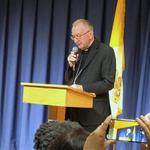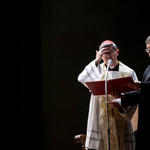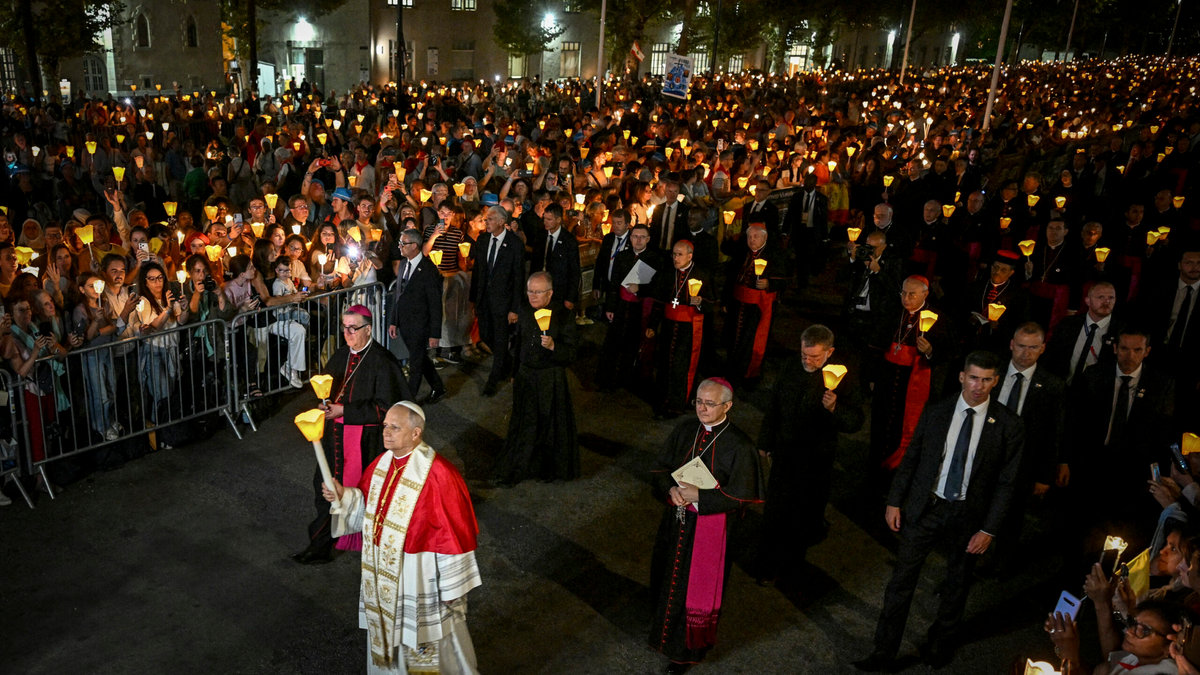
Before the meeting, the Pope stopped to pray at a memorial plaque for victims of clerical abuse.
On the evening of Sunday, September 27, Pope Leo XIV met privately with seven French survivors of clerical sexual abuse at the bishop’s residence in Lourdes — a meeting that had been planned to last an hour and ran to nearly two.
The Vatican confirmed afterward that the Pope had first met each survivor individually, listening to their stories and to their proposals for addressing and preventing abuse, before speaking with the full group for approximately 30 minutes. He “expressed his solidarity with them and, through them, with all those who have suffered and continue to suffer from the wounds of abuse,” the Vatican statement read, adding that Leo “reaffirmed his commitment to ensuring that the evil they had experienced would not be repeated for others” and said he hoped to work with the victims “so that the community of the faithful may increasingly be a place where men and women of every age can find comfort and healing.”
As reported in the article by Salvatore Cernuzio for Vatican News, five of the seven survivors met afterward with a small group of international journalists at a hotel in Lourdes to describe what they had experienced. Their accounts were consistent: the Pope had listened, and had done so with attention they described as genuine.
One of the survivors, Jérôme Guillement, put it simply: “There was something sincere about him. He knows he has to work with us.”
A symbolic setting — and a symbolic gesture
The choice of Lourdes as the meeting place carried its own weight. Before the Pope's visit, the shrine covered its artworks by Father Marko Rupnik — a former Jesuit priest accused of spiritually and sexually abusing more than 20 women, who is currently on trial at the Vatican. Mosaics by Rupnik on the façade of the Basilica of the Rosary will remain hidden indefinitely. Bishop Olivier Bozo, who oversees pastoral coordination for the shrine, explained the decision: “It had come to carry such a symbolic burden for victims that, even though many of the people who come to Lourdes are not abuse victims, for those who are, something had to be done.”
Earlier in the day, before addressing the French bishops, Leo had stopped in front of a commemorative plaque dedicated to victims of clergy sexual abuse and prayed there briefly — a gesture that preceded both his address to the bishops, in which he called for “the greatest vigilance” in pursuing prevention and accountability, and the private meeting in the evening.
Context and criticism
The meeting came five years after a landmark 2021 French independent report that caused nationwide shock and forced a reckoning within the French Bishops’ Conference. Leo had addressed the crisis directly with the bishops that same morning, praising the steps they had taken while insisting the path must continue.
Not all reactions to the evening’s meeting were positive. Several French survivors’ associations criticized the decision to select seven individuals rather than representatives of established organizations, arguing that institutional engagement — rather than personal encounter — is what the moment requires. The Vatican did not immediately respond to those criticisms.
Fiona Sobocki, a survivor of abuse outside the Church who founded the advocacy initiative LOUDfence, attended the outdoor Mass Leo celebrated at the Prairie of the Shrine earlier in the day. She told OSV News afterward: “I hope this is the catalyst which begins a journey of healing and peace for people injured by abuse. And what we can give back, although so little by comparison to what has been taken, means so much to those who have suffered sexual violence and then the re-abuse of being disbelieved.”
Leo XIV, it should be noted, is not new to this work. As a bishop in Peru, he served as the point person for listening to abuse victims within the Peruvian bishops’ conference — a role that gave him direct, personal experience of the kind of encounter he had in Lourdes on Sunday evening.