At an interreligious meeting during his visit to France, the Holy Father also highlighted the need for dialogue and called religions the “guardians of life.”
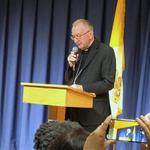
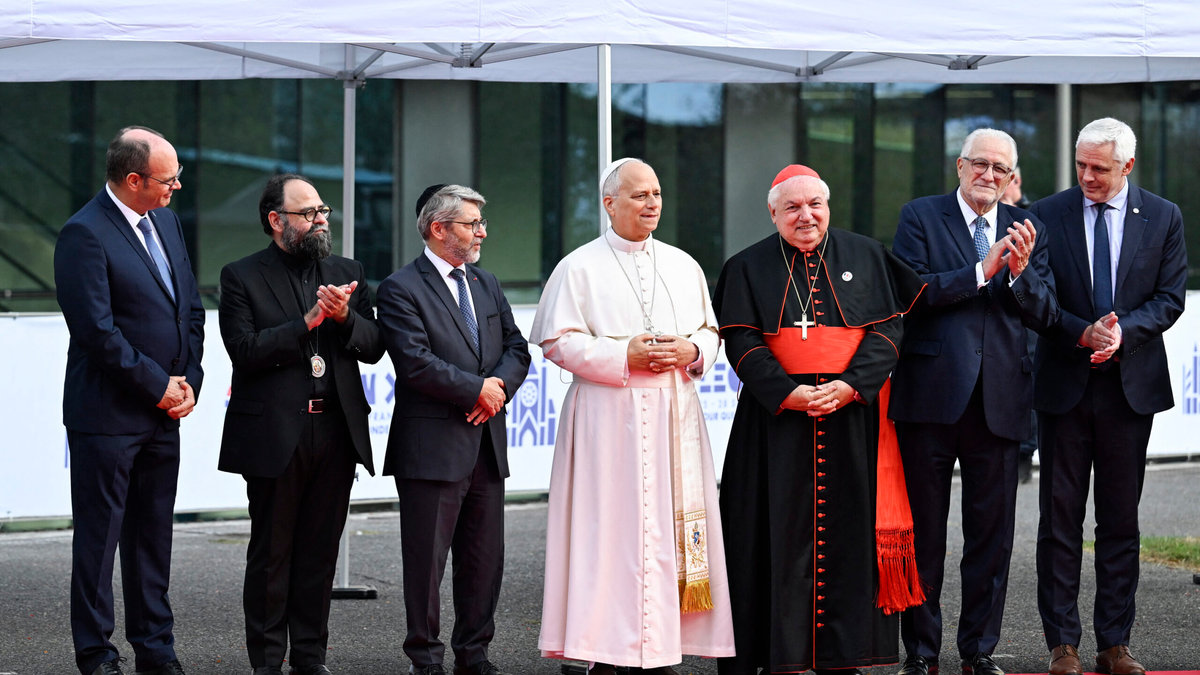
On the last day of his four-day visit to France, Pope Leo XIV held a meeting with representatives of various religions at the Robert Schuman Conference Center in Metz. During his address, he focused on three points: the importance of dialogue, the rejection of violence in the name of God, and the role of religions in protecting, accompanying, and serving life.
Invoking Venerable Robert Schuman, one of the founding fathers of the European Union, he declared that “our shared responsibility as men and women of faith is to bear witness that, beyond all borders, it is always possible to meet one another, forge friendships, and seek peace.”
Dialogue is vital
“Dialogue does not diminish our identity,” he said, “but expresses it with simplicity and truth by opening it to the diversity of the other.” Quoting Pope Francis, he said that “the goal of dialogue is to establish friendship, peace and harmony.” He also cited Pope John Paul II, who described dialogue as “an intrinsic requirement of human nature itself.” It is an “art of encounter” and “the very opposite of aggression and violence.”
Violence in God’s name is a profanation
Continuing on the theme of violence, he strongly denounced “violence or oppression” committed “in God’s name.” In fact, he said, “Nothing that disfigures human dignity can claim to be inspired by God.” On the contrary: invoking God’s name to justify violence or oppression, he said, “is to profane that name.’”
Consequently, he explained, “Religious discourse must constantly call for the disarmament of hearts and words.”
Religions are guardians of life
Religions should not only denounce violence, but also promote “peace and fraternity,” and “protect, accompany and serve life.” This is where the “fruitfulness of religious traditions is seen.” Indeed, what makes a civilization great is “the way it cares for, protects and upholds the human person,” not its “material achievements.” Religions, he added, are “guardians of life” which “affirm its sacred value.”
“To serve life means to surround it with care, presence, and tenderness,” he said, “especially in times of trial, right to the very end.” This was a pointed statement in the context of France’s recently enacted law on “aid in dying,” which permits both assisted suicide and euthanasia under specified conditions. The day before, in Lourdes, he had said that “we must reject the temptation to cause death under the guise of false compassion.”
In conclusion, the Holy Father returned specifically to the topic of interreligious dialogue, which received particular emphasis in the Catholic Church in the light of Nostra Aetate, one of the declarations of Vatican II. In the spirit of this document, Leo XIV cited his own encyclical Magnifica Humanitas to emphasize that “the Church regards all who sincerely seek ‘truth, goodness and beauty’ as companions on the journey.”