Following first euthanasia of a minor between 1 and 12 in the Netherlands, medical ethics expert Cardinal Wim Eijk challenged the practice.
Just as more places around the world are legalizing “medical aid in dying” — both euthanasia and assisted suicide — a Dutch cardinal spoke out against a recent “assisted dying” case that took the life of a nearly two-year-old child.
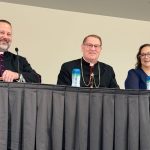
Cardinal Wim Eijk, chair of the Dutch bishops’ conference, told Crux Now in an interview that mercy is misunderstood and misused in Western cultures. Cardinal Eijk, who was a physician before he entered religious life and wrote his medical doctoral thesis on Dutch euthanasia practices and ethics, challenged the idea that ending a child’s life can be an act of mercy. He said:
The word “merciful” is often used nowadays to justify ethically questionable actions. However, is it merciful to violate the fundamental dignity of the human person by ending their life?
What is truly merciful is providing adequate care, in this case in the form of palliative care. If standard forms of palliative care prove insufficient to reduce suffering to a tolerable level, palliative sedation may offer a solution.
You can read the full interview at Crux Now.
In 2024, the Netherlands introduced a regulation to permit euthanasia of minors under age 12, and a young child died in this way at the end of 2025. While it was the first euthanasia of a minor between ages 1 and 12 in the Netherlands, previously two children died in this way in Belgium.
According to the report, the child was born prematurely at 26 weeks and suffered brain damage which resulted in cerebral palsy and visual impairment. The child also suffered epileptic seizures, had trouble clearing mucus, and struggled with sleep problems.
While the parents and primary doctor decided to end the child’s life, some consulting physicians disagreed with the decision, per the report:
The physician consulted independent physicians from outside his own region (for a second opinion)... Those physicians established that at that time the child was not continuously suffering unbearably… Their conclusion was that there were still reasonable alternatives, such as palliative options and other medications that could possibly result in better control of the epileptic seizures.
Nonetheless, the parents chose euthanasia, and a Dutch review committee concluded that "the physician had acted with due care."
In his recent visit to France, which legalized assisted suicide and euthanasia in July, Pope Leo XIV strongly condemned euthanasia, precisely before an audience including many sick and ill children, saying in a speech at the Lourdes shrine:
We must reject the temptation to cause death under the guise of false compassion. It is impossible to regard causing death as something normal. What is legal is not necessarily moral.