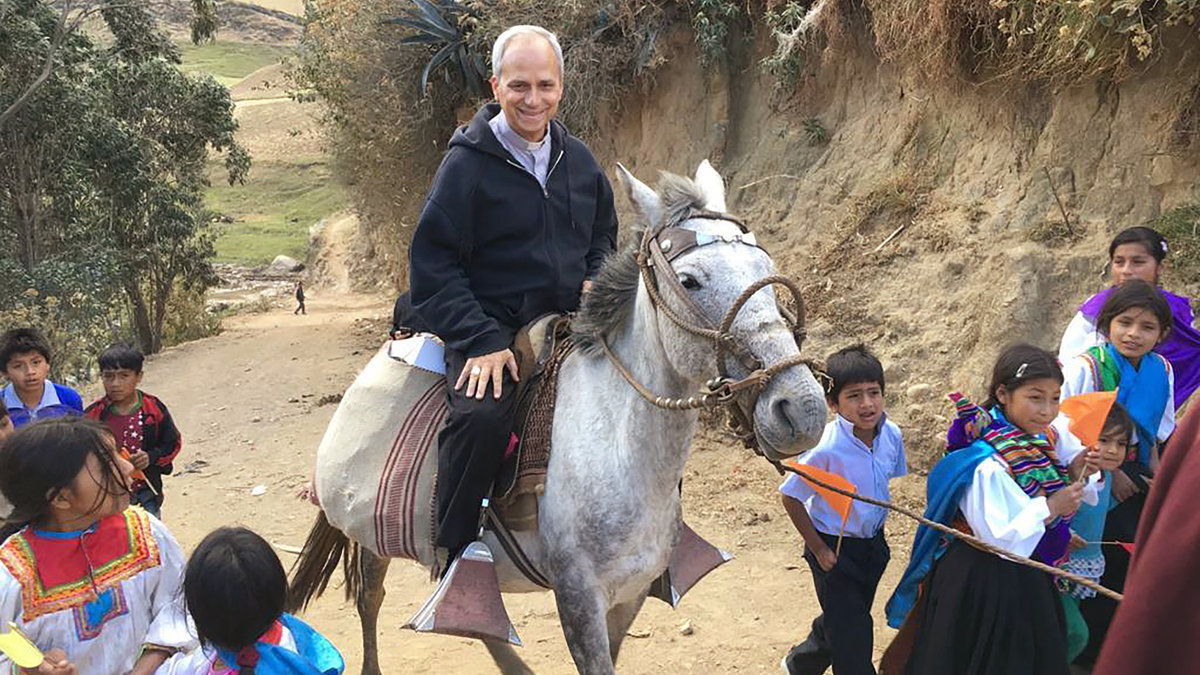
Rumors circulated early on that the Pope with Peruvian nationality speaks this South American language, but he hasn’t spoken it publicly since his election.
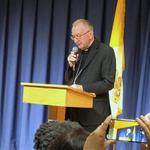
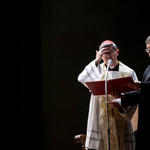
Since his election, Pope Leo XIV has on various occasions shown his linguistic skills in action. From the moment he first appeared on the loggia after his election, he impressed the world with his fluent Italian and Spanish—and of course, his native English was a given. During his recent trip to France, observers noted his fluency in the local language. In the course of ordinary events (for a pope), such as Christmas or Easter greetings “to the city and the world,” he has publicly spoken in Portuguese, German, and Latin as well.
There’s one language he is said to speak that we haven’t seen him use in public as pope: Quechua. It was the lingua franca of the Inca Empire in South America, and about 10 to 13 million people speak some form of it today, more than three million of them in Peru.
More than just rumors
Right from day one of his pontificate, rumors circulated that he had learned this native South American language during his time in Peru. However, it was difficult to confirm, especially in English-language sources. Linguists, amidst speculations as to whether the rumors were true, were quick to point out that Quechua is a language family rather than a single language, so the question would also be which variety of Quechua he might speak—but for simplicity’s sake, we’ll stick with the general term. And since then, it appears that the rumors have essentially been confirmed.
One of the first sources to corroborate the reports was a Spanish-language newspaper, El País. It published an article on May 9, the day after Leo XIV’s election, with comments from people who knew the Pope when he was still Father or Bishop Robert Prevost. In the article, a Spanish Augustinian who carries out his ministry in Peru mentioned that the Pontiff had learned Quechua during his time as a missionary in that country. On that same day, in an interview with CNN, Cardinal Joseph Tobin of Newark also said that the new Pope had learned some Quechua. However, both of these references are rather short on details.
Confirmation from locals
One year after his election, OSV News mentioned in an anniversary article that Father Prevost had enrolled “quietly in a language course” to communicate better with Quechua-speaking communities. They quoted Janina Sesa, who led Caritas in Chiclayo, Peru, where Prevost was the bishop for eight years. “I thought he had signed up just to greet us,” Sesa told OSV. “But no — he was there as a student.”
In case there were any remaining doubts, further evidence also comes from one of his former parishioners, who herself speaks Quechua (as well as Spanish). In a recently released documentary by EWTN on Pope Leo XIV, Liliana Loaya Días recounts her initial amazement upon hearing him say some words in Quechua: “No way, an American speaking Quechua!” she said. When she asked him how he had learned to speak it, he told her he picked it up in places he visited.
Will we get to hear him speak Quechua in public? We can’t rule it out. He will have a perfect opportunity to do so when he visits Peru during his South American trip this coming November. We don’t know how fluent he really is, but we can hope at least to hear a greeting or a prayer in this language spoken by a part of his flock which is surely still close to his heart.