The artistic director behind the French youth vigil with Pope Leo XIV discusses the massive undertaking of transforming a stadium for prayer.
People following Pope Leo's visit to France were delighted, if not surprised, to see Paris maintaining its reputation for visual elegance, even in the midst of massive events. And at the top of the list was the youth vigil, which told the story of French history through its impressive line up of saints.
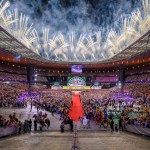
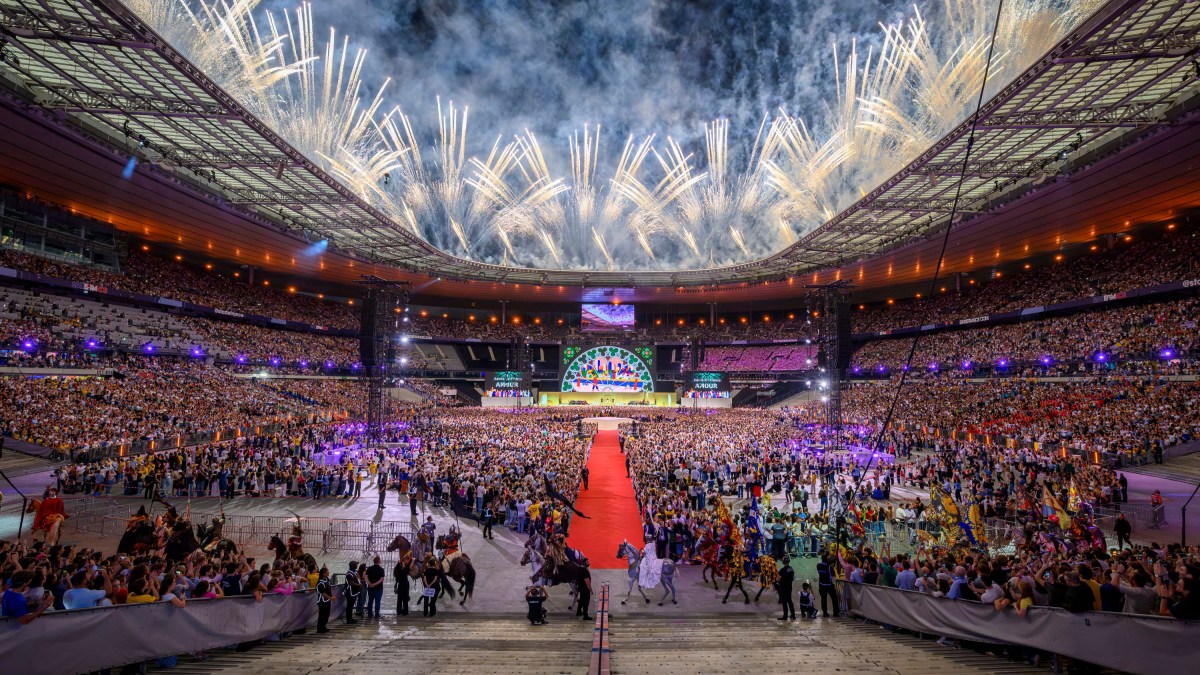
The Stade de France had never looked so much like a cathedral. On September 25, some 80,000 young people gathered there around Pope Leo XIV for a vigil where the impressive staging gave way to prayer. Behind this spectacular transformation was one man: 33-year-old Jean-Baptiste Darantière, who conceived and staged the vigil.
Darantière spoke with Aleteia about the massive event. He explained the choices that guided his staging and recounted the numerous unforeseen events that peppered the preparations and the evening itself. The interview has been edited for length and clarity.
A living stained glass window
Aleteia: You oversaw the artistic direction and staging of the massive vigil at the Stade de France, which gathered 80,000 young people around Pope Leo XIV. When were you approached for this mission, and where did you start your work given the scale and short timeframe?
Jean-Baptiste Darantière: When the Archdiocese of Paris asked me to oversee the artistic direction and staging of the youth vigil at the Stade de France, I began by reflecting on how I could sacralize the space to make it conducive to prayer. Very quickly, an intuition came to me: to make the Stade de France an “open-air cathedral.” The connection to the rose window of Notre Dame de Paris then seemed obvious.
Ten months earlier, I had directed the artistic staging of the Mission Congress at Bercy. It was there that I discovered WePixArena, a technology that uses participants’ mobile phones to create light or display messages. This experience sparked the idea of a living stained glass window. We wanted to arrange the audience on the field like shards of glass, so that each young person became a fragment of color, and together, they composed an artwork. That became the starting point for all my work.
Saints for our times
You chose to dedicate a significant portion of the event to the saints of France and to its Christian heritage. Where did you draw this inspiration, and how did you construct the vigil’s narrative?
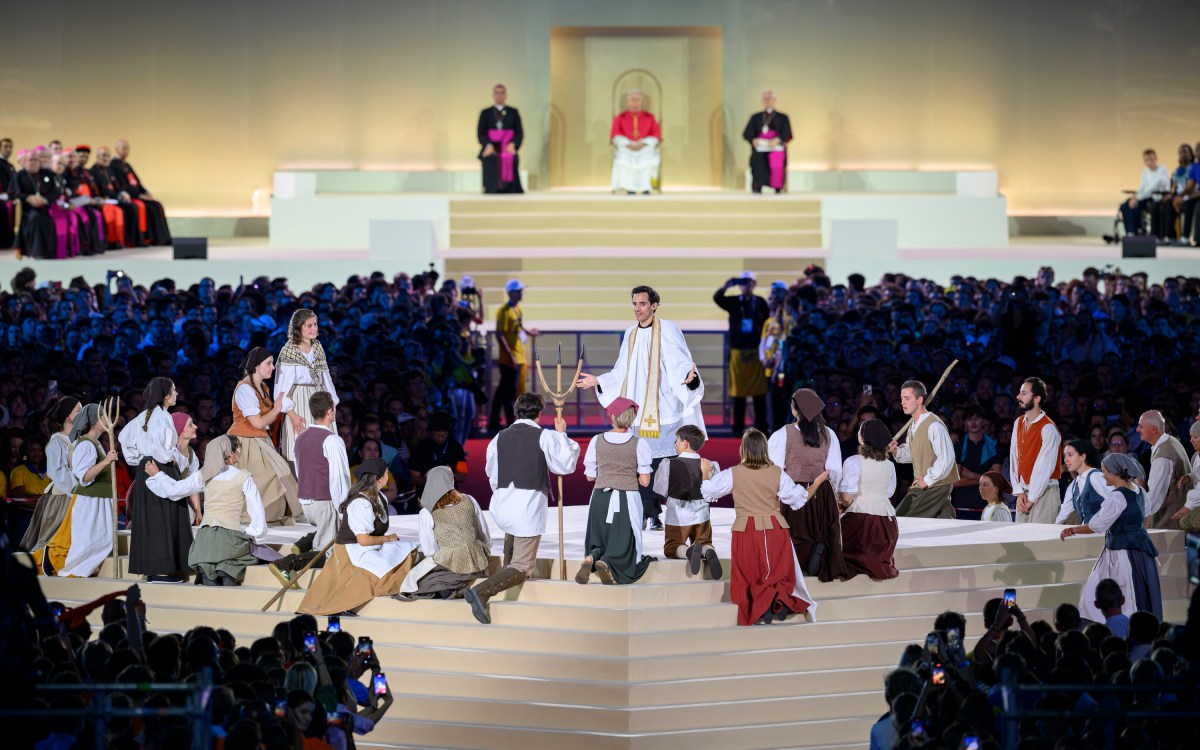
The steering committee wanted to propose something centered on the saints of France. For me, the challenge was to create something that was both impressive and deeply spiritual in a space that, by nature, isn’t spiritual. We were doing this in front of the head of the Catholic Church and 80,000 young people representing the full diversity of the Church. I had to imagine something capable of uniting all these people, even though everyone arrived with their own expectations, convictions, sensitivities, and tastes.
The only figures who seemed truly capable of speaking to everyone and bringing us together were the saints of France, because they are the ones who show us the path. In their own times, they all went through extremely difficult trials, including wars, social upheavals, crises, and persecutions. Those realities still echo what young people experience today, albeit in different forms and within modern contexts.
How did you choose the saints who were going to be highlighted?
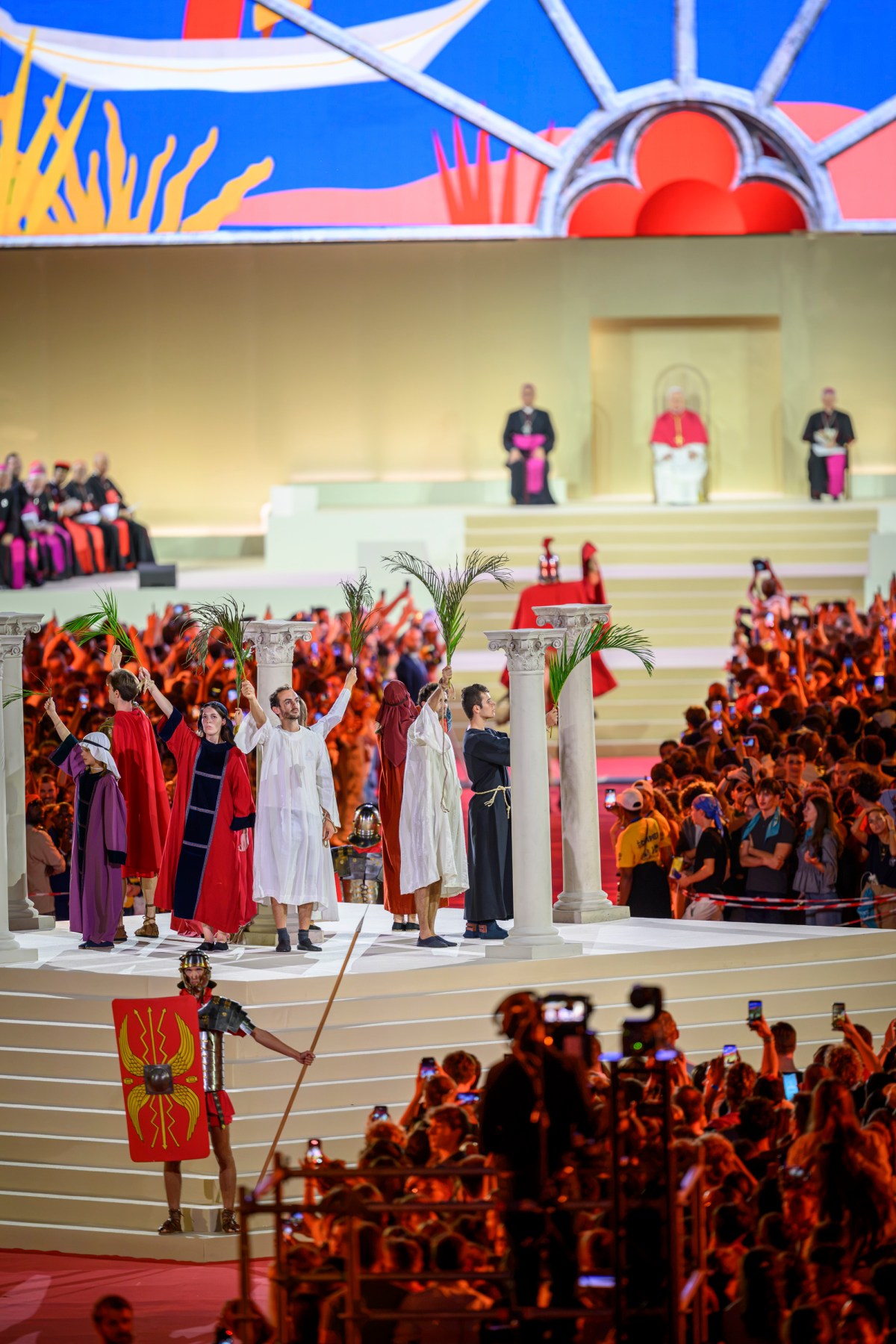
Jean-Baptiste: During our initial discussions, many saints, both well-known and lesser-known, were proposed. I knew it was essential that everyone could feel represented and that no single saint overshadowed another. That’s when the idea of a chronological approach emerged. It allowed us to tell the history of the Church in France through the eyes of those who embodied it: the saints.
Entering into silence
You made the quite spectacular choice to feature the saints themselves through their relics. How did this idea come about? What did their real, physical presence bring to the story you wanted to tell?
Jean-Baptiste: For several reasons, we couldn’t hold Eucharistic adoration. That raised the question of how to create a movement that was spiritual, sacred, and profound enough to lead everyone into prayer with the Pope.
Having Pope Leo XIV pray solely in front of a cross, no matter how beautiful, seemed insufficient. We faced an immense challenge from the very beginning: getting 80,000 young people to enter into a true moment of silence. That’s how the idea emerged of using a relic with enough spiritual and emotional significance to create that atmosphere.
Initially, I thought of the Holy Crown of Thorns, but the Pope had already venerated it during vespers in a televised segment. Very quickly, the Holy Tunic became the obvious choice. When we obtained this incredible relic of Christ, knowing that the Successor of St. Peter was coming to pray before it, I realized we needed to physically gather the procession of saints around the One for whom they gave their lives.
The scene was incredibly powerful spiritually, but for me, it was also extremely spectacular in the story it told. It created a tableau that was spiritual, moving, and striking, and on a personal level, it was a prayer in itself.
Furthermore, it extended the show's common thread focused on the saints. From a spiritual perspective, their presence truly elevated the show and transitioned it into prayer.
A marathon preparation
The 80,000 people at the Stade de France were dazzled by the vigil. But behind the scenes, there were inevitably unforeseen events, moments of doubt, minor setbacks, and wonderful surprises. What stands out to you today when you reflect on everything that happened before and during that evening?
Jean-Baptiste: The first thing that comes to mind is an enormous sense of relief, but also immense gratitude for this show, because its success was far from guaranteed.
In concrete terms, we only had a single day of rehearsal on the previous Saturday, with the 450 people running the show. We also had to fit 450 costumes that same afternoon. It was a true marathon.
It’s also worth noting that all the music was performed live. Today, in television production, that’s practically unheard of. Usually, when music is played live, there’s a backup playback track so that the music can continue if a musician makes a mistake. Here, we had never been able to rehearse with the orchestra and the choir. We couldn't record the music in advance. If the orchestra or choirs had fallen slightly behind or gotten ahead of the pre-recorded narration, the entire show would’ve been ruined.
And yet, everything worked perfectly. It was absolutely extraordinary.
Pleasant surprises
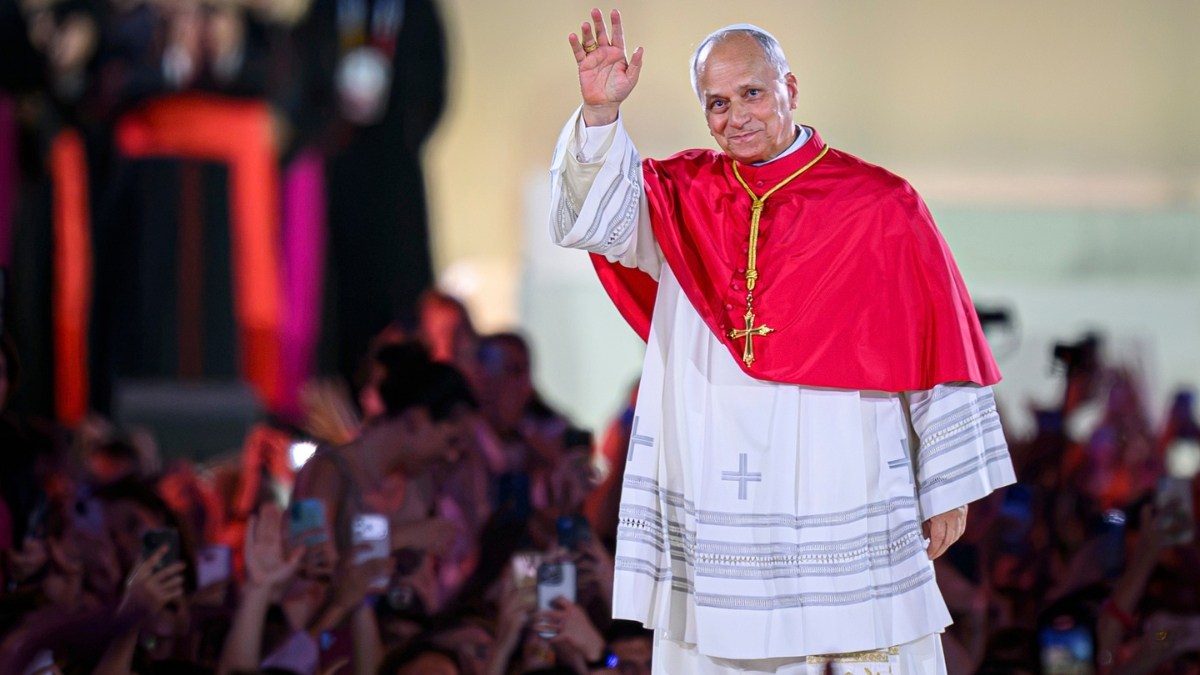
There were, of course, unforeseen events, but they were very joyful ones. For instance, my team told me at the last minute that Vatican officials said the Pope wanted to greet the crowd and go to the central stage. In just three or four minutes, we had to discreetly dispatch a small army of technicians to secure the area and move dozens of barriers nearly 1,000 feet to allow the Pope to exit through the center, step onto the stage, and greet the audience.
It was a highly spontaneous decision on his part, and it’s obviously one of the most memorable images from the vigil: Leo XIV standing on that stage surrounded by an immense crowd. It was absolutely magical!

Answering a spiritual thirst
Looking back, how do you explain the overwhelming reaction to this vigil, which extended far beyond the 80,000 young people at the Stade de France?
Jean-Baptiste: I’m very moved by the reactions from the participants, from all over France, and even internationally. I’ve received hundreds of messages since Friday. It proves that what happened touched something much deeper than a simple artistic display meant to welcome the Pope.
I think several factors contributed to this. People today have a deep thirst to discover or rediscover the great figures who shaped the history of the Church. They’re also seeking an answer to the questions young people are asking today. The show echoed these desires.
Obviously, the success isn’t entirely my doing. I was just a small cog in the wheel that evening. I’m very happy to have been a useful instrument in the hands of Providence. It was grace that made the evening what it was.