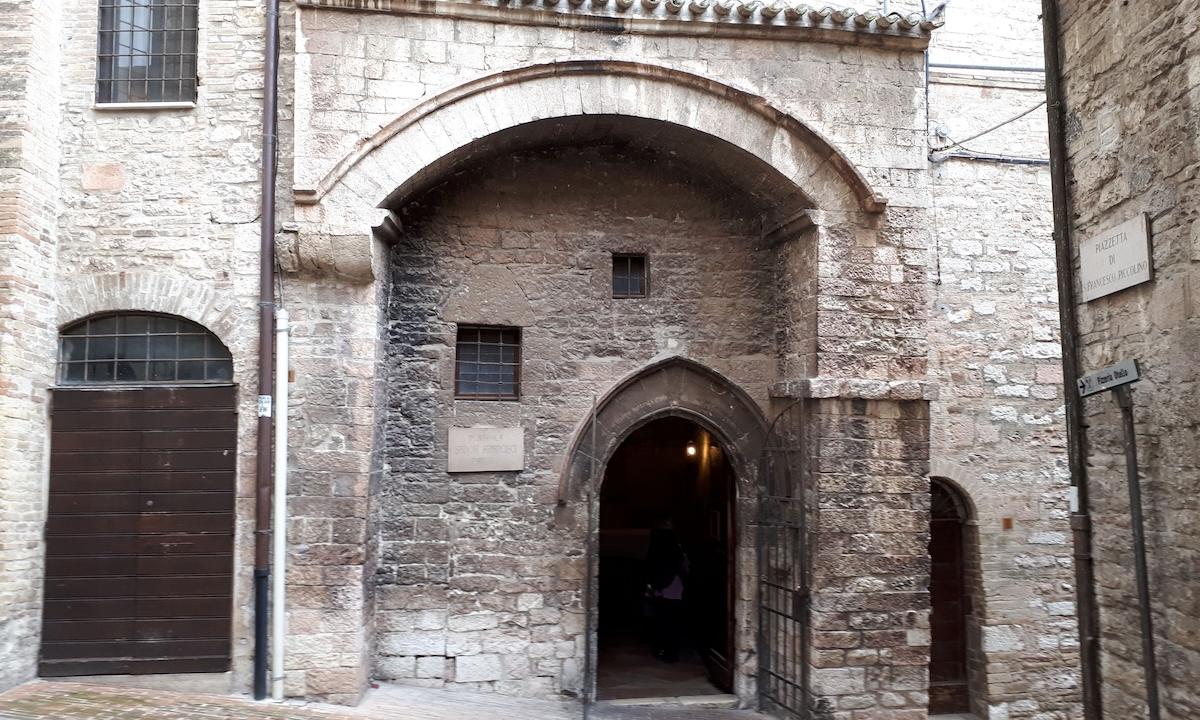
In 2026, we commemorate the 800th anniversary of the death of St. Francis of Assisi. Though eight centuries have passed, the poor saint from Assisi has left an extraordinary legacy that still endures. The Church has celebrated a special jubilee for this anniversary, which concludes January 10, 2027. In this article, I’ll explore five themes: penance, poverty, prayer, peace, and conformity to Christ.
+ Penance
Before his conversion, Francis was repulsed by lepers. However, as he began meditating on how Christ lowered himself by taking on human flesh (see Philippians 2:6–8), Francis began to see and respond to the world differently. One day, he encountered a leper on the road. His instinct was to flee from the disfigured man, as he, like virtually everyone else in that era, loathed being in the presence of lepers. Instead, Francis approached and embraced the man. In that moment, what had once seemed “bitter” was transformed into “sweetness of soul and body,” as his biographer wrote. Francis himself recalled in his Testament, written shortly before his death, that the Lord had led him among lepers and that there he “began to do penance.” This encounter marked the defining turning point of his conversion.
+ Poverty
One day at Mass, on the Feast of St. Matthias, Francis heard the Gospel passage in which Christ exhorts his disciples to “take nothing with them for the journey” (see Matthew 10:9–10). Immediately, he exclaimed, “This is what I desire, this is what I want with all my heart.” From that moment, he renounced all his possessions, seeking to follow Christ in complete dependence on God. He did not seek to have nothing merely for the sake of poverty; instead, he sought to empty himself so as to be filled only with God and with what God wished to give him. He was also living Christ’s exhortation to the rich young man: “Go, sell what you have, give to the poor … then come, follow me” (Matthew 19:21). Unlike the rich young man, who went away sad, poverty made Francis and his followers free and joyful.
+ Prayer
Thomas of Celano wrote that St. Francis “directed his whole being to the one thing which he was asking of the Lord, not so much praying as becoming himself a prayer.” It is as if he embodied the scriptural exhortation to “pray without ceasing” (1 Thessalonians 5:17). While Francis prayed wherever he was, he frequently withdrew to caves and hermitages, sometimes for weeks at a time. There, he poured out his entire self to God. He prayed with his whole person: with his heart, mind, emotions, and even his body. Gradually, prayer transformed him. In another passage, Thomas of Celano wrote that after deep prayer, Francis was “changed almost into another man.” Through prayer, Francis was becoming more and more like Christ.
+ Peace
From his life of penance and prayer flowed another hallmark of Francis’ legacy: peace. Francis would frequently greet others and begin homilies with the phrase, “Peace and all good.” Peace is not simply the absence of conflict, but the presence of goodness that comes from God. Indeed, Christian peace is a gift of the Holy Spirit; it is not something we can acquire through our own efforts. For Francis, it came through surrendering himself to God: embracing penance and poverty, serving the poor and marginalized, forgiving others, and seeking God in prayer. Through this way of life, Francis received an interior peace that the world could not give. In turn, he carried that divine peace within him out into a violent and divided world as a peacemaker.
+ Conformity to Christ
If there is one thing that stands out most in Francis’ legacy, it is his conformity to Christ. In everything Francis did, he sought to become like Jesus. This is seen most extraordinarily in 1224, just two years before his death, when Francis received the stigmata — the wounds of the crucified Christ — upon his own body on Mount La Verna. St. Bonaventure interpreted the event precisely in terms of conformity, writing that “the true love of Christ had transformed the lover into the very image of the Beloved.” Yet the stigmata were the culmination of a lifetime of imitation of Christ. Francis had already been transformed into Christ’s likeness through the Gospel, prayer, poverty, embracing the leper, serving the poor, and receiving Christ in the Eucharist. In all these actions, Francis was gradually stripped of his old self and transformed more and more into the image of Christ.
Eight hundred years after his death, Francis continues to speak to the Church and the world. The movement he founded has borne much fruit over the centuries through the friars, sisters, and laypeople who strive to follow his unique form of life. Yet his legacy of penance, poverty, prayer, and peace ultimately points beyond Francis himself. It leads to Christ. In fact, this may be his greatest legacy: showing us the path to God — that holiness ultimately leads to divinization, allowing Christ to transform us more and more into himself.