Ever since the invention of the printing press in 1440, the Holy See has actively pursued the dissemination, protection and promotion of printed knowledge. While many of us probably think that protecting knowledge has mostly to do with cultural initiatives like promoting literacy and expanding access to education, protecting books also requires a very practical strategy to ensure the physical integrity of these sources of knowledge.
Paper, parchment and bindings can in fact be damaged due to humidity, fire, tiny bugs that feast on cellulose, and, of course, wear and tear from human use. During the Middle Ages, ancient manuscripts were saved from mold, bugs, fire and humidity thanks to the painstaking work of monastic librarians. After the invention of the printing press, which made replicating written works much easier, protecting books from physical threats remained an important task for libraries around the world. Very soon, the Vatican emerged as an innovator in the field of book preservation.
It was Pope Nicholas V who, in the mid-15th century, first opened the papal book collections to scholars establishing the Vatican library as a place of universal knowledge exchange. His successor, Pope Sixtus IV, was the first one to take organizational steps to preserve books. He appointed a team, called famuli, tasked with routinely inspecting books from damage from mold, bugs or water. In 1555, Pope Paul IV expanded the library staff to welcome a new role, that of the book restorer (restauratore), whose task was to repair damaged paper, fix bindings, and mend torn pages.
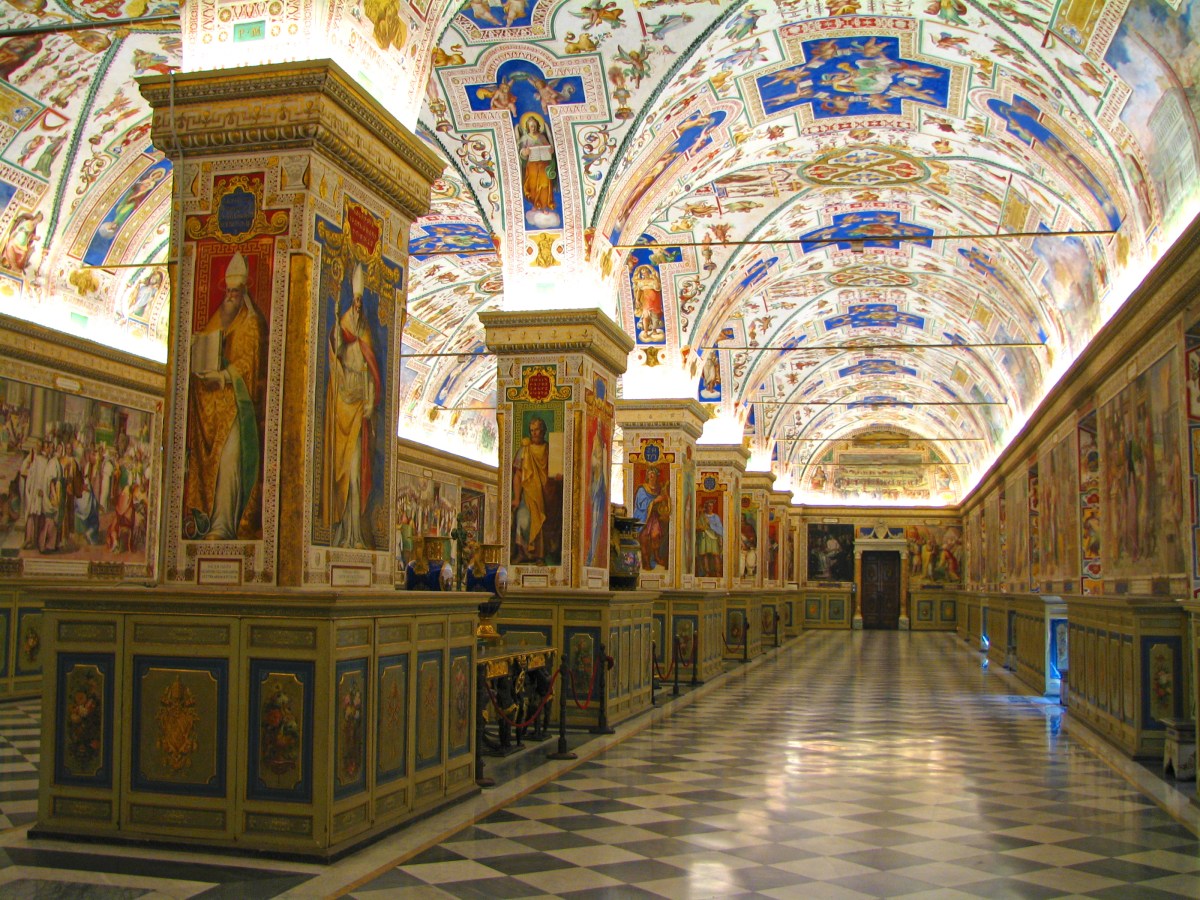
In 1591, Monsignor Angelo Rocca, secretary to Pope Sixtus V, published a description of the Vatican Library that included detailed rules for preventive book conservation such as managing room ventilation, controlling humidity, and protecting manuscripts from excessive light exposure to prevent parchment from warping and inks from fading.
As scientific discoveries both created new threats and provided new solutions, the Vatican adapted its conservation strategies accordingly. During the two World Wars, the Vatican Library reinforced its subterranean and heavy-masonry storage areas, creating secure, bomb-resistant vaults within Vatican walls. Passageways were fortified and fire hydrants were positioned throughout the library. In the early 1980s, the Vatican constructed a climate-controlled bunker beneath the Cortile del Belvedere capable of storing over 50 miles of shelves to protect the Vatican library collection in case of nuclear or biochemical threats.
Celebrating the Vatican role in knowledge preservation
This year, the Vatican Apostolic Library will start a cycle of exhibitions to explore its long-honored mission of preserving printed knowledge. The exhibition cycle, envisioned by Pope Leo XIV, whose mother was a librarian, is titled “Catastrophe and Wonder.” Over the course of the next few years, it will explore each of the five most common threats to printed knowledge, fire, water, light, insects and human intervention, through a series of multi-disciplinary installations.

The first theme-specific exhibition, called AQVA, explores water’s double identity as a threat to humanity and a life-giving force. The Vatican envisioned this exhibition cycle as a conversation between ancient works of art and contemporary creations. For this cycle, the theme of water is explored by juxtaposing the 470-year-old treatise “Aquatilium Animalium Historiae” by Renaissance naturalist Ippolito Salviani with installations by French artist JR, the American typographer Bill Moran, and the Italian chef Fulvio Pierangelini.
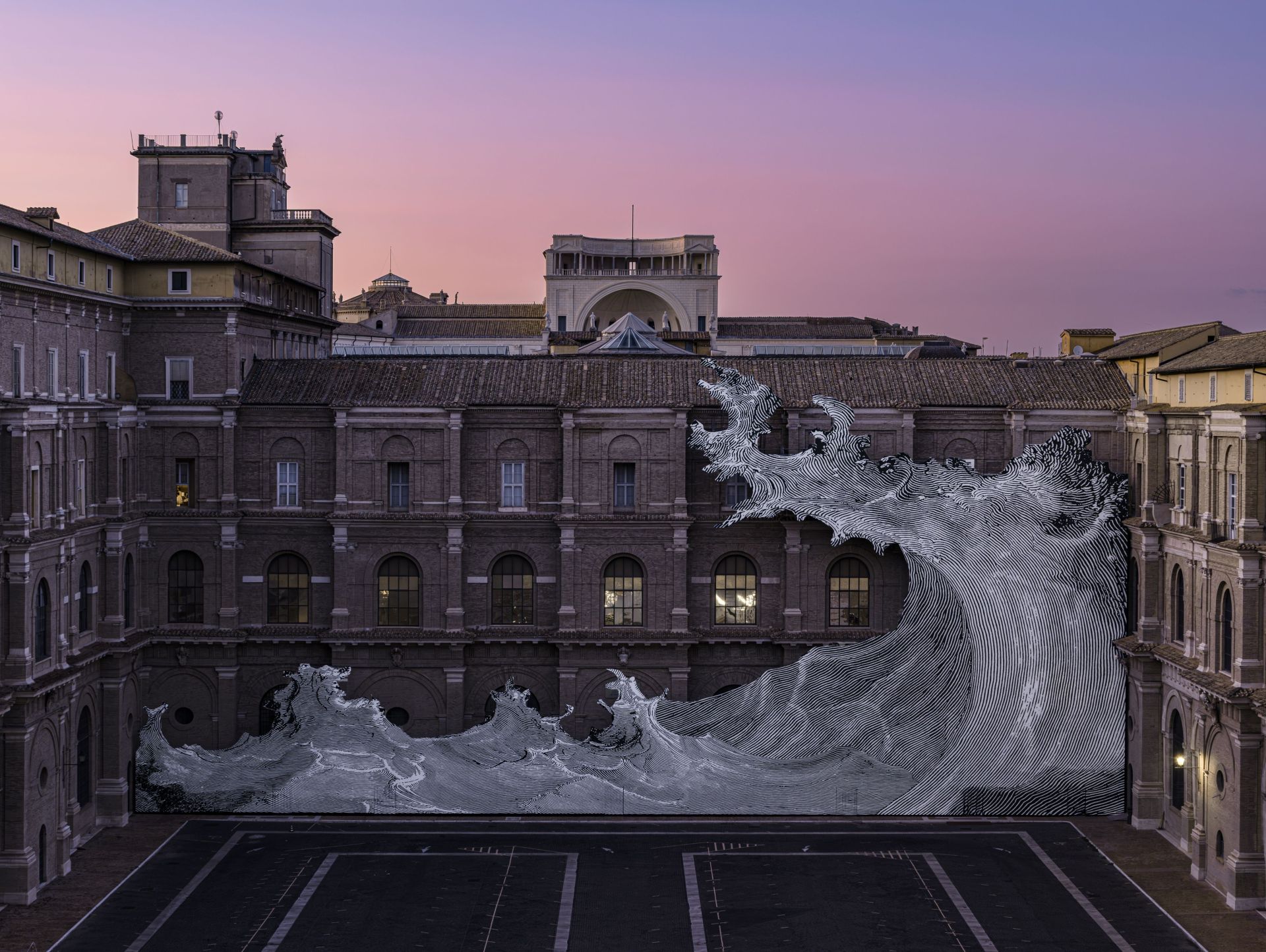
Salviani’s treatise is one of the most fascinating works of Renaissance illustration around the theme of aquatic life. It was compiled using an innovative printing technique based on copperplate engravings (rather than the traditional woodcuts used in early printing) and based on Salviani’s direct observation of aquatic species around the Mediterranean. These nearly 500-year-old manual illustrations are juxtaposed with “Diluvium,” a 230-foot-long sculpture of a crashing black-and-white wave symbolizing the biblical flood, created by French contemporary artist JR. Typography by Bill Moran, who developed LetterFish, a collection of creatures whose component parts are inspired by marine life, and fish recipes by Chef Fulvio Pierangelini add to the multidisciplinary language of the exhibition, curated by Rev. Giacomo Cardinali, Simona De Crescenzo, Francesca Giannetto, and Delio Proverbio.

“The starting point of the entire exhibition cycle was Gaetano Volpi’s bibliophilic treatise ‘Del furore d’aver libri’ (1756), which lists the dangers that threaten the preservation of books: from water to fire, from light to animals, and even the damage inflicted by human beings themselves on their cultural heritage,” said Rev. Giacomo Cardinali, Library Vice Prefect and Commissioner for Exhibitions, in a press release. “In the belief that, in the face of fear, it is wiser to pause and move through it, we enlisted three extraordinarily creative minds – an artist, a typographer, and a chef – and discovered unexpected horizons precisely within what usually frightens us.”
AQVA runs from September 25, 2026, to May, 14, 2026, at the Vatican Apostolic Library in Vatican City (Rome). Tickets can be purchased in person at the venue or online, up to 48 hours before entry, through Ticket.it (the official ticketing platform for the Vatican Apostolic Library’s exhibition projects).