The Pope called for a renewed alliance between the Church and artists. Behind that appeal is 2,000 years of patronage.
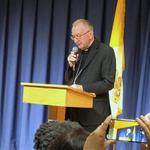
On October 2, Pope Leo XIV addressed artists and curators gathered in the Apostolic Palace for a meeting on “The Art of Possibility: Weaving Together,” organized by the Vatican’s Dicastery for Culture and Education. What he said went well beyond an opinion on generative AI. It was, for those who have been following Leo’s take on the ongoing technological revolution, a philosophical statement, a theological argument, and a cultural manifesto.
“The Church wishes to renew its alliance with artists,” he told those present. The reason, he explained, is that art performs a function that no algorithm can replicate. First and foremost, art listens. “Art acts like an antenna, picking up the great questions of the human heart — and making them audible, visible, and shareable.” In an age of search engines, the danger is homogenization, standardization.
On the specific question of artificial intelligence, the Pope was characteristically sober and precise. “There is an ontological difference — prior even to the aesthetic — between art and what a machine can generate through statistical calculation based on millions of images created by others. Algorithms lack the spark of the human.” And then, he made the appeal: “The Church wishes to renew its alliance with artists and cultural institutions to safeguard our humanity.”
The restlessness that machines cannot have
To ground this claim, the Pope alluded to Augustine’s Confessions. Art, Leo said, “when authentic, is animated by this restlessness.” The word he chose, restlessness, is philosophically loaded.
Augustine’s inquietum est cor nostrum — “our heart is restless until it rests in Thee” — is not some description of spiritual longing. It is, Augustine first argued, a structural account of human subjectivity. The human being is the creature who cannot rest in what is given. Not because neither the human nor its surrounding world are defective, but because both are oriented beyond themselves, toward a fullness that has not yet been reached and that cannot be simply manufactured. This fundamental orientation is what drives the artist to make something that has never existed before — and it is precisely what an algorithm, however sophisticated, does not have. An algorithm has no cor inquietum. It has, in the end, no death to face.
This is where the existentialist thread, which can be traced back to Augustine himself, enters. Heidegger's account of authentic existence is built around what he called Sein-zum-Tode — being-toward-death, a secular echo of Augustinian thought. The human being, Heidegger famously argued, is the entity for whom its own existence is at issue, for whom death is the most certain and most indefinitely imminent of all possibilities. This awareness — that every moment of making is borrowed time, that the work outlives the maker — is what gives human art its irreducible weight. The artist works in the shadow of finitude. The painting or the poem or the piece of music is, among other things, a way of saying: I was here, and I noticed this, and I wanted it to last.
An AI system processes data. It has no mortality, no Angst, no awareness of its own ending. It cannot make art in the sense Leo means, because it cannot be restless. It does not thirst nor search. It calculates — extraordinarily well, with results that can indeed be beautiful — but the beauty is, to follow Leo’s image of art as “wound” of sorts, downstream of the calculation, not upstream of a wound.
What Benjamin saw coming — and what Leo XIII saw first
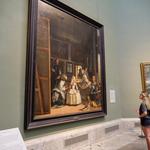
The most prescient philosophical treatment of the question Leo XIV is raising came from Walter Benjamin in 1935, in his essay “The Work of Art in the Age of Mechanical Reproduction.” Benjamin’s central concept is the aura — the quality of a work of art tied to its presence in a particular time and place, its embeddedness in tradition, its singularity. The aura of a painting is inseparable from the fact that it was made by a specific person, in a specific moment, with a specific hand — that it carries the trace of its own making. Mechanical reproduction, Benjamin argued, strips the work of its aura: the photograph of a painting is not the painting, and the copy, however accurate, lacks the here and now of the original.
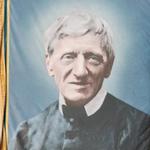
Benjamin was not a contemporary of Leo XIII — he was just 11 years old when the great social encyclical pope died in 1903 — but both men were responding to the same underlying historical process: the industrialization of production and its effects on the human being and the things human beings make. Leo XIII, in Rerum Novarum (1891), was responding to the factory and the assembly line — the reduction of the worker to a unit of production, stripped of dignity, of craft, of the relationship between hand and material that had defined human labor for centuries. Benjamin, writing forty-four years later, was responding to the camera, the phonograph, and the printing press — the reduction of the artwork to a reproducible commodity, stripped of its aura, its singularity, its belonging in a specific human moment.
They were diagnosing the same modernity from different angles. Leo XIII asked what industrial reproduction does to the worker. Benjamin asked what it does to the work. Both were pointing at the same wound: the logic of mass production, when applied to human beings and the things they make, dissolves the particular into the generic, the singular into the interchangeable, the irreplaceable into the commodity.
The AI-generated image is the latest and (so far) most radical expression of that logic. It has no original — only outputs. It has no aura, Benjamin might argue, because it has no specific here and no clear now — only the statistical average of everyone else’s here and now, distilled into a plausible surface.
Leo XIV, in his October 2 address, stands at the intersection of both traditions — the Catholic social teaching lineage that runs from Leo XIII through his Magnifica Humanitas, and the cultural-philosophical lineage that runs from Benjamin through the contemporary critique of the attention economy. His insistence on an “ontological difference — prior even to the aesthetic — between art and what a machine can generate” is not choosing between those two traditions. It is holding them together: what Leo XIII said about the worker, Leo XIV is now saying about the work. The spark that machines cannot generate is the same dignity that factories cannot manufacture. The argument has not changed in 135 years, but the machine certainly has.
The Church that built the Sistine Chapel
There is a further dimension to Leo’s appeal that his audience in the Apostolic Palace understood without needing it explained: the Church has been here before. For more than a millennium — from the catacombs to the Council of Trent, from Giotto to Michelangelo, from Palestrina to Bach — the Catholic Church was the single most important patron of art in the Western world. Every major artistic innovation in European culture between roughly AD 400 and 1600 was funded, commissioned, or inspired by the Church. The mosaics of Ravenna, the cathedrals of France, the polyphony of the Renaissance, the iconographic programs of the great basilicas — all of this was the product of an institution that understood art as a form of theology and theology as a form of beauty.
The rupture came gradually and from multiple directions. The Reformation stripped the churches of the northern tradition of their visual programs. The Enlightenment relocated the arts from the service of the sacred to the service of the self — the artist as autonomous genius rather than craftsman in God’s workshop. The Industrial Revolution and the rise of the commercial art market completed the separation: by the 19th century, the Church had largely ceded cultural leadership to the secular academy, the bourgeois salon, and eventually the museum. Paul VI’s famous address to artists in 1964 — from which Leo XIV quoted in his October 2 speech — was an acknowledgment of that rupture and a first attempt at repair. John Paul II’s 1999 Letter to Artists deepened the attempt. Leo is extending it into the AI age.
What would it mean for the Church to become, once again, the great patron of arts — not in a nostalgic or triumphalist sense, but as a genuine cultural counterweight to the Silicon Valley model? It would mean commissioning works that are irreducibly particular, irreducibly human, irreducibly rooted in the tradition of a specific community’s encounter with God and others. It would perhaps mean building institutions — schools, residencies, exhibition spaces, publishing houses — that fund artists on the basis of their humanity rather than their market metrics. It would mean insisting, in the public square, that the question of what art is and what it is for is a question with a theological dimension that cannot be answered by any platform’s engagement statistics.
In a cultural landscape increasingly dominated by a handful of technology companies whose products flatten, homogenize, and commodify human creative expression, the Church’s tradition of beauty — accumulated over 15 centuries of patronage — represents an extraordinary resource. “Algorithms lack the spark of the human,” Leo said. What the Church carries, at its best, is a sustained account of where that spark comes from, what it is for, and why it must be protected.
The alliance he is proposing is not between two institutions with complementary interests. It is between two traditions that share a common enemy: the reduction of the human person to a data point, and the reduction of human creativity to a statistical output. The Church has been thinking about beauty for two thousand years. Artists have been making it. The question Leo XIV is raising — with considerable precision, in the Apostolic Palace, on the feast of the Guardian Angels — is whether that shared history is enough to build something new.