Founded by an autistic deacon, Catholic Autism UK hopes to help parishes notice barriers they may never have considered.
If you think about it, going to Mass is meant to be an occasion to feel at peace, and at one with God. Yet the minute you walk through the church doors, you're faced with all sorts of sounds, smells, movements, and rituals that, for some people with autism, could make that peace a little harder to find. Or, in the worst of cases, may actually make the whole experience a little off-putting.
There might be bells, an organ, singing, incense, babies crying, and people shuffling past to get to their seats. We stand up, sit down, and kneel, sometimes in fairly quick succession, and depending on the parish, you might also find a stranger suddenly reaching across the pew to shake your hand.
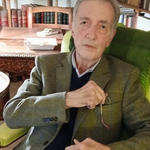
Deacon Mark Paine knows something about that experience himself. The permanent deacon from the Archdiocese of Birmingham, England, wasn't diagnosed with autism until his late 40s. This mid-life diagnosis meant looking back over decades of life, including all those years sitting in church, with a new understanding of why he might have experienced certain things differently from the people around him.
There was also his family. Two of Paine's children are autistic, so the questions facing parents trying to help an autistic child find a place within the Church weren't theoretical ones in his household. And if you add to that nearly 30 years working in primary education, including special educational needs, it's not surprising that he began thinking about what could (and should!) be done differently, leading him to create Catholic Autism UK.
Understanding the difficulties
The idea is not to reinvent parish life for autistic Catholics, but to look properly at where difficulties arise and what can actually be done about them. And naturally some of those difficulties are easily missed by people who don't encounter them themselves.
Consider sacramental preparation as a perfect example: Paine has already produced free resources for autistic children and young people preparing for the sacraments, including those who are non-speaking. After all, a child who can't explain his understanding in the way a catechist expects hasn't necessarily failed to understand. It might be the question, or the way we're asking it, that needs another look.
Paine explained the issue very succinctly to the Catholic Herald:
“These barriers arise not from deliberate exclusion, but simply because activities have not been designed with neurodiverse participants in mind. No one consulted neurodiverse people.”
Of course, few parishes would knowingly exclude an autistic child from First Communion preparation, or want an autistic adult to find parish life inaccessible, or a source of stress. Sometimes we simply don't notice a difficulty because it isn't difficult for us.
At Catholic Autism UK's first meeting in September, the conversation was reassuringly practical. Among the ideas discussed were encouraging dioceses to appoint inclusion advisers, sharing examples of adapted liturgies and making sure children who are outside mainstream schooling can still prepare for the sacraments.
There is also the rather obvious point that autistic children eventually become autistic adults. Parish support can't stop after Confirmation. Adults may still find the noise of Mass overwhelming, struggle with social events, or simply communicate differently from the people around them. They may also want to serve their parish, explore a vocation, make Catholic friends and play a full part in the life of the Church.
Paine hopes Catholic Autism UK can become both a source of support and, in his words, a “catalyst for change.”
And perhaps one of the easiest changes to make is simply to be slower to make assumptions about the person in the pew beside us. Someone who leaves Mass suddenly may not be bored, but overwhelmed. A child covering his ears may actually be trying very hard to stay. And the parishioner who slips away without chatting over coffee may have enjoyed being among people enormously.
We don't always know how much effort it has taken someone simply to be there, or how stressful that hour might be for the parent of an autistic child. Sometimes a little understanding and an encouraging smile across the pew might be the best support we can offer!