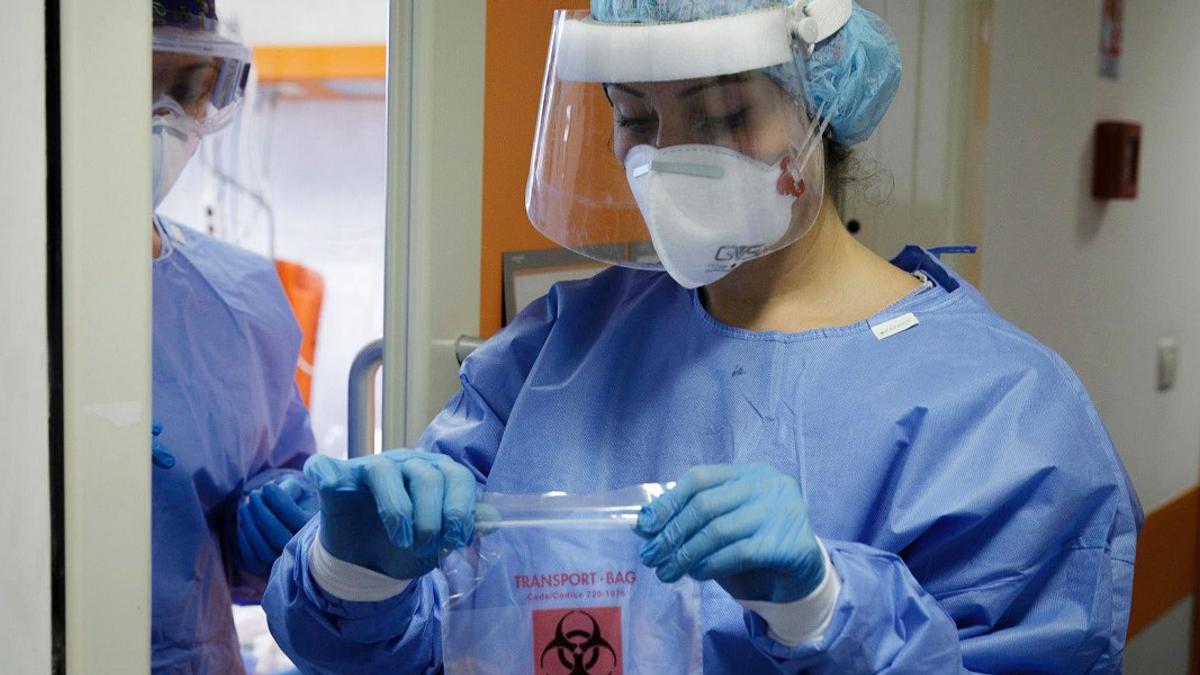
Bambino Gesù has retained its place as Europe’s leading pediatric hospital, while climbing to an impressive fourth worldwide.
Europe certainly isn't short of excellent children's hospitals. Yet among the hundreds of institutions considered for a major international ranking, one hospital has once again come out on top on the continent: Rome's Bambino Gesù, which happens to belong to the Holy See.
The hospital has retained its position as the leading pediatric hospital in Europe in Newsweek and Statista's World's Best Specialized Hospitals 2027. And while being number one in Europe is impressive enough, Bambino Gesù has also climbed two places in the worldwide ranking, from sixth to fourth.
If you're curious, the three hospitals that sit above it are all in North America: Toronto's Hospital for Sick Children, Boston Children's Hospital, and Children's Hospital of Philadelphia. Bambino Gesù is also the only Italian institution among the world's top 25 for pediatrics.
The Pope's hospital
And this isn't a hospital that happens to have acquired a Vatican connection somewhere along the way. Founded in Rome in 1869, Bambino Gesù was donated to the Holy See in 1924 and became affectionately known as “the Pope's Hospital.” And even its name, Bambino Gesù, “Baby Jesus," is particularly appealing.
For parents of faith arriving with a seriously ill child, that Catholic identity must offer its own kind of reassurance. This is a hospital bustling with doctors, nurses and researchers working at the highest level of pediatric medicine, but also with priests and religious sisters. There are chapels, Mass and spiritual support for families who want it. Children are welcomed regardless of their religion, but faith hasn't been politely removed from the building.
And that's perhaps what makes this latest accolade particularly interesting. Families aren't being asked to choose between world-class science and a Catholic understanding of the child entrusted to the hospital's care. Here, the two have been living under the same roof for more than a century.
As Tiziano Onesti, president of the hospital's board of directors said in a press release:
“Families entrust their children to us at the most difficult moments: we must respond to that trust by bringing together quality of care, research and attention to the individual.”
Of course, when your child is ill, impressive titles probably aren't the first thing on your mind. You simply want to know that the people looking after them are very, very good at what they do.
And on that front, Bambino Gesù has just received some impressive reassurance of its own. Here are the specifics: Around 800 hospitals in 35 countries were considered for the pediatrics ranking, with 250 making the final list. Professional reputation accounts for 85% of the score, based on recommendations from medical experts. Quality accreditations and certifications account for another 10%, while the remaining 5% considers the use of patient-reported outcome programs.
Bambino Gesù received the highest possible rating for those patient-reported measures. The hospital was also recognized for two particular areas of expertise: oncology and, for the first time this year, neonatology.
Back to the children
Onesti was understandably pleased with the result. But he also brought all those impressive rankings and percentages back to the children behind them. An international ranking, he said, ultimately has meaning only if excellence translates into better care.
The hospital's ambition, he added, is to turn scientific progress into “better and more accessible opportunities for care for our children.”
It's an idea Pope Francis also expressed when speaking to the doctors and researchers of Bambino Gesù on its 150th anniversary on November 16, 2019:
“I would like you never to lose the ability to see the suffering face of a child even behind a simple sample to be analyzed, and to hear the cry of parents even within your laboratories.”
However advanced the science might become, he urged them never to lose sight of the suffering face of the child behind the laboratory sample, stating : “There is no care without research. And there is no future, in medicine, without research."
And for the families arriving at Baby Jesus hospital, that must feel like such a relief. They may be walking into Europe's leading pediatric hospital, surrounded by some of the finest medicine available, but the little person lying in the hospital bed is still somebody's child.