The St. Louis archdiocese is suing ICE and other local officials who they say are limiting their access to give detainees the sacraments.
A majority of the approximately 150 detainees at a St. Louis-area detention center are Catholic, according to the St. Louis archdiocese, and they desire the sacraments of the Eucharist and Reconciliation during their detainment.
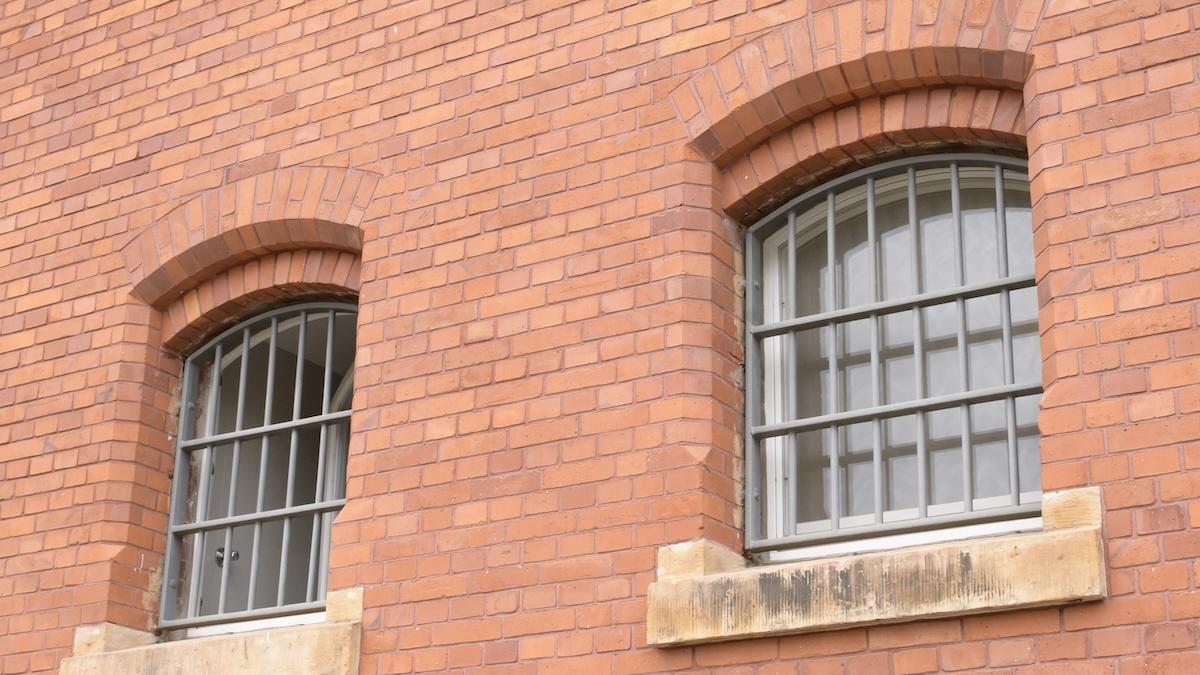
But officials at the Ste. Genevieve County Detention Center — which contracts with U.S. Immigration and Customs Enforcement (ICE) — are denying detainees access to the sacraments and to the consolation of ministerial visits, according to a lawsuit that the Archdiocese of St. Louis filed against ICE and local officials on October 5, 2026.
Archbishop Mitchell T. Rozanski and the Archdiocese of St. Louis, along with Father Christopher Schroeder, pastor of Christ the King Parish in University City and St. Joseph Parish in Clayton, are named as plaintiffs. Schroeder visits Spanish-speaking ICE detainees as part of his ministry. The law firm of Bryan Cave Leighton Paisner is representing them.
Violating religious freedom
The plaintiffs argue that the jail’s policy violates the First Amendment and federal and state religious-freedom laws, as their complaint says:
Under the First Amendment — and federal and state statutes that protect the rights enshrined in it — the government may not (a) ban the exercise of religion or (b) treat religious practice differently than it treats analogous secular activity.
Yet the Ste. Genevieve County Detention Center manages to commit both sins by imposing a visitation policy that prevents Catholic priests from meaningfully ministering to Catholic federal detainees housed there (while readily allowing exceptions to the policy for non-religious reasons).
While the facility is a county jail run by the sheriff's office, the suit also names ICE and Department of Homeland Security officials, saying they weakened standards for contractor jails and don’t inspect them for religious-liberty compliance.
Plaintiffs say priests are limited to a four-hour weekly visiting window and forced to speak with detainees by phone through glass, making it impossible to give the sacraments of Confession and Communion. They are seeking private face-to-face visits during business hours and permission to celebrate Mass.
The Archdiocese is not asking for special accommodation, it says, but to have the same visitation rights as other groups. According to its press release, “other individuals — including lawyers and consular officials — are permitted to visit detained individuals under much more permissive circumstances.”
On top of that, local priests regularly visit and provide the sacraments to detainees in other jails, but are unable to do so at this specific detention center, which the archdiocese says violates the religious liberty rights of priests and the people detained.
A Catholic’s obligations
Visiting the imprisoned is a corporal work of mercy for Catholics, rooted in Jesus’ words in Matthew 25:36: “[I was] naked and you clothed me, ill and you cared for me, in prison and you visited me.” The lawsuit says “Catholic priests seek to offer — and Catholic detainees want to receive — the sacraments of communion and confession, as well as other pastoral care.”
All Catholics have the need to avail themselves of the sacraments and the pastoral care of their priests, and priests are obligated to provide the sacraments. Per the complaint, the current visitation policy prevents priests from carrying out these obligations and cuts off members of the Body of Christ from access to the Eucharist and Reconciliation:
Each time Plaintiffs or a detainee have requested an accommodation in order to allow for spiritual counseling, Mass, or provision for the sacraments, that request has been denied.
Ste. Genevieve County Detention Center has held about 3,000 ICE detainees, including one who died in the facility, since it began housing them in mid-2025.
While the results of the lawsuit remain to be seen, the archdiocese says in the complaint that this policy is hurting some of the “most vulnerable” people:
That this policy targets some of our nation’s most vulnerable — civil ICE detainees awaiting deportation to foreign countries — exacerbates a constitutional concern and a canonical one, because it withholds from the weakest among us the thing most precious to all of us.
At the same time, says the archdiocese, “We have faith that the judicial system will vindicate the God-given right to religious freedom that ensures Catholics—and all the faithful — may practice their faith, even while imprisoned.”