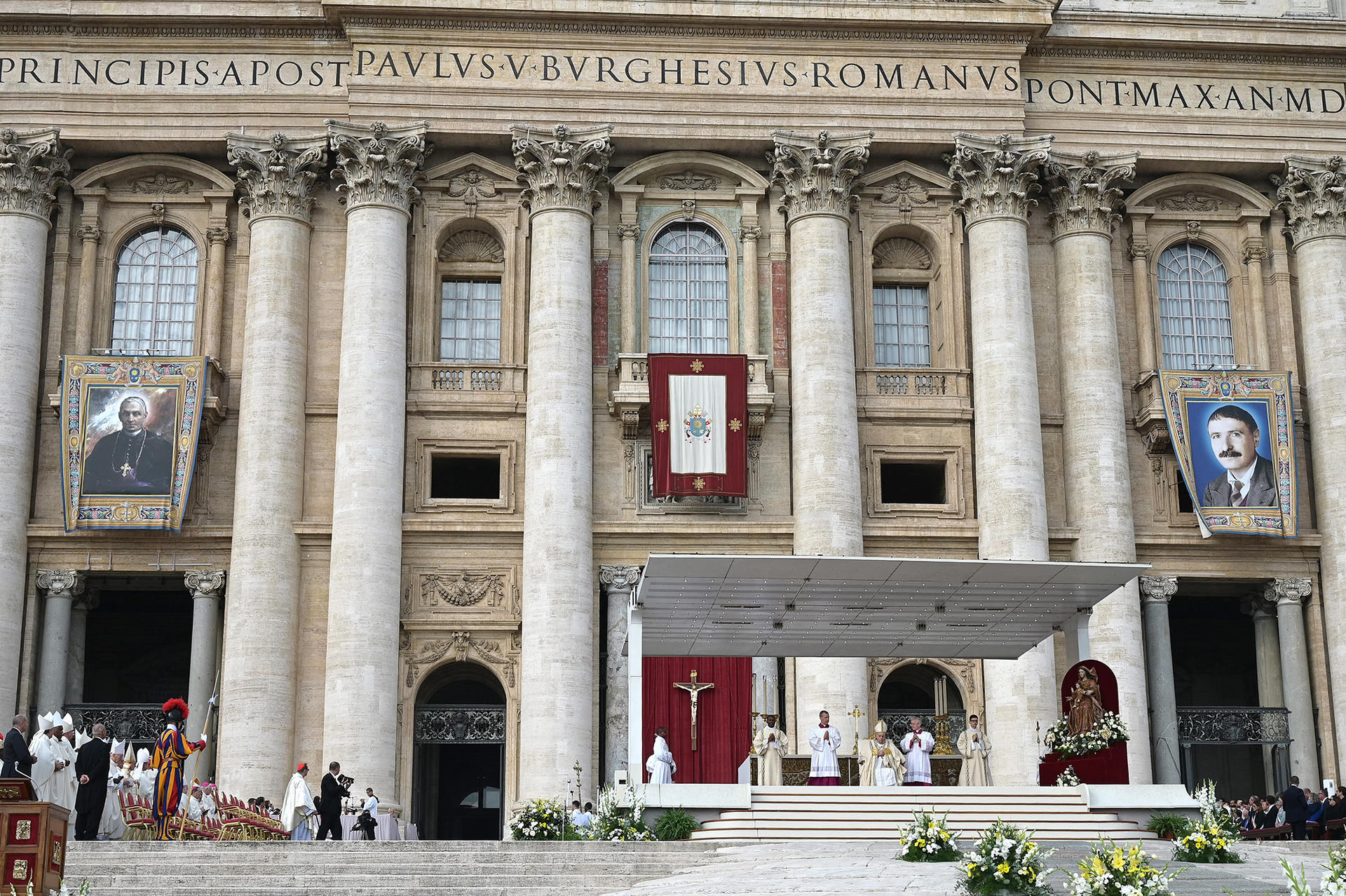
Bishop John Baptist Scalabrini was canonized by Pope Francis on October 9, 2022. The next day, Scalabrinian pilgrims — religious and lay members of his order, and migrants from many countries — gathered for the weekly audience in Paul VI Hall.
Pope Francis was pleased with the diversity of the group: “In this way, you represent well the breadth of the work of Bishop Scalabrini, the openness of his heart, for which, so to speak, one diocese was not enough.”
For this bishop “one diocese was not enough”
The Holy Father called them to live out and spread “the culture of encounter” as well as to think “outside the box.”
Today, too, migration constitutes a very important challenge. It highlights the urgent need to put fraternity before rejection, solidarity before indifference. Today, every baptized person is called upon to reflect God’s gaze towards migrant and refugee brothers and sisters — there are many of them — to let his gaze broaden our own gaze, thanks to the encounter with humanity on the move, through tangible closeness, following the example of Bishop Scalabrini.
Four years later, Pope Francis' observation is more urgent than ever.
One person trying to follow that example very closely is Bishop Jacques Fabre-Jeune, CS. The Haitian-born Scalabrinian has led the Diocese of Charleston, South Carolina, (which covers the entire state) since 2022. Emigrating to the U.S. as a teen, Bishop Jacques’ personal trajectory is a patchwork of his founder’s expansive pastoral vision.
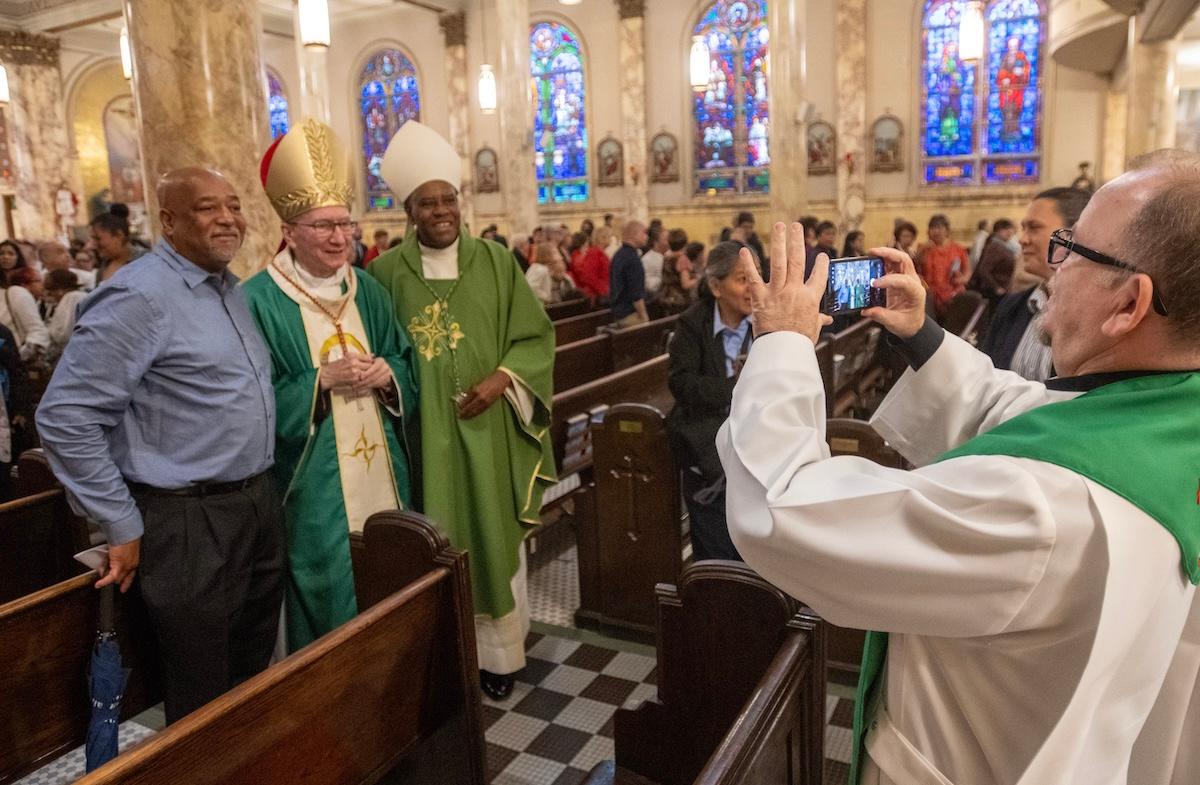
Just as the Vatican Secretary of State Cardinal Pietro Parolin recently expressed his experience celebrating Mass in honor of the Italian saint’s historic journey to the United States, Bishop Jacques said he “never imagined” he would also have the opportunity to say Mass in the same place where his founder celebrated a Mass with migrants.
“I felt very little,” the bishop told Aleteia. “But it was a moment of grace for me, and a moment to see how one person can impact the whole world, and especially impact the Church in the U.S.”
Indeed, the impact of this one saint is felt in 39 countries through the missionary work of 1,195 Scalabrinian missionaries. They run 52 houses for migrants, 13 schools and orphanages, 4 hospitals, and 13 Stella Maris centers ministering to those in the maritime industry.
Who is Saint Scalabrini? Why should he be better known?
Giovanni Batista Scalabrini was born the third of eight children on July 8, 1839, near Como, Italy. His father was a wine merchant, and his mother taught him to value prayer and the poor. He left for the seminary at 18 and was ordained on May 30, 1863. At the young age of 36 (in 1876), Scalabrini was consecrated a bishop by Pope Pius IX at the urging of Saint John Bosco.
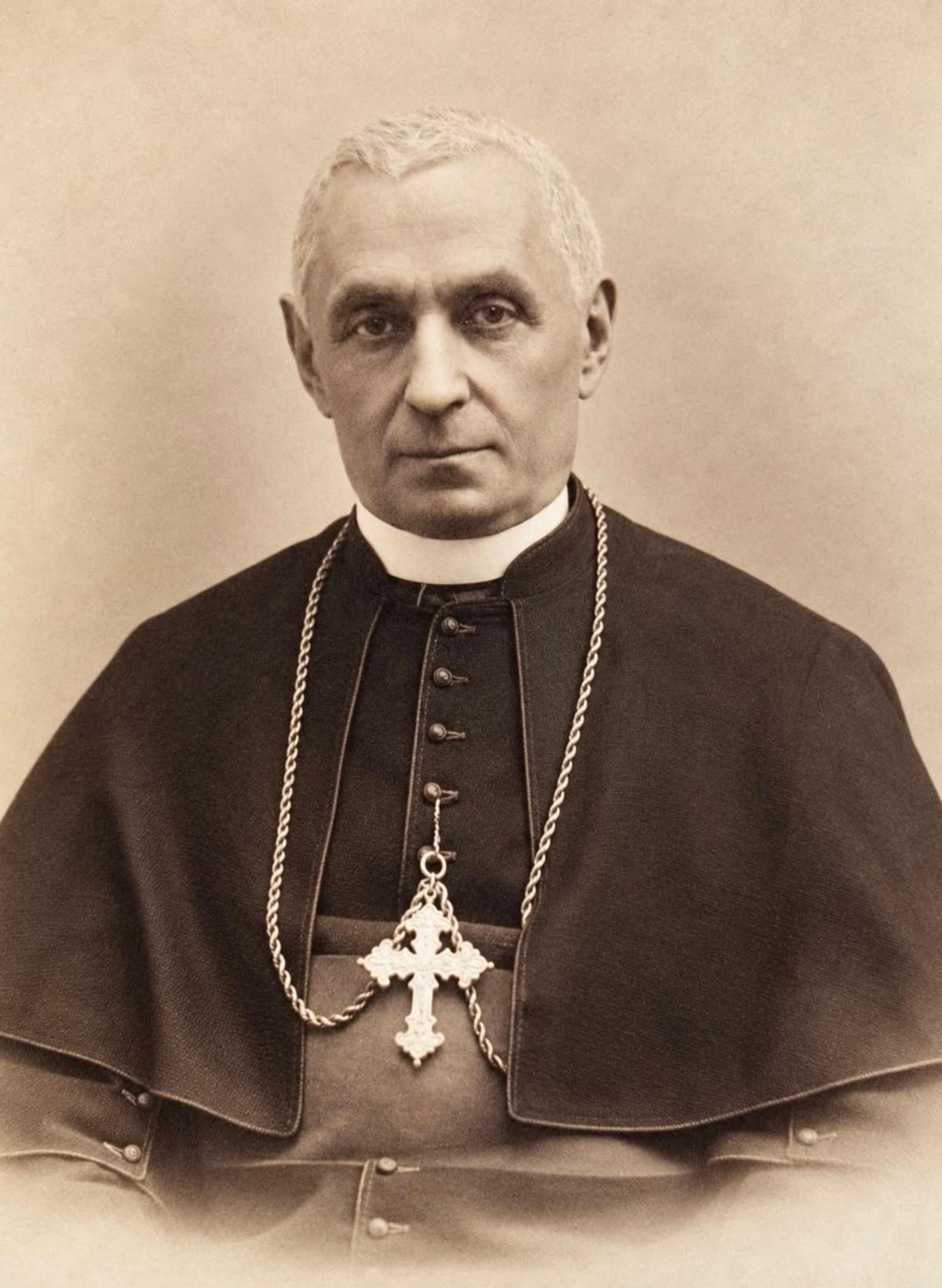
The bishop was very active and dedicated to shepherding the flock in his northern Italian Diocese of Piacenza. He traveled to each parish and promoted the catechism and Eucharistic devotion.
Bishop Scalabrini was also aware of the many men and families emigrating to the Americas to find new opportunities and livelihoods. One day in the train station in Milan he witnessed just how many were leaving. He overheard conversations about their defenselessness abroad and the exploitation they were subject to.
“I blush with shame,” he said. “I feel humiliated as a priest and as an Italian, and I ask myself again ‘what can be done to help them?”
This inspiration became the Congregation of the Missionaries of St. Charles (Borromeo) -- (who was a bishop of Milan and is buried in the city's famous Duomo) -- with a charism encompassing evangelization, catechesis, and hospitality. The Missionary priests were founded November 28, 1887, and the Sisters on October 25, 1895.
Since then, Scalabrinians have continued to serve as leaders in the Church’s pastoral care of migrants. Among them are Cardinal Silvano Tomazi, CS, who is a former permanent observer of the Holy See to the UN and co-founded the Center for Migration Studies in New York City; and Cardinal Fabio Baggio, CS, current Undersecretary of the Dicastery for the Promotion of Integral Human Development.
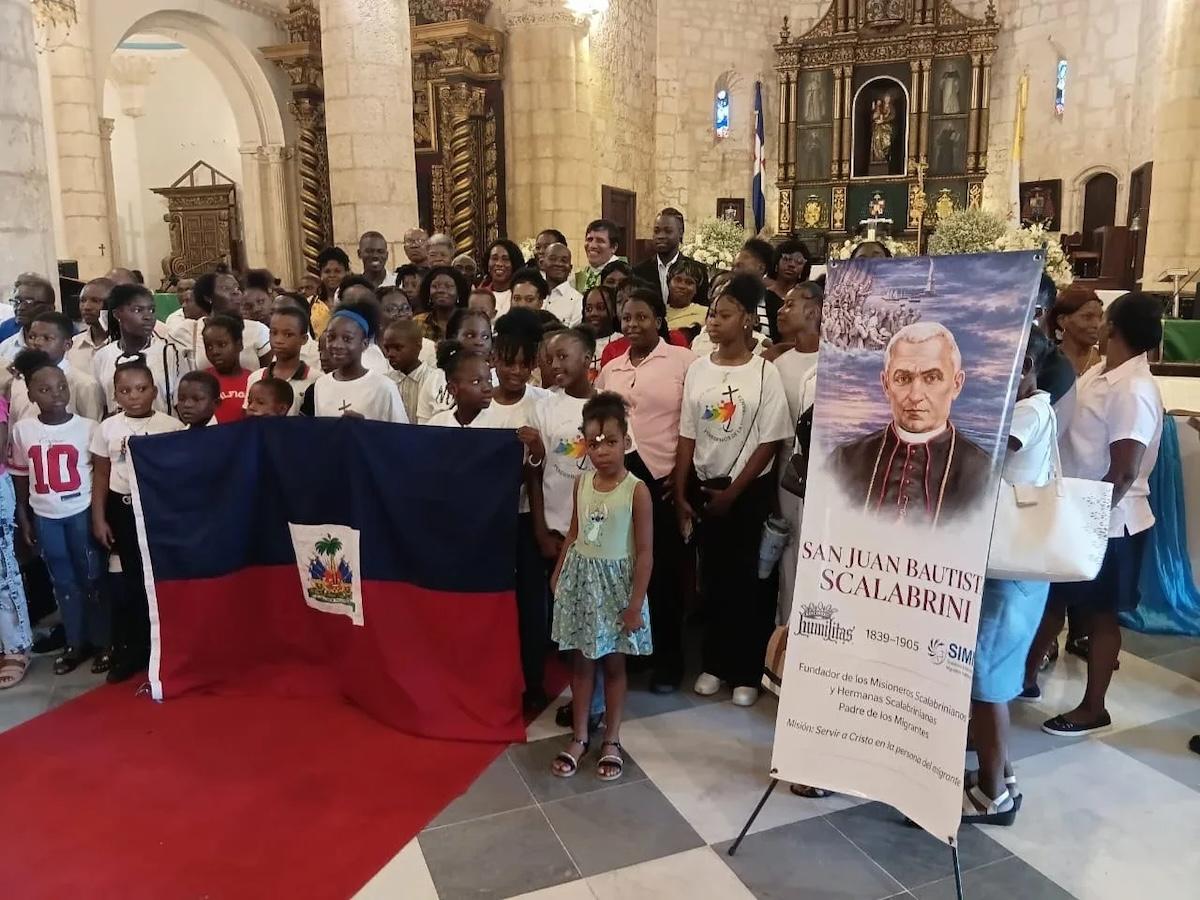
When asked why St. Scalabrini is not better known in the United States, Bishop Jacques reflected that one clear reason is the order’s “pastoral approach.” Following the Italian emigrants west, priests of the Missionaries of St. Charles were “isolated in the parishes that were delegated to the Scalabrinians."
“We had great priests working on different levels in the States, but they were clustered responding to the Italians.” He said he believes not even the Italians served by them were aware of their import and impact.
When Pope Francis canonized Scalabrini, whose cause was first supported by Pope Pius XI in 1926, he suspended the requirement for a second confirmed miracle obtained through Scalabrini’s intercession. As reported by Aleteia, Pope Francis’ reasons were both personal and popular. Bishops from around the world affirmed knowledge of the saint, devotion to him, and graces granted by him.
Per that article, the Holy Father saw his relevance to the modern social context, particularly with the new waves of immigrants. “We Scalabrinians have a bit of that ‘suitcase spirit’,” said Sister Lina Guzzo, one of the Missionary Sisters of St. Charles Borromeo (the women’s congregation the saint founded). “The fact they we move our tent to wherever there’s a need.”
Bishop Jacques shared, “I don’t think Scalabrini used the word migration as we do today … He was a loving person … sensitive to the reality of ‘the other’.”
When Pope Francis challenged the saint's bishops and priests to “smell like the sheep,” he was promoting the example St. Scalabrini had lived more than one century prior. For Charleston’s bishop today, it’s not only the name “Scalabrinian” he uses; he wants to embody his founder’s spirit. “He was a man, a person, a shepherd that cared for his people.”
When he saw them leaving Italy to make a living in another country, Scalabrini’s pastoral concern extended beyond geography. He wondered who would care for their souls and sacramental life. “A bishop is a father,” Bishop Jacques affirmed. A bishop doesn’t stop caring for “his children” just because they no longer live in his diocese.
Bishop Jacques sees the mission as a developing interest still today. “We can work together, from the countries giving migrants and the ones receiving,” the bishop explained. “There should be communication to accompany the person,” as Scalabrini even sent his priests to accompany 19th- and 20th-century immigrants on their crossings.
In the modern context, where immigration and migration are often such polarizing and politically charged issues, Bishop Jacques — in the mind and spirit of St. Scalabrini — suggests trying to move beyond the political debate. He doesn’t deny legal considerations are important and needed in dialogue, “but one aspect that can help in the debate is to see why Scalabrini chose St. Charles Borromeo as patron.”
First, because the noble-born Charles cared deeply for the poor, even selling his personal and household belongings to feed them.
Secondly, because of his dedication to catechesis and priestly formation. St. Charles is credited with writing the first catechism after the Council of Trent, building seminaries to properly train priests, and founding the Confraternity of Christian Doctrine for teaching children the faith. He is the patron saint of bishops, seminarians, and catechists.
Church's social doctrine
Bishop Jacques reflected on the prevalence of uncatechized American Catholics.
"We have a lot of Catholics who are not catechetized. Because they're not catechized, they don't know the social doctrine of the Church, the basics of the faith," he said. "We don't train young people in their Confirmation classes with good catechism and social doctrine of the Church." If Catholics receive better catechesis, the bishop said, "once they come of age in adulthood they will have a different way of approaching the love the Church has as a mother for her children."
“If we don’t understand that we are all children of God,” he emphasized, then we see immigrants not as members of the same human family, also saved by Jesus and therefore brothers and sisters.
“The Catechism is very important for us Catholics to see things in a different light; and to be Catholic and Christian first, before they belong to a partisan position or political party,” he surmised without denying the complexity of the current issues surrounding immigration. “Before we talk about migration as controversial, let’s talk about children of God … about Scripture and tradition.”
He clarified this misunderstanding exists among immigrants themselves — whether first, second, or third generation. “We need to instruct those who are migrants now, because once their children are integrated, they might repeat the same thing,” he added.
The bishop noted the connection between our current Pope Leo and the Pope Leo that Bishop Scalabrini knew and collaborated with. It was the former one, Leo XIII — champion of the Church’s social doctrine — that gave Scalabrini permission to form his congregation.
When Bishop Jacques recalls that famous Milan train station scene from the founder’s life, he shared that he personally visited that same station. He was deeply impressed by that most important episcopal mission of visiting his people, where they lived. It was from there that Scalabrini accompanied them, saw their needs, and formed relationships that would continue.
Those relationships were how he discovered the needs Italians were facing in their new lives and how he received the call to continue caring for them at a distance.
Seeing needs by being with the people
Scalabrini used to say, “Get out of the sacristy!” The South Carolina bishop knows the importance his saint-founder placed on prayer and time with the Blessed Sacrament, “but he knew that if you stay in the sacristy or your office waiting for people to come, for migrants to come with their problems, you will not see” and be able to meet the needs.
He described St. Scalabrini as a priest and bishop who identified himself with the Church as a mother, who cares for her children at home and is concerned for them when they are far away.
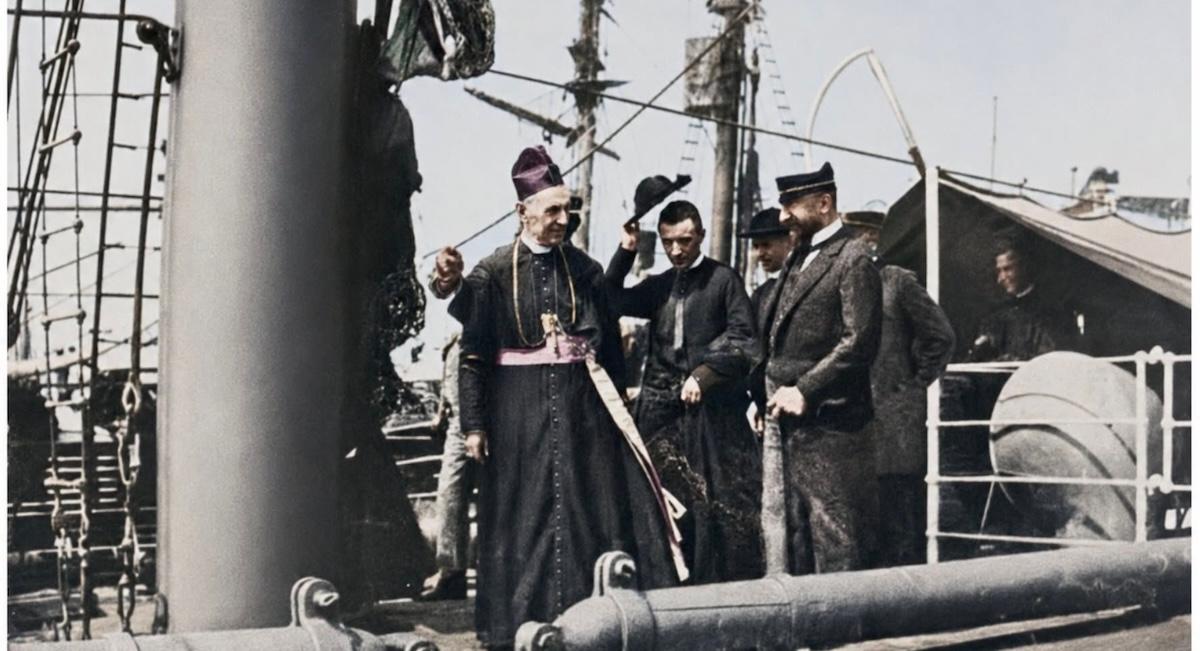
Pope John Paul II named him venerable in 1987 and beatified him on November 9, 1997. On October 9, 2022, Pope Francis canonized St. Scalabrini. His feast day is June 1, the anniversary of his death in 1905 which coincided with the Feast of the Ascension of the Lord.
Continuing the “Spirit of Pentecost”
At Bishop Scalabrini’s beatification (November 9, 1997), Pope John Paul II recognized him as “father of migrants.”
“… As a true father of migrants, he worked to sensitize communities to a respectful, open, and solidary welcome. He was in fact convinced that, by their presence, migrants are a visible sign of the catholicity of the family of God and can help create the indispensable premises for that authentic encounter among peoples which is the fruit of the Spirit of Pentecost.”
As shared in a biographical series of Facebook posts by the Scalabrinian Province of St. Charles Borromeo,
“For immigrant communities, a church was rarely only a place for Sunday worship. It could serve as a school, meeting place, source of emergency assistance, center of cultural continuity, and bridge to the wider city. Parish societies helped families find work, care for the sick, organize funerals, educate children, and maintain community bonds. Scalabrini understood that immigrants needed stable institutions. Without them, poverty, discrimination, language barriers, and isolation could confine families to the margins of urban life.”
Although many came to the Americas expecting to return to their homeland, as permanent lives were built, Scalabrini knew they needed the accompaniment of their Church.
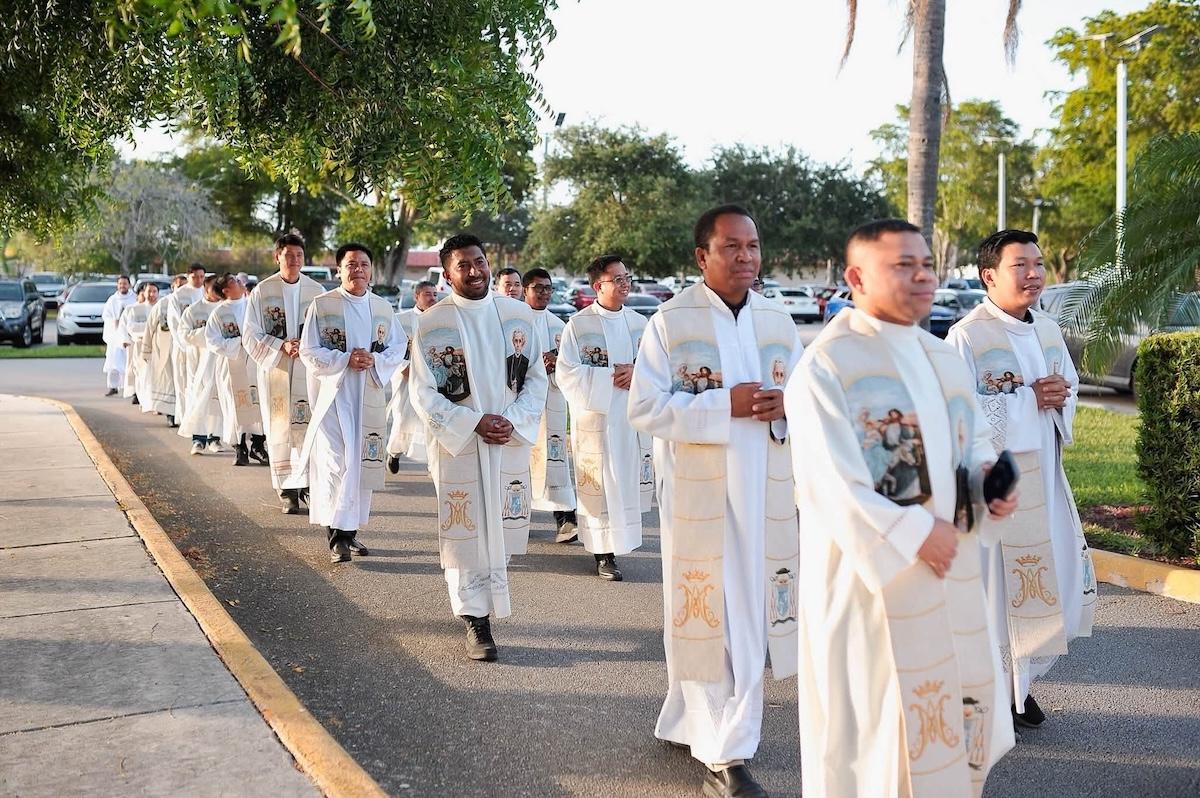
The Scalabrinians continue following in the footsteps of their founder. In that October 10, 2022, audience, Pope Francis commented on a “rule of wisdom. When we walk, when we go on a pilgrimage, we always need to walk at the pace of the least.”
He challenged, “Dear brothers and sisters, may the holiness of John Baptist Scalabrini ‘infect’ us with the desire to be holy, each one in an original, unique way, as God’s infinite imagination has made us and wants us to be. And may his intercession give us the joy, and give us the hope to walk together towards the new Jerusalem, which is a symphony of faces and peoples, towards the kingdom of justice, fraternity and peace.”