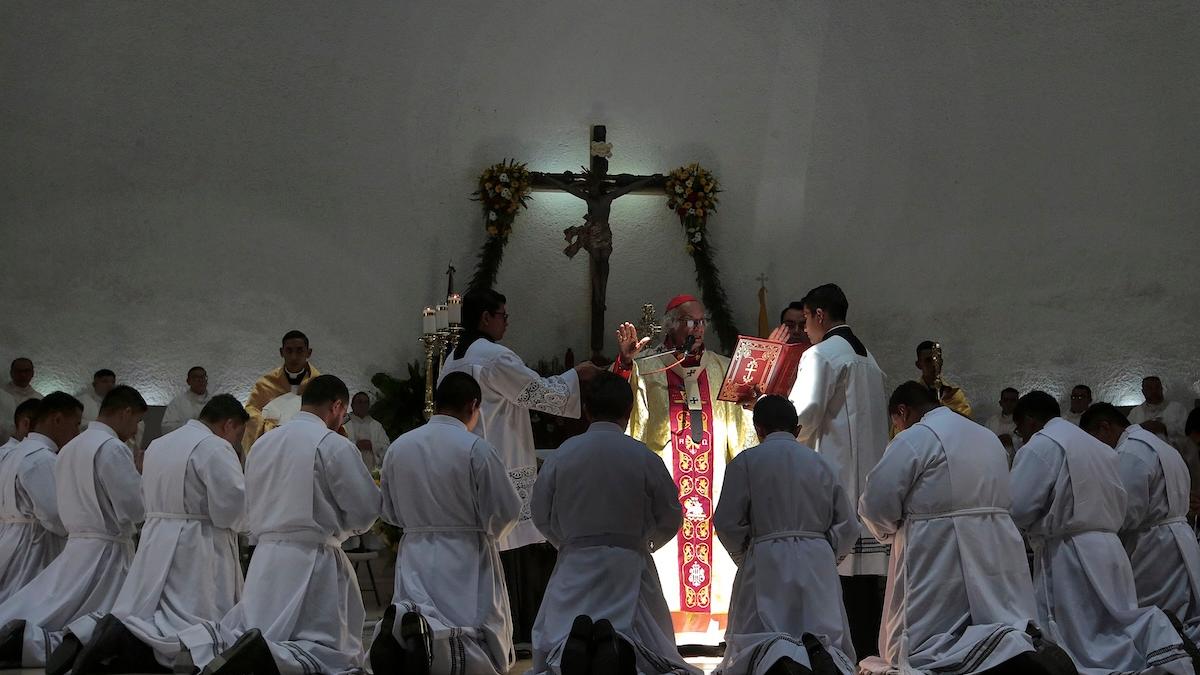
The ad limina visit of Nicaragua’s bishops to Rome, during the week of October 12, comes against a backdrop of continued persecution of the Catholic Church by Daniel Ortega’s regime.
Following the bishops of Honduras the previous week and ahead of those of Panama the week after, the bishops of Nicaragua will make their ad limina visit beginning October 12, with an audience scheduled with Pope Leo XIV likely on Friday morning. Behind this institutional appointment lies a central question: How do you keep a Church alive when political power seeks to control its public expression?
To understand this crisis, one must go back to the Sandinista revolution of 1979. Having overthrown the Somoza dictatorship, Daniel Ortega’s government maintained a conflictual relationship with part of the Catholic hierarchy. In the context of the Cold War, the government aligned itself with the Eastern Bloc, in the manner of Fidel Castro’s regime in Cuba. The local Church split between those defending its institutional autonomy and Christians committed to the revolutionary project.
John Paul II’s memorable visit of 1983
John Paul II’s visit on March 4, 1983, stands as the strangest and most difficult episode of his pontificate. During the Mass celebrated in Managua before hundreds of thousands of faithful, the Polish Pontiff faced demonstrations by regime supporters, struggling to continue his homily as he repeatedly appealed for “Silencio!” The Mass unfolded in a climate of intense tension — witnesses from the time recall that a Radio Vatican technician who attempted to raise the level of the Pope’s microphone was threatened by a regime militiaman.
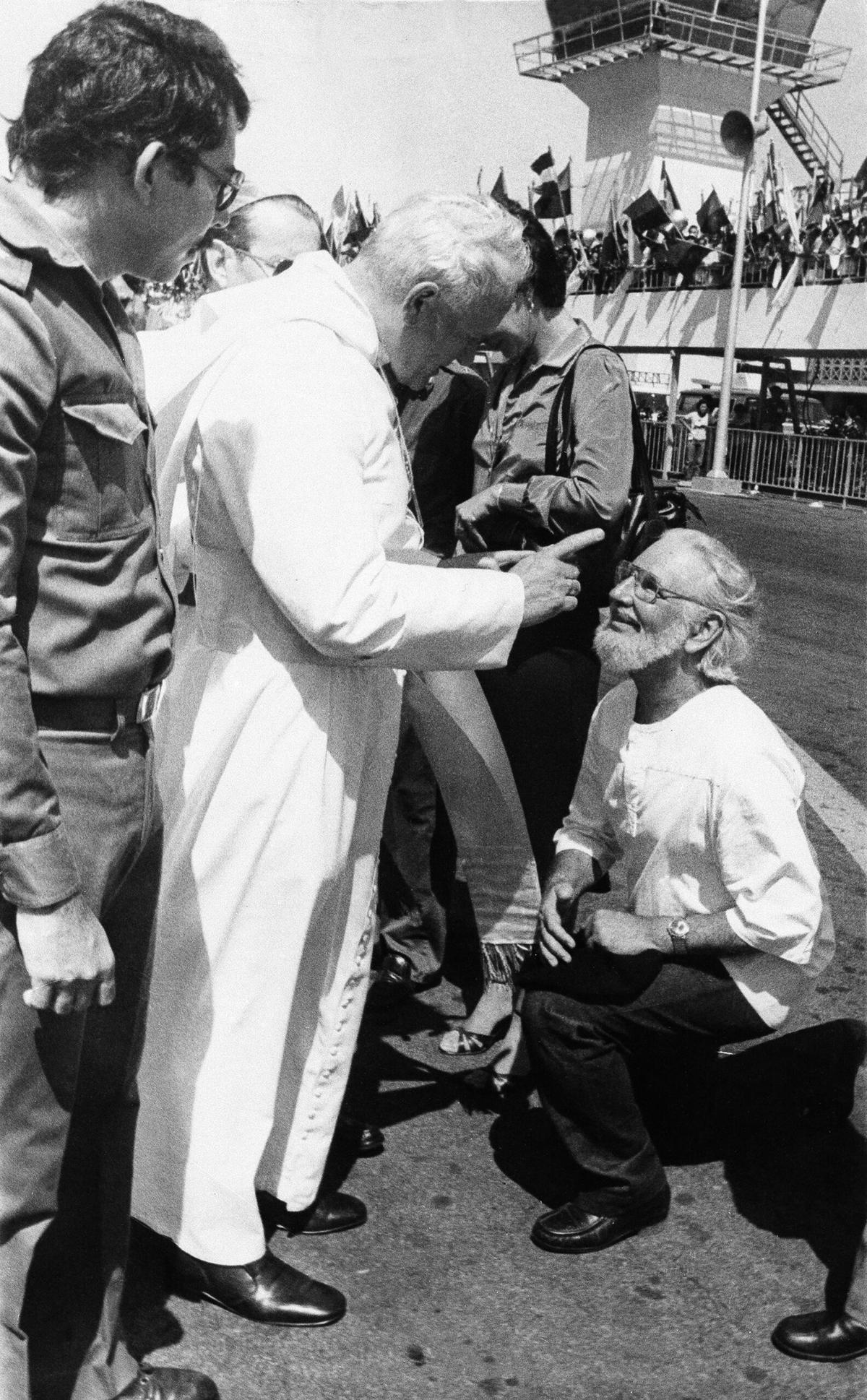
Another scene that occurred a few hours earlier has remained in the memory. Welcomed at the foot of the plane by Daniel Ortega, the Pope was introduced to members of his government, among them Fr. Ernesto Cardenal (1925–2020), a priest and former Trappist monk who had become Minister of Culture and a fervent advocate of liberation theology. John Paul II publicly reprimanded him for his political engagement (which is prohibited by Church law) and the picture of the kneeling priest and the Pope's pointed finger became famous. In fact, Cardenal was suspended from the priesthood a year later and would not have his sanctions lifted until 2019. He died in 2020.
His brother Fernando Cardenal (1934–2016), a priest and Minister of Public Education in the Sandinista government, was also suspended in 1984 and forced to leave the Jesuit order. Having remained on good terms with his former congregation, however, he was able to re-rejoin it in 1996 after completing a new novitiate — a fairly exceptional case in the history of the Society of Jesus.
Ortega: from rehabilitation to authoritarian drift
In the meantime, the situation appeared to calm. Defeated in the 1990 elections, Daniel Ortega moved into opposition, accepting the rules of democratic transition. During the 2006 presidential campaign, the former revolutionary leader drew closer to part of conservative Catholicism, notably through Cardinal Miguel Obando y Bravo, Archbishop Emeritus of Managua, whose support would prove decisive for his electoral victory. His backing for a total ban on abortion illustrated this paradoxical convergence on moral questions. But the alliance did not survive the regime’s authoritarian transformation.
The real turning point came in April 2018. Protests against a social security reform spiraled into a national crisis that left many dead. Priests and Church institutions took in the wounded, offered spaces of refuge, and denounced the repression. The government accused the Church of supporting its political opponents. Bishops who sought to facilitate national dialogue gradually became targets of the regime.
A repression that intensifies
From 2022 onward, the pressure has intensified: arrests of clergy and expulsions multiplied, including that of the apostolic nuncio himself, Archbishop Waldemar Sommertag. Numerous Catholic organizations have been dissolved, processions restricted, and religious celebrations placed under surveillance. Archbishop Rolando Álvarez, Bishop of Matagalpa and a leading figure of ecclesial resistance, was convicted and imprisoned in 2023, then expelled in January 2024. Other prelates met the same fate. In November 2024, Archbishop Carlos Enrique Herrera, president of the bishops’ conference, was in turn sent into exile in Guatemala. In June 2026, a bishop emeritus, Archbishop Juan Abelardo Mata, was arrested following a religious celebration. He is currently believed to be under house arrest.
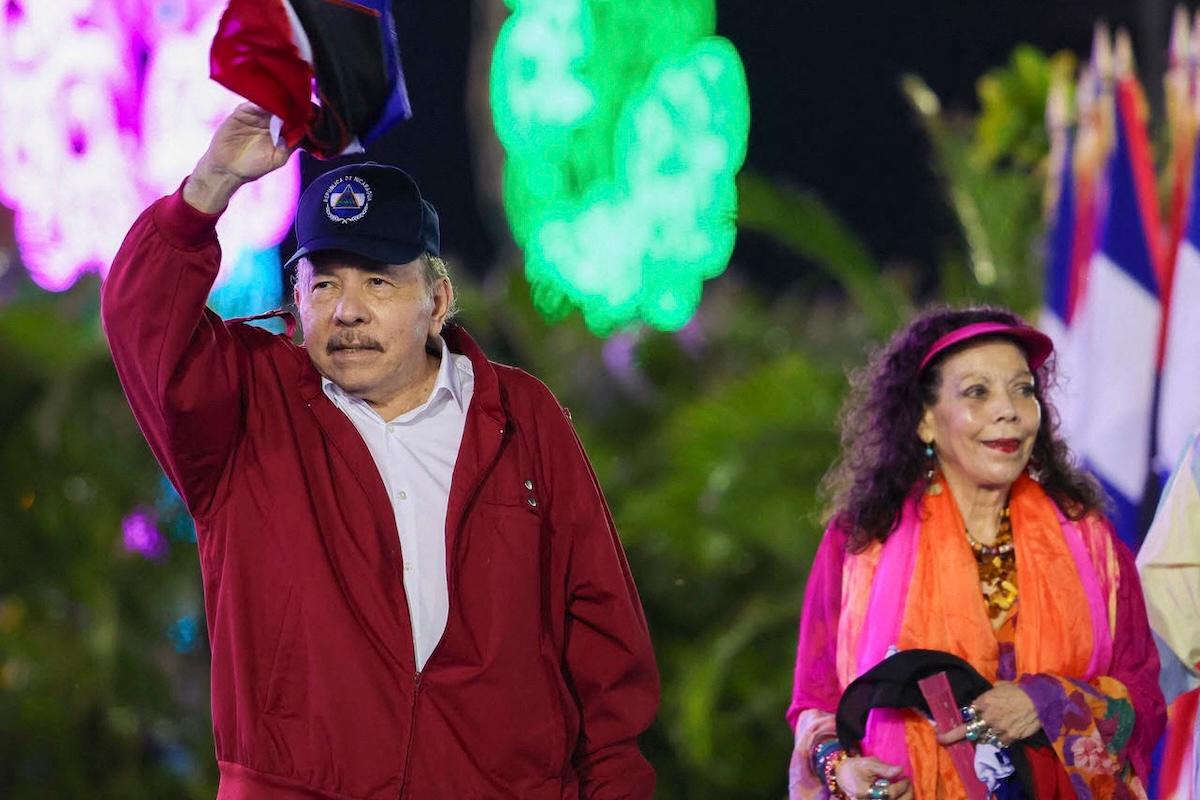
The ad limina visit of the week of October 12 thus takes on particular significance. Beyond its canonical character, it will allow the bishops to present to Rome a Church weakened by forced departures and constant surveillance. It also represents a moment of communion with Pope Leo XIV, at a time when the possibilities for dialogue with Managua remain extremely limited and diplomatic relations are suspended. In 2023, the idea of Brazilian President Lula mediating between the Vatican and the Nicaraguan regime came to nothing.
Since 2025, the Nicaraguan dictatorship has become bicephalous, with Ortega’s wife, Rosario Murillo, elevated to the rank of co-president. Many sources consider that her personal influence has largely contributed to the regime’s radicalization, leaving it increasingly isolated on the international stage.