Bishop Erik Varden reflects on his conversion, Norway’s spiritual awakening, and how cultivating a hidden life prepares us for public action.
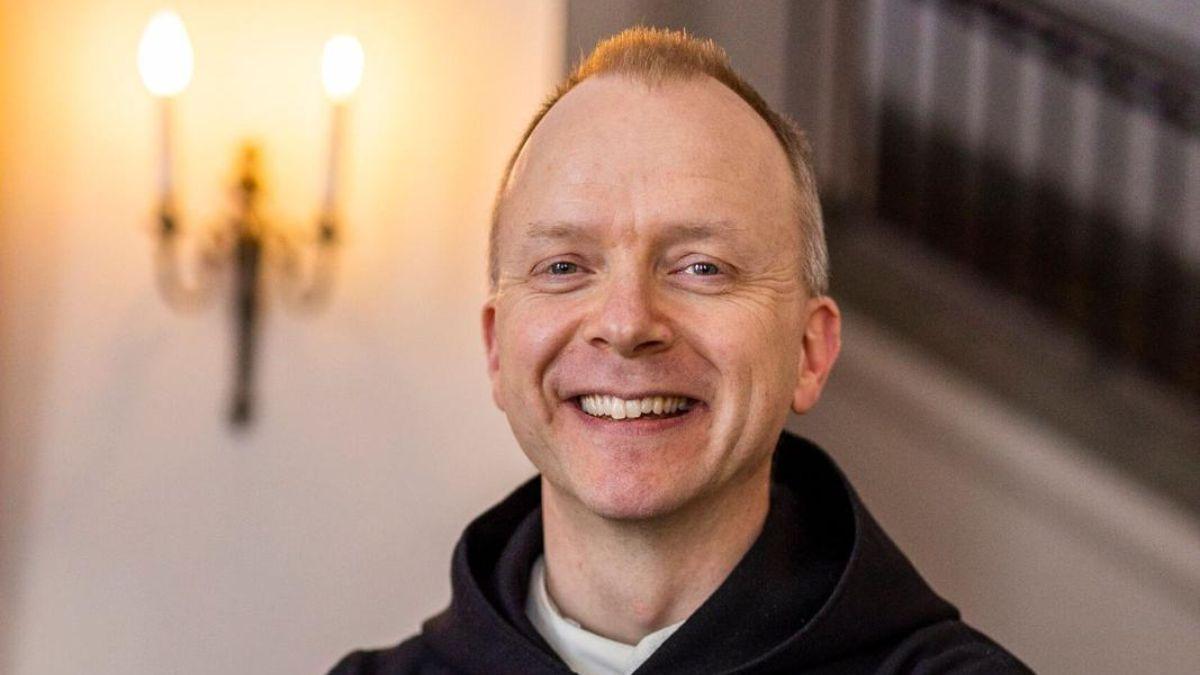
Bishop Erik Varden, a Cistercian monk and the bishop of Trondheim, Norway, recently published two books that illustrate the fruitfulness of a hidden life. Already becoming well known across the Church, he was asked by Pope Leo to preach this year's Lenten retreat to the Curia. He spoke with Aleteia about his conversion to Catholicism, Norway’s spiritual awakening, and the power of the interior life.
In an age when everything seems to be on display, Bishop Varden celebrates what remains hidden. His books are an ode to monastic life, an ancient tradition that has contributed to Europe's cultural influence. They also celebrate the interior life, an essential foundation for developing one's thinking and listening to God's voice.
His latest work, Introduction à la vie cachée (Introduction to the Hidden Life; Fayard), is a conversation with Nicolas Diat based on Pope Benedict XVI’s 2008 address at the Collège des Bernardins regarding the monastic foundations of European civilization. His second recent book, Illuminés d'une gloire cachée (Illuminated by a Hidden Glory; Artège), gathers the spiritual meditations he preached to Pope Leo XIV and the Roman Curia during this year’s Lenten retreat.
Illumination through music
Aleteia: You became Catholic in 1993 and a Trappist monk in 2002. Can you describe your conversion and the spiritual journey that led you to the Trappists?
Bishop Erik Varden: I was born and raised in a Christian family, but we weren't particularly practicing. I was baptized when I was very little, which remains a source of great gratitude for me. However, my Christian formation was fairly neutral.
Like many teenagers, I went through a period of rebellion and resolutely distanced myself from the faith. But when I was 14 or 15, an inner awakening began. I started asking questions about the meaning of existence and searching for lasting points of reference.
During this search, I had a strange illumination that came to me through music. The experience gave me a deep certainty that I carried something within me that transcended me, and that this other reality was a presence with a name. So, I set out in search of that name. This quest led me to the Bible, to Christ, to the Church, and ultimately to my vocation.
A spiritual spring in Norway
You are now the bishop of Trondheim. Norwegians are mostly Protestant, and many are unaffiliated with any religion. How is Catholicism evolving in Norway?
Bishop Varden: We’re experiencing a springtime. Right now, there are many graces and many challenges. This springtime also brings many responsibilities. We truly see grace at work. Many people are searching for truth, communion, and true life with diligence, seriousness, and sincerity.
We can see that Catholicism — which remained a very marginal part of society for a long time and only modestly returned to Norway in the 19th century — is no longer quite so marginal. It must now embrace its role at the heart of society to help form, guide, and support it. It has once again become an integral part of the social and cultural fabric, which is marked by great diversity.
Our Catholic community in Norway is primarily made up of immigrants. In Trondheim, we have Catholics from 130 different countries. Bringing together such a diverse community in unity can sometimes be a challenge, but it also brings tremendous richness. It helps us avoid treating national identity as absolute or imagining that there is a specifically Norwegian form of Christianity or Catholicism that should serve as the norm. It truly invites us to live Catholicism in the original, etymological sense of the word: as a universal communion.
The importance of the unseen
You recently published Introduction à la vie cachée and Illuminés d'une gloire cachée. That’s a lot of hidden (“cachée”) things you’ve decided to bring to light! Why focus on what is hidden?
Bishop Varden: In today's world, where we all seek the attention of others and put ourselves on display with varying degrees of subtlety, it is interesting and fruitful to ask: “What are the truly important things that remain unseen?” Because at the heart of the visible world, there is a hidden life.
This obviously resonates with my monastic sensibilities. Monastic life has always sought to be both hidden and welcoming, hospitable to others. It’s a small society set apart from the world, yet always open to receiving it.
Cultivating the soil of the soul
Why is it so important to develop an interior life?
Bishop Varden: Because public action requires a foundation of reflection and inner grounding. For our words to be meaningful, they must first be the fruit of an inner process. They must express something real, something true, serving as a means of genuine communication rather than mere hot air.
Cultivating an interior life isn't about closing yourself off. It’s about accepting that actions and conversations need time to mature. It means recognizing that the soil in which these seeds grow is the soil of my soul, my mind, and my intellect.
It also means recognizing that this soil cannot be made fertile without effort. It requires work, labor, and erudition. This is a very important concept in Pope Benedict XVI's thought: "Rough" earth is earth that hasn't been plowed, and erudition is the process by which a person, following God’s calling, applies their strength, thought, and desire to transform that rough earth into fertile ground capable of nourishing the seed.
From rough earth to fertile ground
How do we transition from rough earth to fertile ground? How do we achieve this erudition?
Bishop Varden: It happens through an encounter with God; it means responding to his call. It is God himself, his Spirit, who is primarily at work. We must therefore listen to the Spirit, who doesn't speak through violent gestures or forceful rhetoric.
The Holy Spirit loves to speak silently, showing an astonishing and sometimes shocking patience. We must learn, or relearn, to listen, to wait, and to consent to God's action in our existence. This means renouncing the deeply rooted desire in all of us to play God. We have a tendency to want to shape our lives, our futures, and our communities in our own image, rather than receiving the image willed by the Creator for our good and our happiness.
Recognizing the voice of God
You invite us to listen to the Spirit, but how can we recognize God’s voice?
Bishop Varden: First of all, we must learn to recognize the different ways God speaks throughout salvation history by reading, becoming familiar with, and internalizing Scripture. Having a strong biblical foundation is essential. It’s a great challenge because the Bible is a demanding book, but the more you discover it, the more fascinated you become by the universe it opens up.
Next, we must learn to recognize God's action in the Church: in the sacraments, in the communion of the faithful, and in the concrete life of our communities, parishes, and families. We must also recognize it in the magisterium and in the lives of the saints.
These are the prerequisites for discerning what is the fruit of grace and what may arise from human goodwill, but remains on a purely human level.