The famous Daprato Rigali Studio was tasked with creating the official image — and it's part of a trend toward traditional styles. We talked to the artist leading the fourth generation of this studio.
If you’re interested in art and history, the name Daprato Rigali might ring a bell.
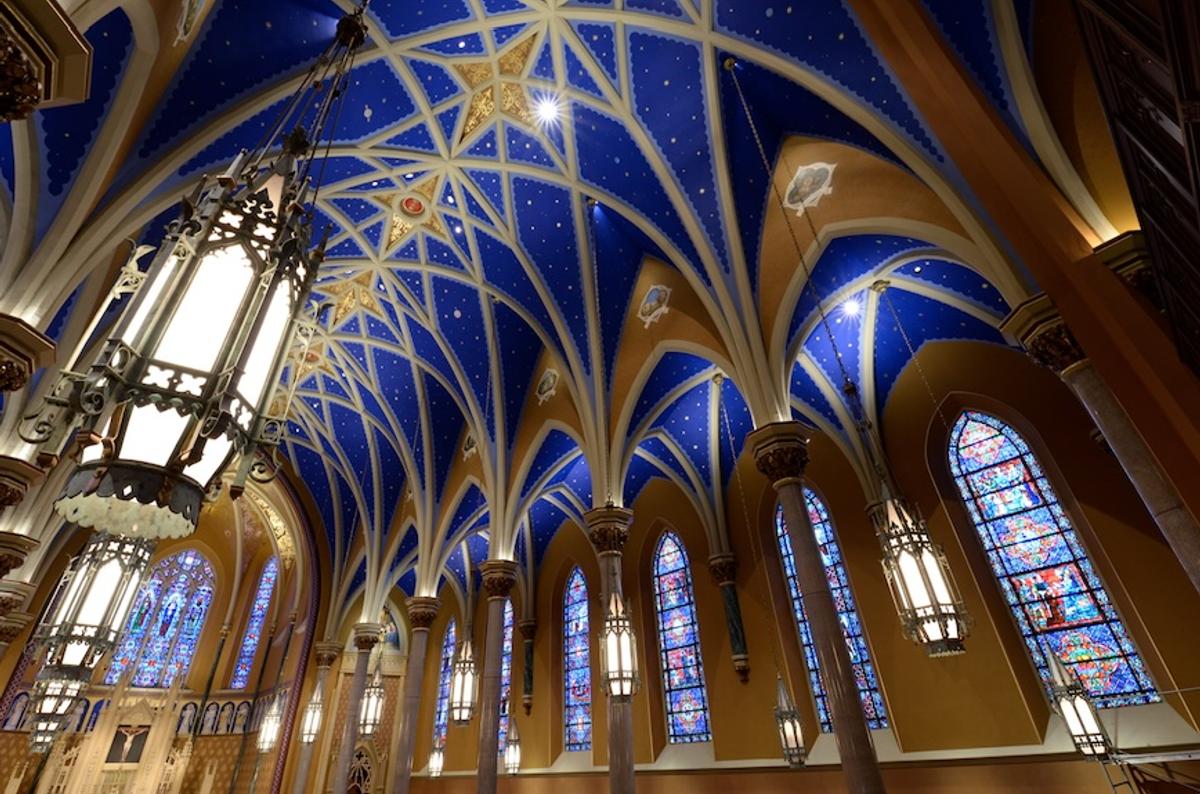
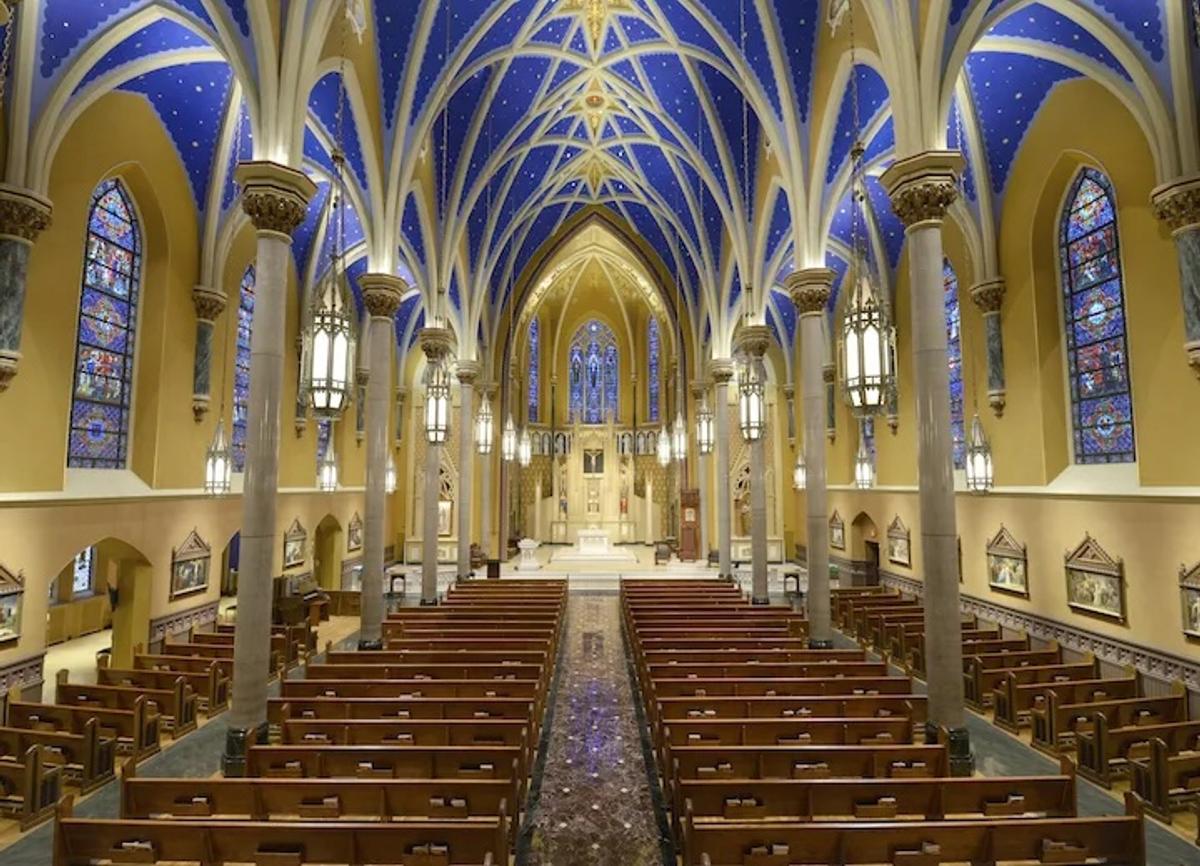
Since 1860, Daprato Rigali Studios has been an industry leader in interior design and the renovation and restoration of historic and iconic buildings, with a special focus on decorative painting, stained glass, and marble fabrication. With a stained glass studio, a marble studio, a design studio and other services, some 30 talented artists and designers work together to craft the luminous projects for which Daprato Rigali is known.
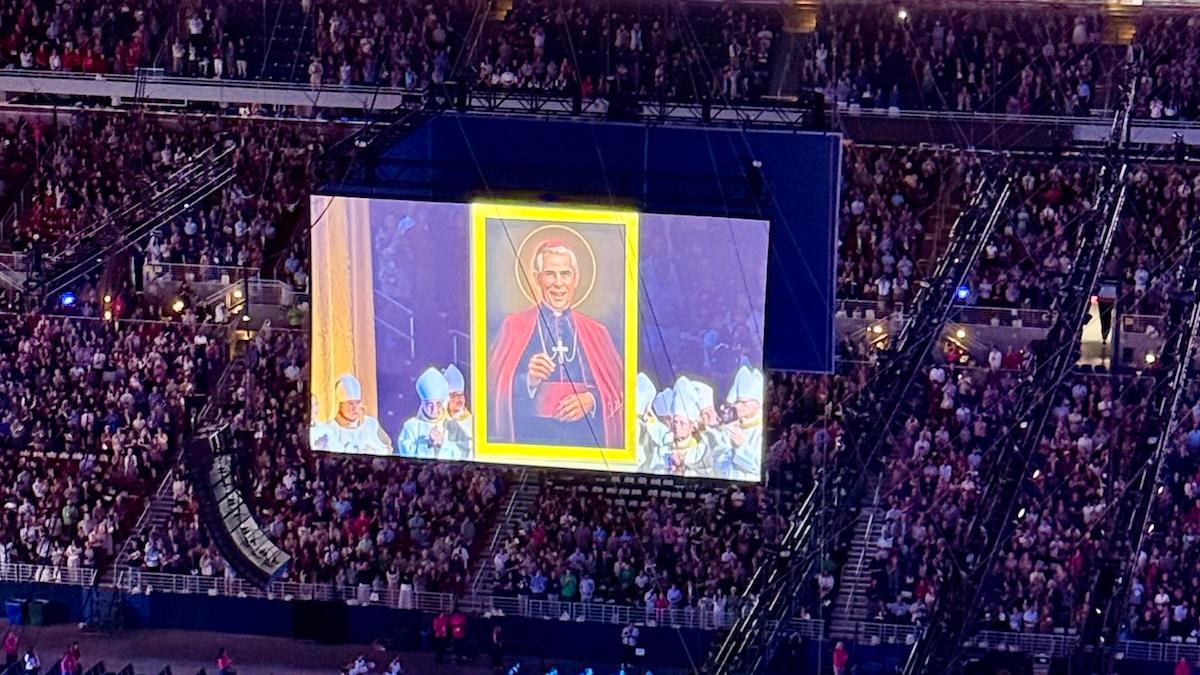
When the planning began for Blessed Fulton Sheen’s historic beatification, Bishop Lou Tylka of Peoria and the planning committee tasked Daprato Rigali Studios with creating the official portrait of Blessed Fulton Sheen — the portrait revealed to thunderous applause at his beatification Mass.
Daprato Rigali’s lead artist, Plamen Petrov, created the masterpiece, while a team of artisans crafted the altar and ambo for the beatification Mass, as well as the pedestal for Blessed Sheen’s relics.
How did the portrait come together? What was it like to be such an integral part of this historic moment? And how is this style of traditional art and design making an unexpected comeback?
Here’s Aleteia’s conversation with John Rigali of Daprato Rigali about all that went into it — and some remarkable big-picture changes he’s seen in the world of Catholic art and churches.
What was the planning process like for creating the beatification portrait?
We met back in February this year with Bishop Lou [Tylka, of Peoria] and our team — my sister Lisa, myself, and our artist Plamen — at our studio in Chicago, and discussed what were some important parts of the image that they definitely wanted to have. You know, the chalk in the hand was a strong point. The JMJ that's on the side of the portrait was a strong point. His cross was also a strong point. I believe that's the cross [of Blessed Sheen's] that Bishop Lou actually wore at the Mass.
From that point, we created a pencil sketch, using images that we were given and that we also looked up and worked with, and started creating the sketch for approval. Once that was approved, then we started the painting of it, and there were four different phases that went through further approval before the final portrait was delivered to the cathedral in mid-July.
What was the process like to make the altar, ambo, and pedestal?
That process was based on other work we've done in larger scale Masses and also drawn from our knowledge of larger churches and celebrations. The ambo was made from a lightweight marble travertine with Rojo Alicante columns, also lightweight, and that enabled us to transport it and set it up just using my crew of three or four guys. The altar was made of the same and was designed to have the Last Supper on it, and the pedestal was fabricated of the same type of lightweight material to make it easy for transportation. We also created a print image of the portrait that was unveiled during the Mass and during the ceremony in the cathedral.
What are some of your favorite projects that you've had the chance to work on as a studio?
My first commission working with our company, when my dad was running it, was actually 1979. We did the Pope’s outdoor Mass [when St. John Paul II visited Chicago]. We did his throne, his altar, the coat of arms, and all the cardinals' chairs for that Mass. It was outside in Grant Park, and it was an amazing, amazing Mass to be a part of, as was the Fulton Sheen Mass that we were just part of.
We also worked with the cathedral on various projects, starting with their renovation and restoration of the cathedral in Peoria. We also were part of the Archbishop Fulton Sheen sarcophagus, and that is where Bishop Fulton Sheen now rests, so that was another great project we were part of. Working with the diocese of Peoria, their team is great to work with, and we've had a great relationship for many years now. It’s a pleasure to work with them ...
But I mean, we've worked on Holy Name Cathedral — we did a major restoration there— and Queen of All Saints Basilica in Chicago, and the list can go on and on for projects that we've worked on. Those are some of the ones that stand out.
What is the most important thing you would want people to know about your work, in particular, people who might not be familiar with the kind of work that you do?
Our studio actually started in 1860 in Chicago, and at the time they would make sculptures during the day, and they'd go around and literally sell them at night. My great-grandfather came over [from Italy] when he was 15, I believe, and in 1895 he ultimately became the manager, then the president, and then the owner of the company. And that's when we got into ecclesiastical art, which encompassed stained glass windows, the marble statuary, the marble altars, the full decoration, murals, stencil work, gilding.
Now we're the fourth generation. I have a sister and two brothers involved, and we've continued on in the very traditional style ... Our company prides itself in working with the client to design the product or the ideas from the sketches to ultimately the finished product. We believe that what we design is what we deliver, and that comes through from our renderings to the finished product. We take pride as a team to take it from the beginning to the end of the project. That is our ultimate goal.
Since the company began, a lot of things have changed in the world of American art, construction, building, and all the fields that your studio is involved in. What are some changes you’ve seen over time?
I believe there was a time where the designs became much simpler, and not as artistic. And at this point, what we've noticed is a surge back into a more traditional style, and the care and maintenance of the great artwork pieces that are in the existing churches. You can see it in a lot of the windows that were done — we've now actually done a fair amount of complete re-leading of the windows to the point now that they're going to last another 150 or 200 years. Statuary is really coming back. We've seen that on a fairly large scale. I think we are seeing more of a traditional style of the Catholic Church from the days going back to almost when my great-grandfather and my grandfather started this work.