From family favoritism to people who talk too much, the papacy has left its mark on some unlikely expressions.
Popes have been influencing the world for centuries, but you might be surprised to discover just how often they crop up in our everyday conversations. In fact, today I was watching someone on television and found myself thinking that they were pontificating. And that got me wondering about all the other words we use in everyday life that have a little papal influence.
So here are six expressions with fascinating connections to papal and Catholic history. Some might not come as much of a surprise, but others show just how deeply the Church has worked its way into our everyday language.
1Nepotism
Let's begin with least palatable one. These days, nepotism is what happens when the boss's thoroughly unqualified nephew somehow lands the best job in the company. And as it happens, nephews are exactly where the word comes from.
The term derives from the Italian nepotismo, which comes from nipote, meaning nephew. During the Renaissance and beyond, certain popes were particularly generous when it came to finding prestigious positions for their relatives.
Some nephews became cardinals, others acquired considerable wealth and influence, and occasionally the supposed nephew was actually the pope's own son. Slightly awkward.
By the 17th century, the practice had given rise to the word nepotism, which eventually escaped the Vatican and found a comfortable home in offices, businesses and political circles everywhere.
So the next time someone gets a suspiciously convenient promotion because their uncle happens to be in charge, you can thank a few less-than-discreet popes for giving you the perfect word.
2Pontificate
We've all encountered someone who enjoys the sound of their own voice a little too much. Perhaps it's the colleague who turns a simple question into a 20-minute lecture, or the relative who just can't resist making Christmas dinner an excellent opportunity to share his views on absolutely everything.
We say they're “pontificating,” and you don't need to be much of a linguist to suspect a pope might be lurking somewhere in its history.
The noun pontificate originally referred to the office or period of service of a pontiff, particularly a pope.The verb developed from the Latin pontifex, meaning a high priest, and was initially associated with performing the duties of a pontiff.
Unfortunately, somewhere along the way, the word acquired a less complimentary meaning. By the 19th century, it could describe someone adopting pompous airs, and eventually it came to mean speaking in an excessively authoritative or dogmatic manner. Not exactly the linguistic tribute the papacy might have hoped for.
Still, it's a wonderfully useful word, especially when someone insists on explaining a subject they know considerably less about than they think.
3Devil's advocate
Ever deliberately argued against an idea you actually agree with, just to see whether it stands up to scrutiny? Well, you've played devil's advocate, a role with a surprisingly respectable Catholic history.
For centuries, the Church employed an official known as the Promoter of the Faith during investigations into possible saints. Part of his responsibility was to examine the evidence critically, raise objections and make sure that claims about a candidate's holiness and miracles could withstand serious examination. He became popularly known as the advocatus diaboli, or devil's advocate.
Despite the rather alarming job title, he wasn't actually working for the devil. Quite the opposite. His job was to help ensure that the Church made sound decisions about whom it declared a saint.
The expression eventually moved into everyday language, where it now describes someone who challenges an argument, often for the sake of discussion. Which is rather useful when you actually agree with everyone at the table, but decide the conversation would be far more interesting if you didn't.
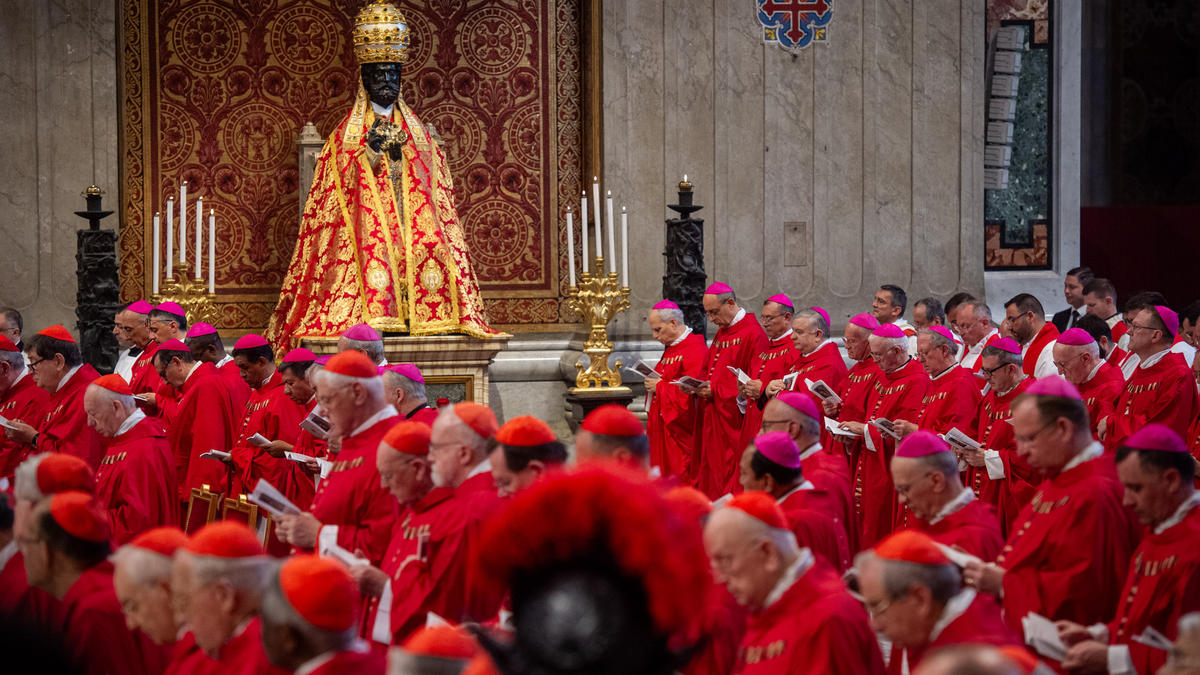
4Conclave
Today, you might hear about a political conclave, a gathering of business leaders or a particularly secretive meeting of influential people. But the word has its roots in one of the most extraordinary episodes in papal election history.
In 1268, cardinals gathered in the Italian city of Viterbo to elect a new pope. Unfortunately, they couldn't agree on whom to choose. Months passed. Then a year. Then another.
The increasingly exasperated townspeople eventually decided that enough was enough and locked the cardinals inside the papal palace in an attempt to hurry things along. Yet, even that didn't produce an immediate result. The election dragged on until 1271, when Gregory X was finally chosen.
The word conclave comes from Latin, meaning a lockable room, and the experience at Viterbo helped inspire the formal rules governing papal elections introduced by Gregory X in 1274.
Thankfully, most modern business meetings don't require locking the participants inside until they reach a decision. Although anyone who's endured a particularly tedious committee meeting might occasionally be tempted.
5Canonize
If someone has been canonized by the Catholic Church, it means they've been formally recognized as a saint. The word comes from the idea of entering someone's name into the canon, or official list, of saints. Although the practice of recognizing saints is much older, canonization gradually became reserved to papal authority during the Middle Ages.
But outside the Church, the word has acquired a rather more casual meaning. Today, we might say that an actor has been canonized by film critics, or that a much-loved public figure has been practically canonized by their admirers.
Nobody is suggesting that the celebrity has performed a miracle or demonstrated heroic virtue. It simply means they've been elevated to a position where criticism is almost unthinkable.
The Church, of course, takes considerably longer to investigate a candidate for sainthood. The internet can sometimes manage it in an afternoon!
6Ex cathedra
Now, we'll admit this final expression hasn't exactly made it into everyday conversation. But frankly, we think it deserves a revival.
Ex cathedra literally means “from the chair” in Latin. In Catholic teaching, it refers to the pope exercising his supreme teaching authority in a very specific way when definitively proclaiming a doctrine concerning faith or morals. It certainly doesn't apply to everything a pope says, even if he happens to be sitting in a particularly impressive chair.
Outside the Church, however, the expression can also describe someone speaking with an air of unquestionable authority. And just think how useful that could be.
The next time someone at the dinner table delivers their opinion as though no further discussion could possibly be required, instead of rolling your eyes, you could simply announce:
“Well, that was rather ex cathedra.”
Will they know what you mean? Possibly not. But you'll sound magnificently authoritative while accusing them of sounding magnificently authoritative. Which, frankly, is the perfect excuse to start using it.