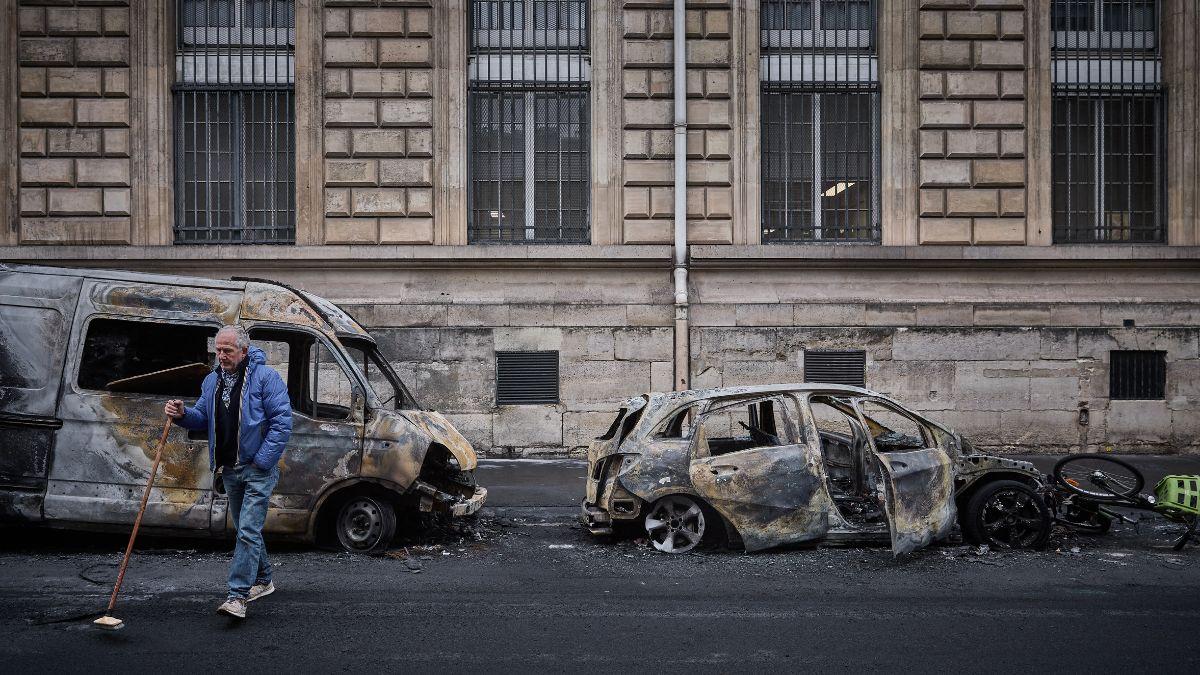
After violence marred protests across France on October 17 and the situation continues to be tense, the French Bishops’ Conference and several dioceses condemned the destruction and called for peace.
“A level of violence we’ve never seen before.” That was how Lamia El Aaraje, first deputy mayor of Paris, described the situation on Sunday, October 18. The previous day, protests had been marked by violence in the capital and several other French cities.
Scenes of destruction multiplied from street to street, reaching even the symbolic locations of the French Republic. In Marseille, Lille, Angers, and Bordeaux, protesters vandalized city halls and prefectural government offices. In Lyon, a tourist information office was set on fire, while numerous businesses were looted. In Limoges, flames ravaged City Hall.
Against this backdrop, the French Bishops’ Conference (CEF) and several dioceses have spoken out in recent days, urging people not to let violence deepen divisions.
“Unacceptable” violence
Several Church leaders have spoken out since the violence that erupted on the sidelines of the October 17 protests.
In Marseille, where the unrest left several businesses and public buildings damaged, Cardinal Jean-Marc Aveline responded on Sunday, October 18, in a statement posted on Instagram. “Our country deserves better than this,” the cardinal lamented.
In Paris, Archbishop Laurent Ulrich also expressed dismay at the violence that engulfed the capital. In an Instagram post on Monday, October 19, he said Paris had been “as though disfigured by the violence that took place there.”
Above all, he lamented the striking contrast with Pope Leo XIV’s visit a few weeks earlier. He said it was hard to believe that the same city that had welcomed the Pope “in joy and harmony” had become, “less than a month later, the scene of the violence we have witnessed.”
A similar message came from Lyon. The diocese had first announced the postponement of the March for Peace, originally scheduled for Saturday, at the request of local authorities “because of the violence committed that day on the sidelines of the demonstrations.”
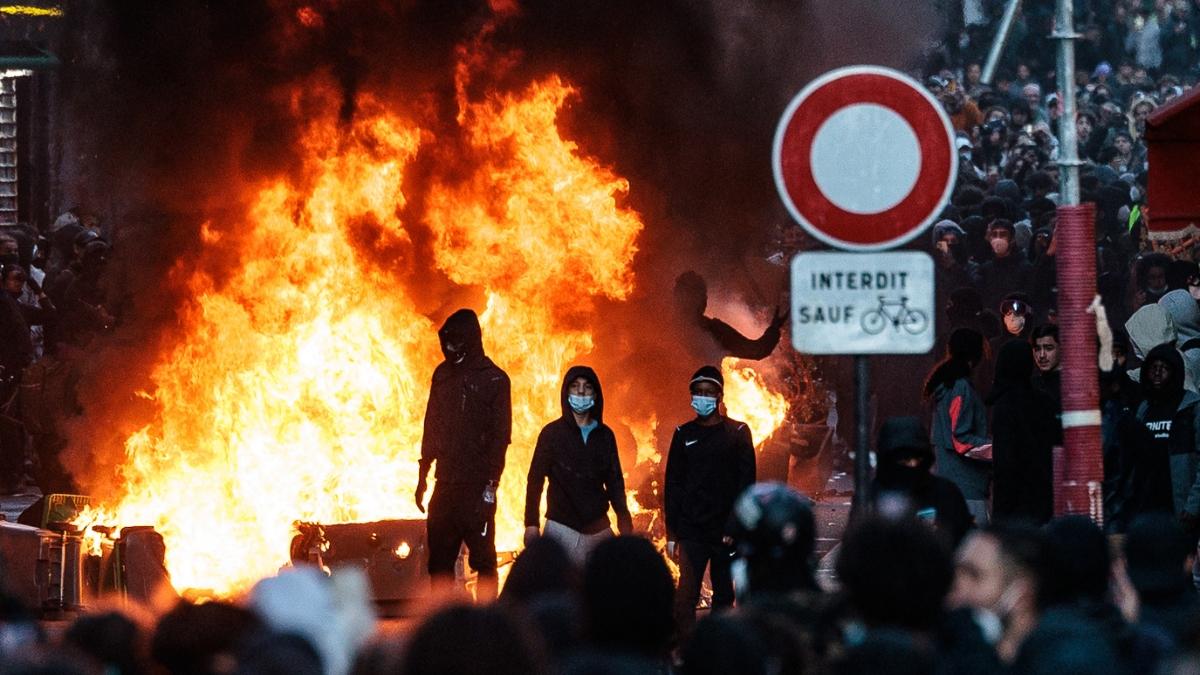
A few hours later, Archbishop Olivier de Germay also condemned the unrest, which had gone far beyond the bounds of a peaceful protest. “The city has been the scene of clashes, hatred, destruction, and looting that are unacceptable,” the archbishop wrote on X.
Violence is a dead end
While acknowledging that the violence was a symptom of a society in distress, the Lyon archbishop insisted that it offered no solution. He also warned of its consequences for social cohesion.
“I am well aware that this violence is a sign of a society in trouble. But I want to reiterate emphatically that it is a dead end and can only lead to more injustice and division.”
Bishop François Touvet of Toulon shared this view, stating that “while the use of force is legitimate in response to violence, violence itself is not.” On Facebook, he also lamented that “this violence has robbed protesters of their legitimate freedom of expression.”
For its part, in a statement released Monday, the French Bishops’ Conference also expressed its sorrow that “these scenes of rioting” had “plunged the country into shock, fear, and desolation, raising many questions about the underlying causes of this crisis.”
While firmly condemning the violence, the CEF called for “legitimate demands to be heard and taken into account,” and expressed hope that “through dialogue and respect for justice, peace may return.”
“Let us be artisans of peace”
Beyond condemning the violence, Church leaders in the various dioceses stressed above all the need to find a path back to peace.
In Marseille, Cardinal Jean-Marc Aveline expressed his solidarity with “those who were injured and the shopkeepers who were victims of this vandalism.” At the same time, he urged everyone not to be drawn into the cycle of violence. “Along with all believers, we pray for these disturbances to end and for peace to return,” the cardinal wrote.
That same determination to break the cycle of violence was evident in other dioceses. In Le Mans, Bishop Jean-Pierre Vuillemin also used social media to call for dialogue and rebuilding. The bishop said he remained hopeful that “the forces of dialogue and rebuilding will always prevail over the forces of destruction.”
Across the dioceses, the message was ultimately the same: move beyond confrontation and seek peace. Archbishop de Germay urged people to act “together” to meet the challenges facing society. He ended his message with these words: “Let us pray for peace and be artisans of peace.”
His appeal echoed Pope Leo XIV’s words a few weeks earlier at the Stade de France on September 25. There, the Pope urged young people not to give in to violence but to become “peacemakers.”
He reminded them that the Christian struggle “is not a battle against others” and must never resort to “the weapons of violence, contempt, or oppression.”