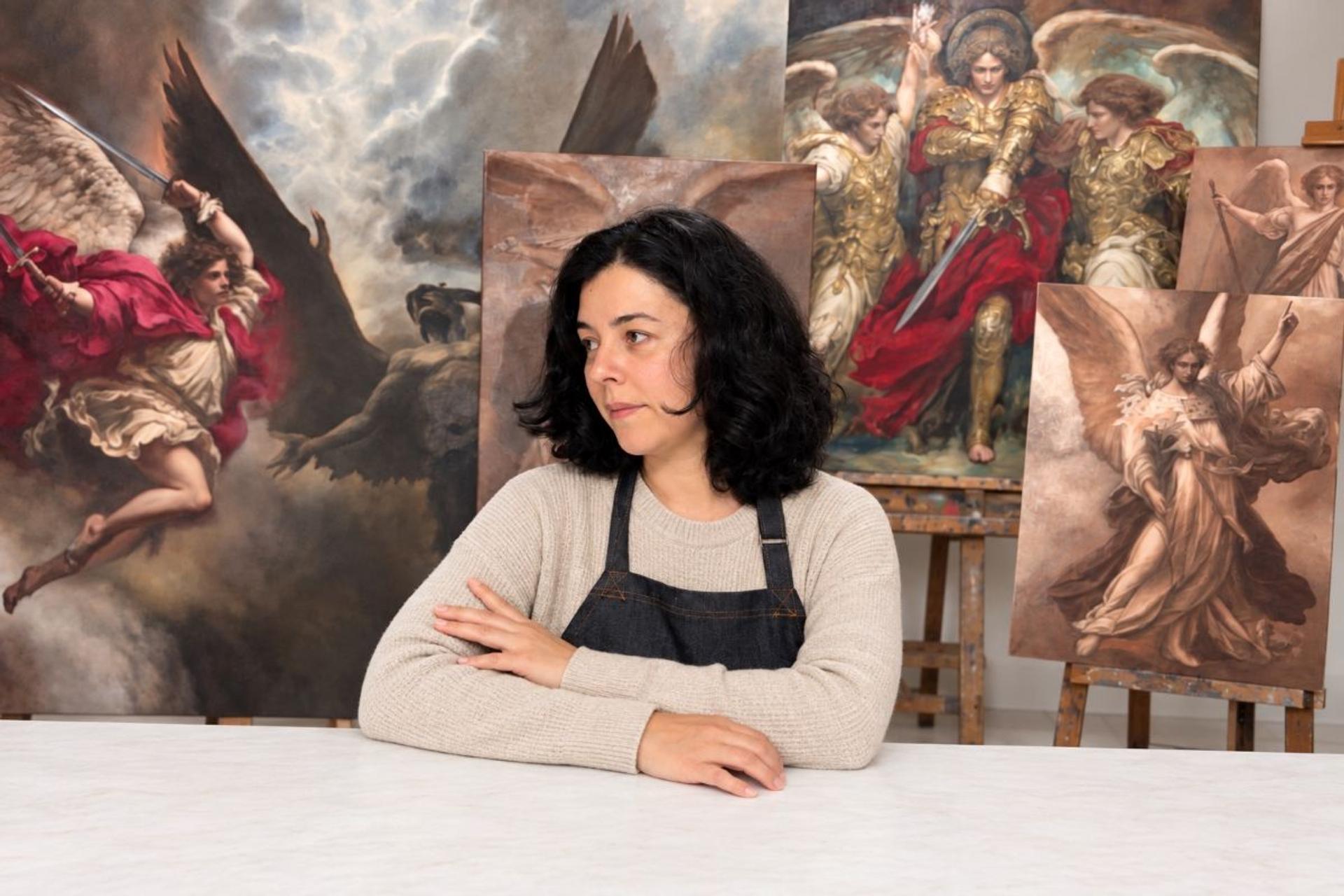
Mexican visual artist and author Edith Pons, winner of the 2026 Bernini Award in the Fine Art category, has traveled a long road to bring her faith and artistic vocation together.
Pons always had a love and a natural talent for art. She studied visual arts at Mexico’s National School of Painting, Sculpture, and Printmaking, known as La Esmeralda. There, she devoted her early years of training and professional work to contemporary art. During that period, however, she drifted away from her faith and, later, from art itself.
“My return to faith came later, and it began by transforming my personal life,” she told Aleteia. “It was during one of the most difficult moments of my life that God revealed himself to me personally. I saw that he was real, that he was alive, and that I could find him fully in the Church.
“At that time, I even came to think that I should give up art entirely to devote myself completely to God in religious life. Over the years, however, I gradually came to understand that my artistic vocation hadn’t disappeared and that it, too, could be a particular way of serving him.”
With her faith renewed, she decided to return to art, guided by the classical tradition and the teachings of St. Thomas Aquinas. Today, her work aims to “help lift people’s spirits, bring hope to the world and, whenever possible, help souls choose Christ.”
Art that is true and universal
Pons first began exploring religious subjects in her art around 2009.
“A priest who was very dear to me, knowing that I was an artist, suggested that I paint something religious. That was the first time I realized it was possible to create sacred art today. It sounds very naive, but that was the environment I came from; the secularization of art was prevalent.”
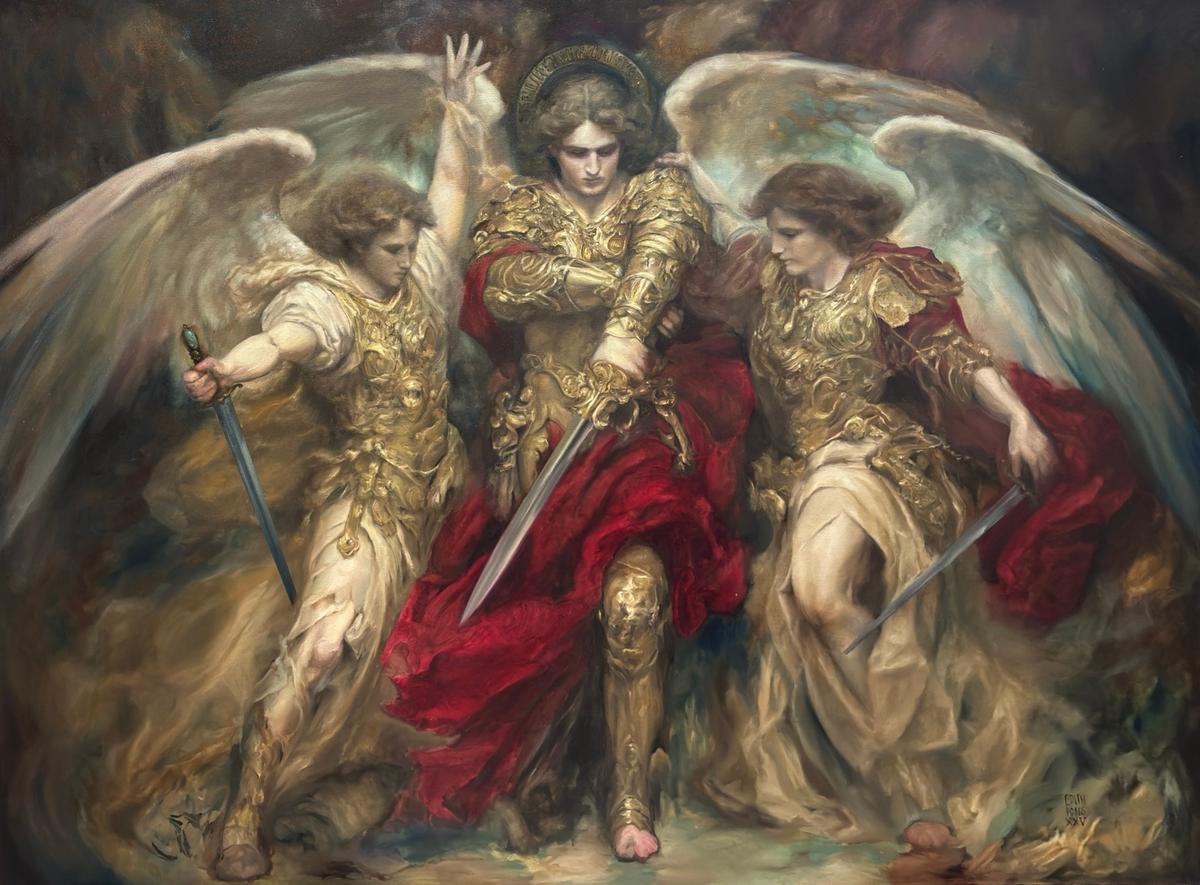
For years, she continued producing copies of existing works and commissioned pieces. But it wasn’t until 2025 that she began consciously applying St. Thomas Aquinas’ criteria for art to her own original work. “You could say that was my first formal work of sacred art: St. Michael, in sepia.”
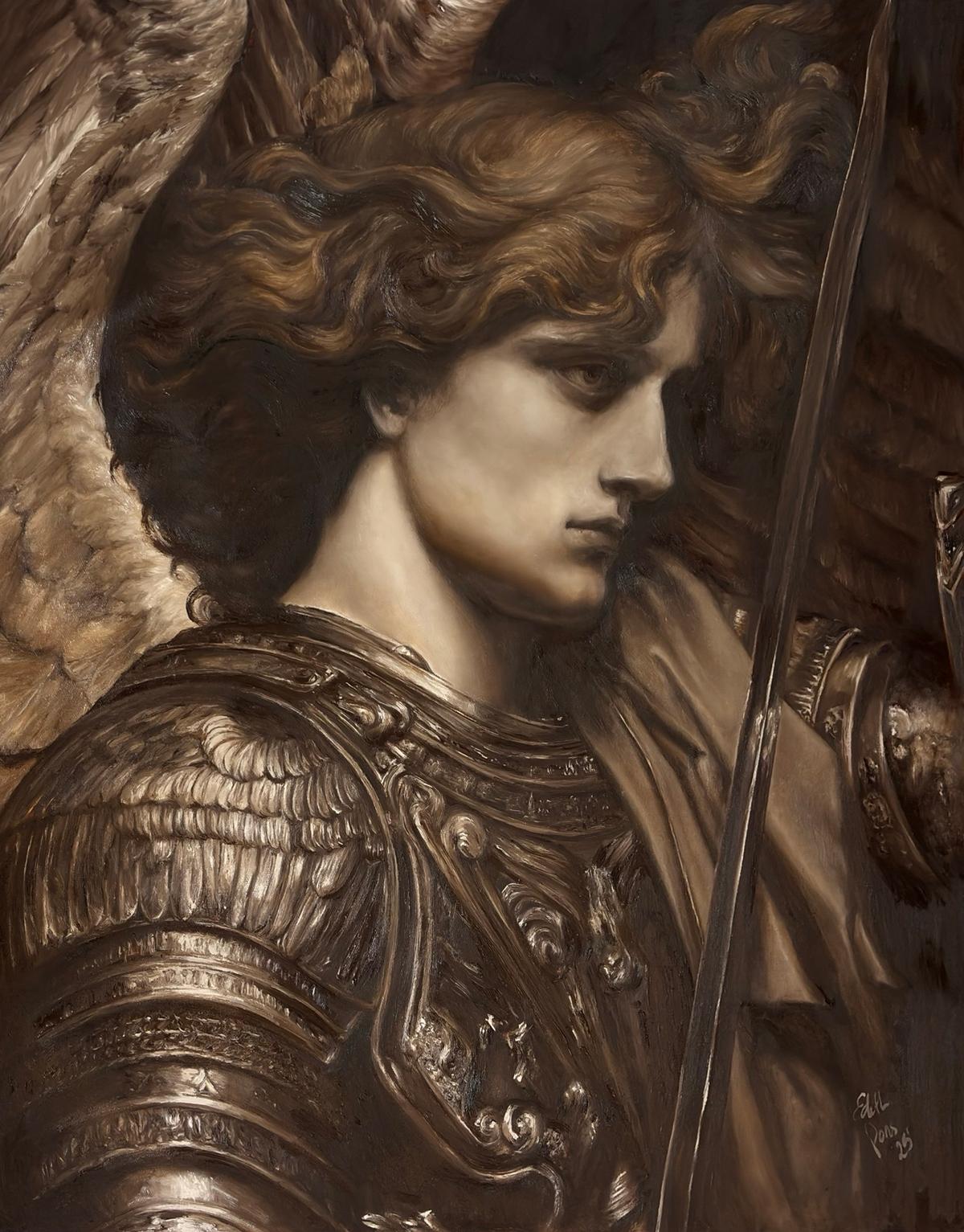
The painting was entered in the Catholic Art Institute’s 2025 Sacred Art Prize in the United States. It won third place among more than 360 entries from around the world. Her second work, The Triumph of St. Michael, received an honorable mention in the same competition.
“For me, it was a kind of confirmation of this new path. I saw that these criteria, new to me but ancient within the tradition, could guide artistic creation toward art that is true and universal.”
The importance of beauty in the spiritual life
Pons is clear that sacred art is created for and dedicated to God, intended to serve worship in the liturgy, and must be genuinely rooted in tradition and doctrine.
“A work may depict Christ, the Virgin Mary, or a saint and yet not truly be sacred art. Sacred art has a specific purpose: it is directed toward God and created to serve worship and help people draw closer to the mystery it represents. That's why it also carries a particular responsibility.”
The artist makes another important distinction: Religious art and sacred art aren't the same thing.
“Religious art can speak about God or the spiritual life, but it may have more personal or interpretive characteristics, or be less appropriate for worship. (...) That's why religious art can accompany us in everyday life, remind us of God and help us live our faith without necessarily belonging to the liturgical or sacred sphere.”
She explains that in sacred art, the artist isn't working merely to express personal feelings or ideas, but to serve God.
“Sometimes I like to think of it this way: Sacred and religious art are vertical because they connect us with God and, at the same time, lift our gaze, our love and our spirit toward him and toward transcendence. Through that experience, they help us transform our lives.”
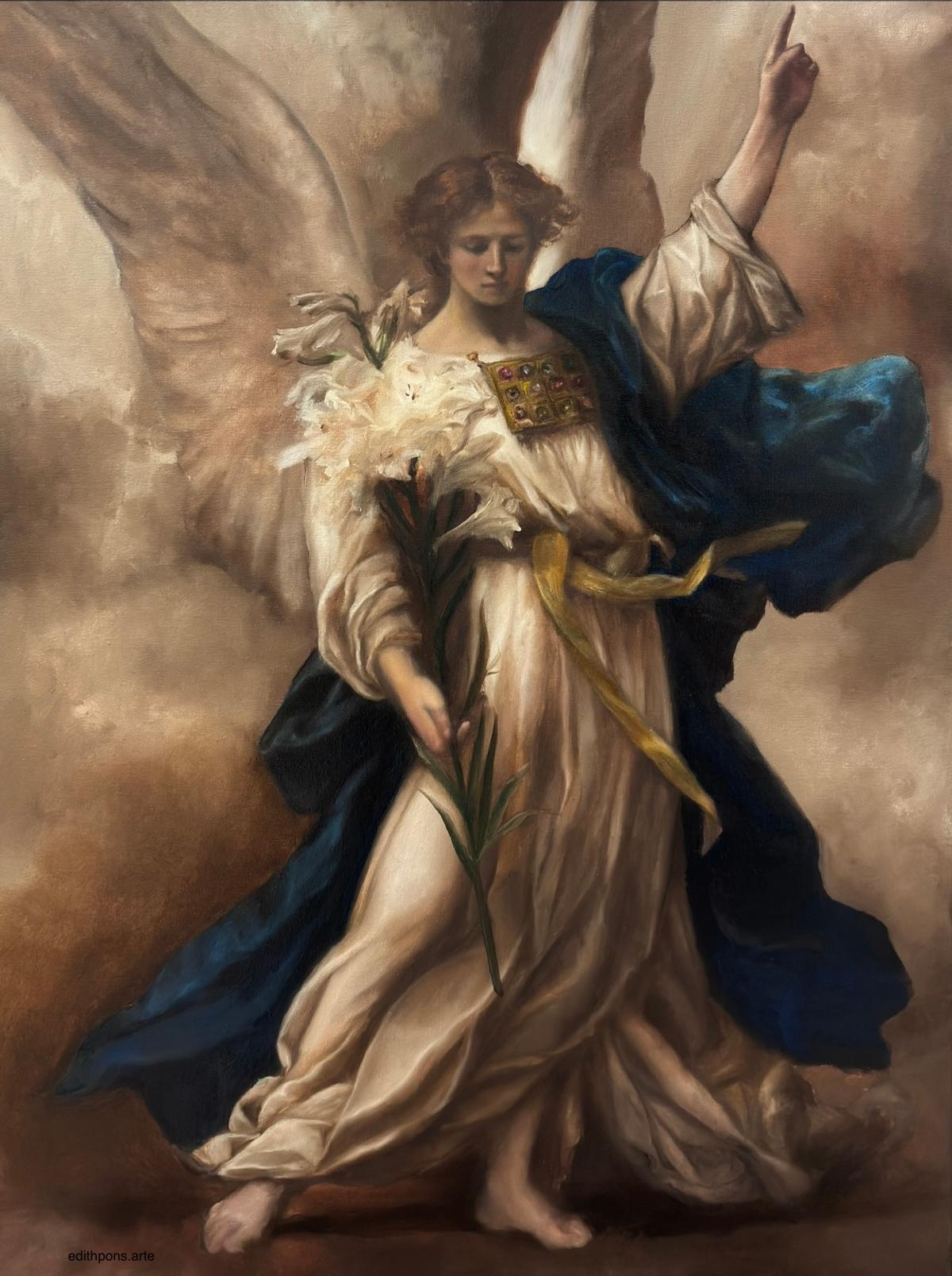
But Pons goes even further, arguing that this art matters because the world needs beauty.
“Beauty makes us vulnerable before the magnificence of something profoundly good that surpasses us. It makes us humble because it allows us to see what we are and calls us toward what we ought to be.”
She recognizes that art can help us understand the mysteries of faith and become familiar with them.
“Often, a person may not yet understand, on an intellectual level, everything the Church teaches. But that person can be drawn in by beauty, stop in front of it, ask questions, and begin to desire what they're contemplating.”
“Art can show us what we can become and, through beauty, draw us toward God. It can make the life of grace and holiness something we desire.”
Recalling the teachings of St. Hildegard of Bingen, Pons says beauty can “awaken deep within us the memory of what we were created for and rekindle our desire for our ultimate end, which is God.”
"Creating sacred art is truly a divine gift"
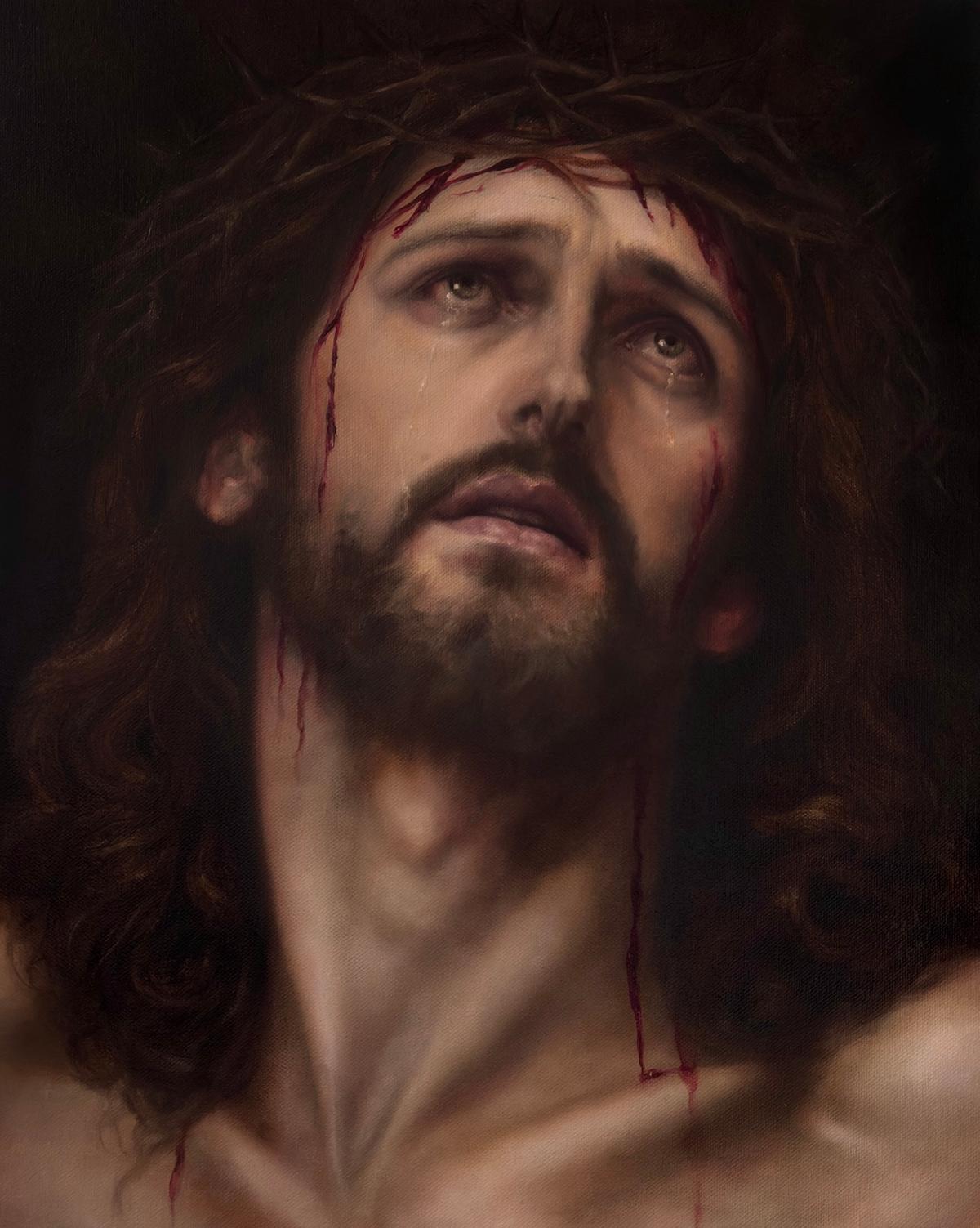
One of the images that has had the greatest impact on Pons' spiritual life is her second painting of the Divine Face of Christ. Creating it changed her life because, in her words, it meant “living it in some way.”
“It became an experience in which I myself, through my sins, have participated.”
By bringing her faith and vocation together, art became not only her principal occupation but also an apostolate.
“It's the way I can contribute most to evangelization and extend my mission after participating in Mass. The art I create can no longer be separated from what I believe, and if it doesn't have a religious subject, its purpose must be beauty.
“That's what I want to share. In other words, my work reflects my spirituality. It doesn't replace my spiritual life, but it's part of it and extends it into my daily work.”
Through her art, Pons strives every day to “help lift people's spirits, bring hope to the world and, whenever possible, help souls choose Christ.”