The European microstate is one of Europe’s few countries to maintain a strict ban on abortion with minimal exceptions.
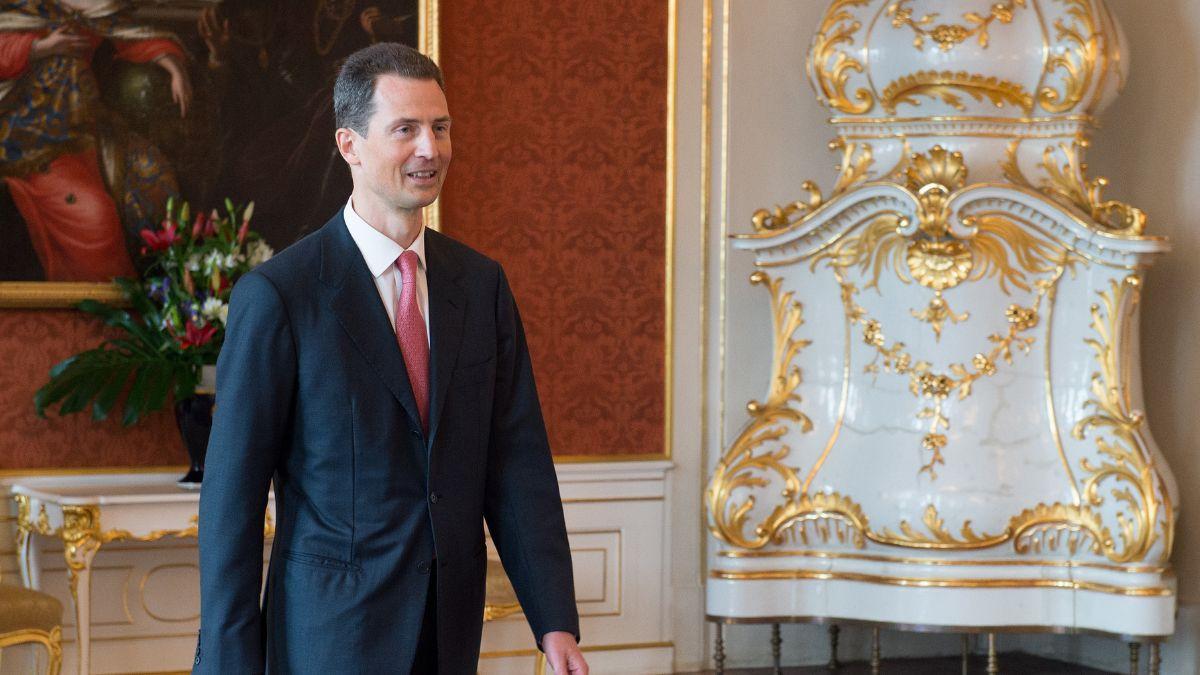
On October 20, Liechtenstein’s Hereditary Prince Alois vetoed legislation which, if enacted, would have permitted abortion during the first trimester. The parliament had approved the bill by 13 votes to 12 in early September.
Currently, Liechtenstein’s laws only allow for limited exceptions to its abortion ban, such as serious danger to the mother’s life or health, pregnancy involving a girl under the age of 14, or pregnancy resulting from a sexual crime. The proposed law would have permitted abortion during the first 12 weeks, repealed restrictions on advertising abortion services, and allowed the procedure to be covered by health insurance.
Once the law was passed by the parliament, the Hereditary Prince had six months to approve or reject the law. Less than two months passed before he announced that he would not allow it to go forward. The bill was born from an initiative that collected signatures from about a quarter of eligible voters in the micro-state (nearly 5,000). The country’s total population is roughly 40,000.
According to Politico, the country’s princely house issued a statement declaring that the bill “is not suitable for adequately protecting unborn life as a central legal interest.”
A previous attempt to introduce a 12-week abortion provision was rejected in a 2011 referendum, with 52.3% voting against it. However, a narrower reform in 2015 removed criminal penalties for women who obtained physician-performed abortions.
Part of a minority of European states
Only six European countries do not allow abortion on request, upholding “highly restrictive, near-total bans” on the procedure. Five of them are microstates similar to Liechtenstein in which Catholicism still holds an important role in society and has influence on a state level. The Vatican City State and Andorra have total bans on abortion. The other microstates with near-complete bans are Malta, Monaco, and Liechtenstein.
Poland is the sixth country on the list. It currently allows abortion “exclusively in cases where a woman’s life or health is at risk or when the pregnancy results from sexual violence.” However, on October 20, Poland’s lower house of parliament passed two bills that would ease abortion restrictions, including by restoring an exception for serious fetal abnormalities and partially decriminalizing abortion-related offenses.
When mother's life is at risk
President Karol Nawrocki will have the opportunity to veto these bills, and is expected to do so. His chief of staff reportedly said that the president “supports the protection of life from conception to natural death,” echoing the Church’s pro-life formulation.
A similar legislative initiative took place in Monaco in 2025. Although the country’s National Council approved a proposal to legalize abortion during the first 12 weeks, Prince Albert II and his government refused to advance the legislation. Pope Leo XIV visited the country on March 28, 2026.
King Baudouin of Belgium was unable to stop a bill legalizing abortion in his country in 1990, but still withheld his assent. The Council of Ministers declared him “temporarily unable to reign” and then enacted the law. Parliament restored his powers two days later. Pope Francis visited his tomb in 2024 and praised the king’s example. He expressed his desire at the time to initiate the monarch’s cause for sainthood.
The Church defends every life
The Catholic Church recognizes the dignity of every human life from the moment of conception to the moment of natural death. Consequently, it opposes direct abortion at any stage of pregnancy—as well as euthanasia and assisted suicide, among other things. Recent pontiffs have also developed the Church’s position on the death penalty, ruling that in the situations of the modern world, it is not admissible.