In a world engineered to capture your attention, choosing what you read — and paying for it — is a quiet form of resistance and a practice of freedom
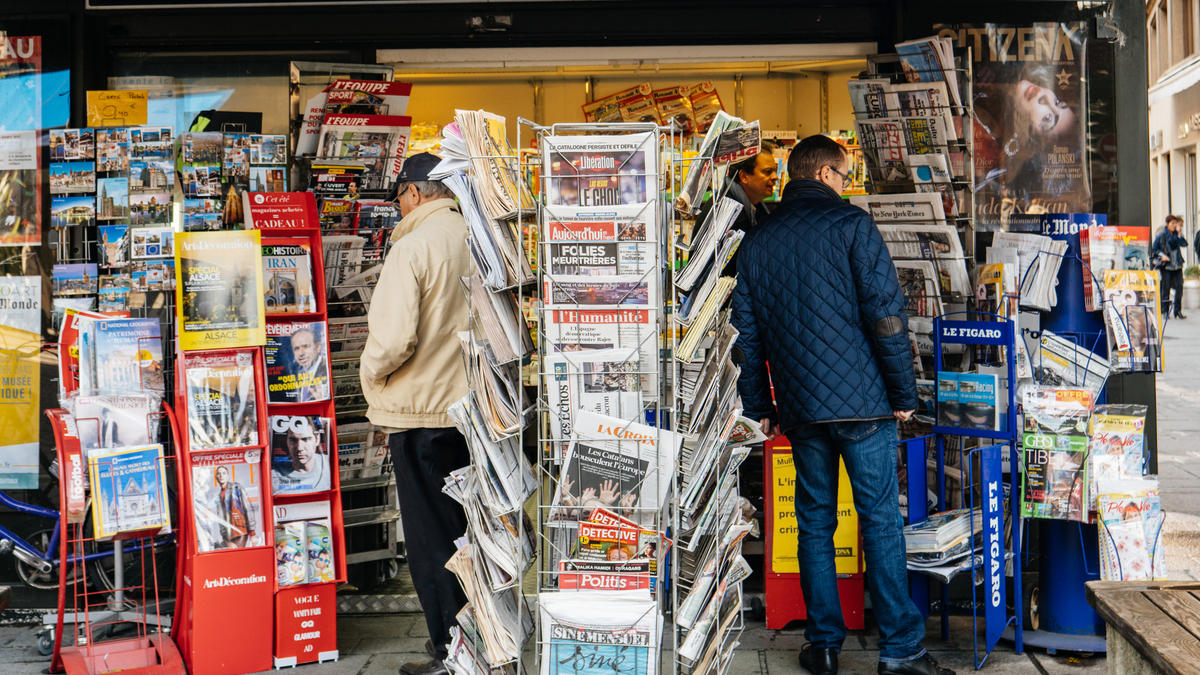
There is something almost countercultural about subscribing to a newspaper. Not because the gesture is dramatic or heroic — it is, after all, one of the quieter things a person can do — but because it runs against the grain of how the internet has already trained us to consume information. We have grown accustomed to getting everything for “free,” instantly, in a feed curated by an algorithm that knows our fears and preferences better than our friends do. Against that backdrop, choosing to pay for news is a small act of defiance, but it may also be something more: a form of asceticism.
The word asceticism tends to call up images of desert fathers and hair shirts. But the original Greek — askesis — simply means “practice” or “exercise.” The ascetic is not someone who punishes the body. The ascetic is someone who trains. And what the great spiritual traditions have always understood is that training requires renunciation: you give something up in order to become capable of something better.
The Bible and the newspaper
A professor once told his students that a good philosopher — or a good theologian — had to walk through the world with the Bible under one arm and a newspaper under the other. The image captures something true about how serious thinking actually works: not in isolation from events, but in constant, demanding conversation with them. The Gospel does not float above history. It lands in it, again and again, and has to be read against the grain of whatever the present moment is doing.
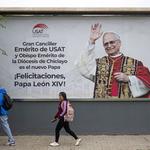
But that only works if the newspaper is worth reading. If what passes for news is a feed of outrage optimized for clicks, the conversation collapses. You can barely bring the Gospel into contact with reality if reality has been replaced by a performance of reality designed to keep you scrolling. As Pope Leo recently put it, clickbait is the enemy of real communication.
What the algorithm takes from you
The attention economy runs on a simple mechanism: the more time you spend on a platform, the more data it collects, the more precisely it can target you, and the more money it makes. Your attention is the product. Every scroll, every click, every moment of outrage or delight is being harvested. The news you see is not selected because it makes you better informed. It is selected because it keeps you engaged — which is not the same thing, and is often the opposite.
This is not some conspiracy theory: it is a business model, and its effects on the reader are corrosive. When your information diet is determined by what provokes the strongest reaction, you end up in a world that feels perpetually on fire. Your sense of what matters is shaped not by considered editorial judgment but by what generates clicks. The algorithm does not care about the common good. If anything, it cares about your cortisol and dopamine levels.
The Church has long understood that what we habitually attend to shapes who we become. “The eye is the lamp of the body,” Jesus said in the Sermon on the Mount. “If your eye is healthy, your whole body will be full of light.” Attention is far from neutral. Where we direct it, and how, is a moral question. We have to reclaim it before it’s gone.
Paying as an act of freedom
When you subscribe to a publication, you do something the attention economy cannot easily accommodate: you make a deliberate choice. You decide, in advance, that this source of information is worth your trust and your money. You are no longer a passive target of an algorithm. You are a reader with a considered judgment about what deserves your time.
This is, in the classical sense, an act of freedom. Freedom is not the absence of constraints. Freedom is the capacity to act in accordance with one’s own values rather than being pushed around by external forces. The algorithm pushes you into a whirlwind of disconnected stimuli. The subscription pulls toward something you chose.
There is also the question of what your money makes possible. Independent journalism does not sustain itself. Reporters, editors, fact-checkers, translators — the infrastructure of reliable information — require funding. When journalism is paid for by advertising alone, it answers to advertisers. When it is paid for by readers, it answers to readers. The subscription is a small democratic act: it says that the people who consume information should also be the ones who make it possible.
A practice for the long haul
The Desert Fathers had a word for the discipline of remaining where you are when everything in you wants to flee: hypomone, often translated as either patience or endurance, but closer in meaning to steadfast perseverance. One of their repeated warnings was against acedia — the restless inability to stay present, to commit, to go deep. The monk who wandered from cell to cell, never settling, never progressing, was considered to be in spiritual danger.
The parallel to our information habits is not forced. We live in an age of permanent distraction, where the next thing is always one tap away and depth feels like a luxury. To subscribe to a publication — and then actually read it, at length, without jumping to something else — is a modest version of staying in the cell. It is a choice to go deep rather than wide, to accept a curated limitation in exchange for genuine understanding.
This is why subscribing is not just a financial transaction. It is a declaration of intent. It says: I want to know what is actually happening. I want information I can trust. I am willing to pay for that, and to resist the temptation of the infinite free scroll that gives me the feeling of being informed while quietly making me less so.
The Bible under one arm. A newspaper worth reading under the other. In an attention economy built on distraction, that combination is, in its small way, a real spiritual practice.
~
[We bring you this article during Aleteia's Donation Week -- while we will always be a free service, we also have to pay the bills. Our Donation Week helps us with both those things. Thank you for your generosity.]