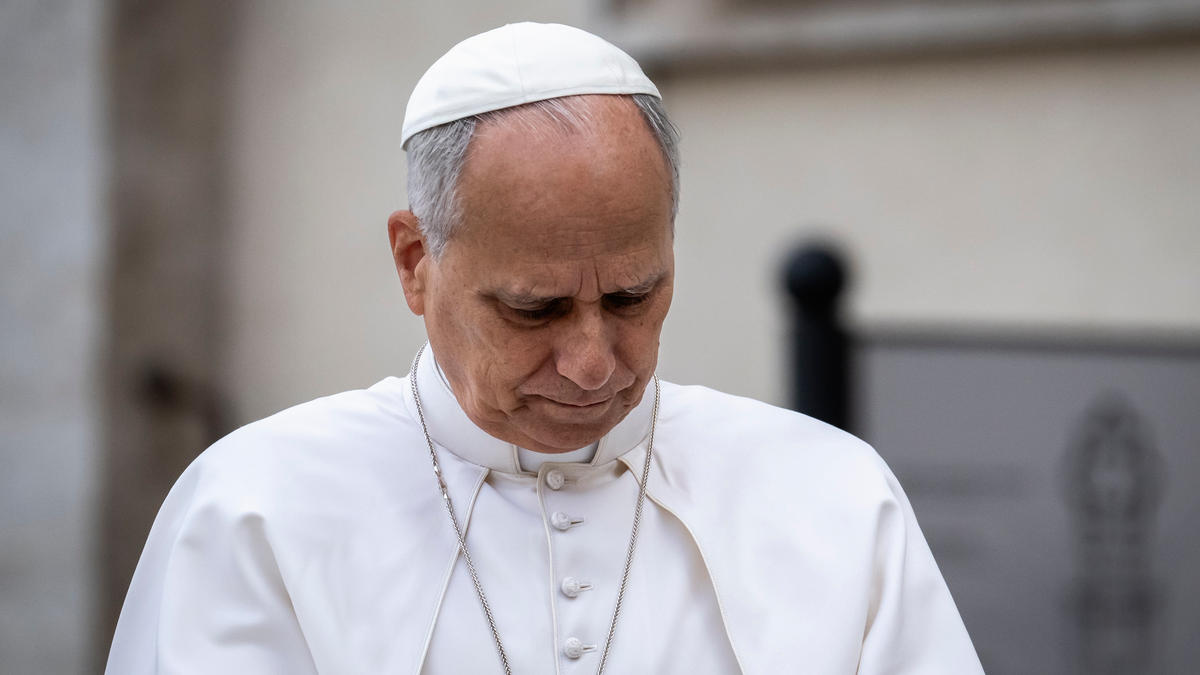
The Holy Father assured his prayers for the deceased, families, and first responders.
Pope Leo XIV expressed his deep sorrow following the collision of two high-speed trains on October 28, 2026, near Urda, in the diocese of Toledo, Spain. The disaster claimed nearly 70 lives and left more than a hundred people injured. In a telegram of condolence addressed to Archbishop Francisco Cerro Chaves of Toledo, the Pope expressed his spiritual closeness to the victims and their families.
“Pope Leo XIV, deeply saddened on learning the painful news of the tragic rail accident in the town of Urda, in Toledo, which claimed many lives and left many injured, offers his prayers for the eternal rest of the deceased,” states the telegram, written in Spanish and published by the Holy See Press Office the day after the disaster.
The Pope, who visited Spain last June, also extends “his sincere condolences to the families of the deceased” and expresses his wishes for a speedy recovery for the injured. Finally, he encourages the members of the rescue teams to continue their relief efforts and bestows upon them, as well as upon all those affected by this tragedy, his apostolic blessing “as a sign of hope in the Risen Lord.”
As is customary following such events, the message is signed by Cardinal Pietro Parolin, Secretary of State of the Holy See.
The accident occurred shortly before 9.00 am on the morning of October 28 on the high-speed line linking Madrid to Andalusia, between Los Yébenes and Urda. An AVE train operated by the state-owned company Renfe, which was traveling towards Seville, rear-ended a train operated by Iryo that was stationary on the track. Several cars were thrown down an embankment, making rescue operations extremely difficult. According to the Spanish authorities, a failure in the signaling and safety system, followed by authorization from the control center to resume services, caused the tragedy. The exact circumstances of the accident, however, have yet to be established, and it is unclear why the authorization was given the Renfe train to continue when the Iryo train was not moving.
In the aftermath of the disaster, the provisional death toll stands at 68 or 69, according to reports published this morning by the Spanish press. More than a hundred people have also been treated for injuries, several of whom remain in hospital in a critical condition. Rescue teams are continuing to clear the wreckage in search of any further victims, while forensic teams are working to identify the deceased.
Spanish authorities have declared three days of national mourning, from October 29 to 31, while high-speed rail services between Madrid and Andalusia remain disrupted. The bishops of Spain have expressed their condolences and sympathy to the families of the victims, assuring them that they are praying “for the eternal rest of those killed and for the recovery of the injured”.
This is the worst rail disaster in Spain since the train accident in Santiago de Compostela on July 24, 2013, which left 79 people dead and 140 injured. However in January of this year, another accident caused 46 deaths, putting Spain into a period of deep uncertainty regarding what needs to be done to ensure safety on its robust train system. Some 45 million travelers used it last year, and as in much of Europe, trains continue to be one of the most efficient, convenient, and affordable ways for people to travel throughout Spain and the continent.