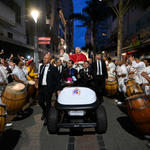
From Pius XI’s limousine to John Paul II’s rugged 4x4s, a 24-ton truck, and an all-electric Mercedes, these 10 vehicles trace the evolution of papal travel.
From Pius XI’s limousine to John Paul II’s 4x4, and from a 24-ton truck to an all-electric Mercedes, popemobiles have evolved considerably over nearly a century. Here’s a look back at 10 vehicles that have marked the history of papal transportation. (See more images in the gallery at the end of the article.)
The car the Pope didn't want: The Itala 20/30 (1909)
In 1909, Archbishop (later Cardinal) John Murphy Farley of New York offered Pope Pius X the first motor vehicle ever presented to a pope: an Itala 20/30. The Italian pontiff, who had been unable to leave the Vatican since the Kingdom of Italy captured Rome, preferred to decline the gift. He was very fond of taking rides in a horse-drawn carriage through the Vatican’s extensive gardens, considering the carriage a more comfortable and less noisy means of transportation.
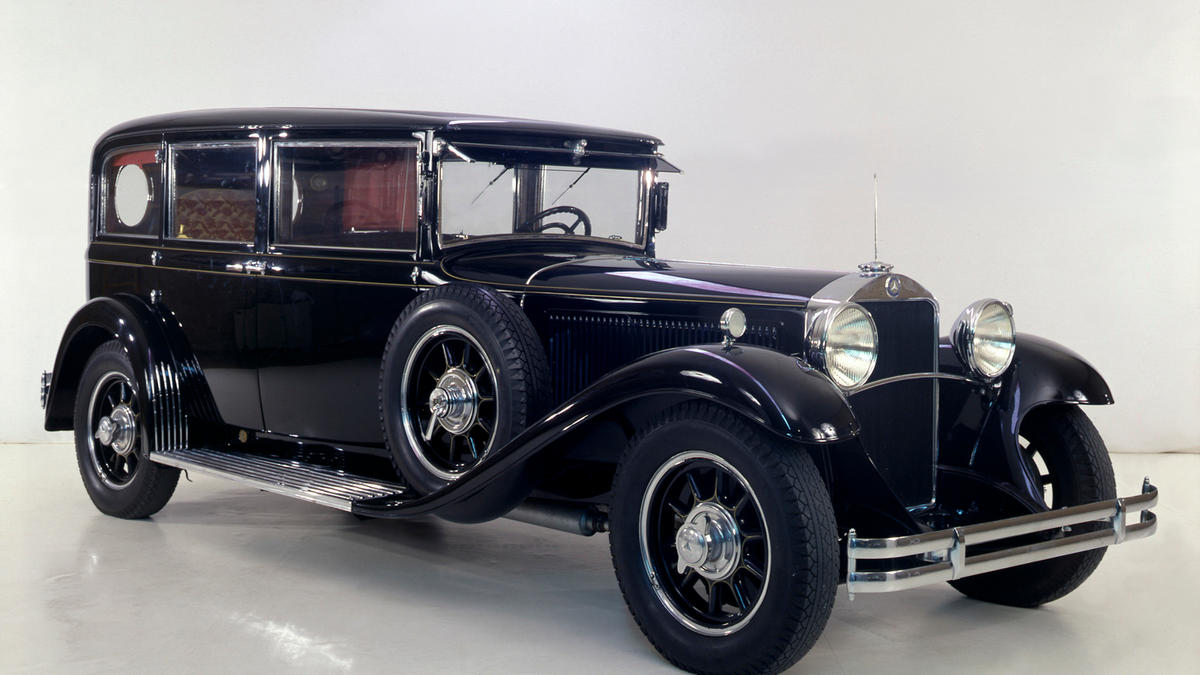
The Pope’s first “official” car: The Nürburg 460 (1930)
This car, donated by Mercedes-Benz, marked the beginning of nearly a century of collaboration between the Vatican and the German manufacturer. The large limousine was delivered to Pius XI on May 23, 1930. Its most amusing feature was a set of discreet buttons to the right of the pontiff’s seat, allowing him to signal to the chauffeur to speed up, slow down, or take him “home.”
The most French: The Citroën Lictoria C6 (1930)
This model was donated by the Citroën factory in Milan. Its richly decorated bodywork and interior, with gilded details, made it a spectacular ceremonial vehicle. It stands in stark contrast to the more utilitarian popemobiles that would appear several decades later.
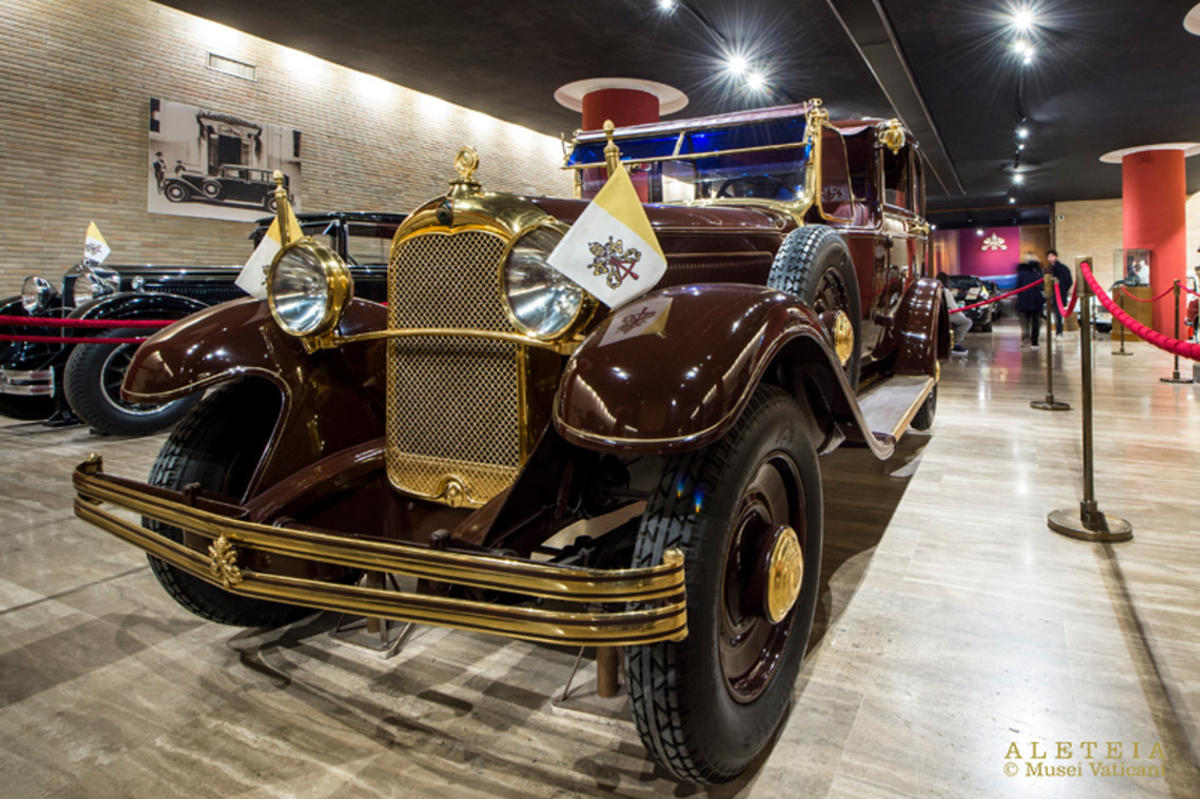
However, the vehicle apparently saw very little use. In 1992, during restoration work at the Vatican Museums, the director noticed that the odometer showed just 159 kilometers. That distance was probably covered in the gardens of the tiny state simply to keep the engine running.
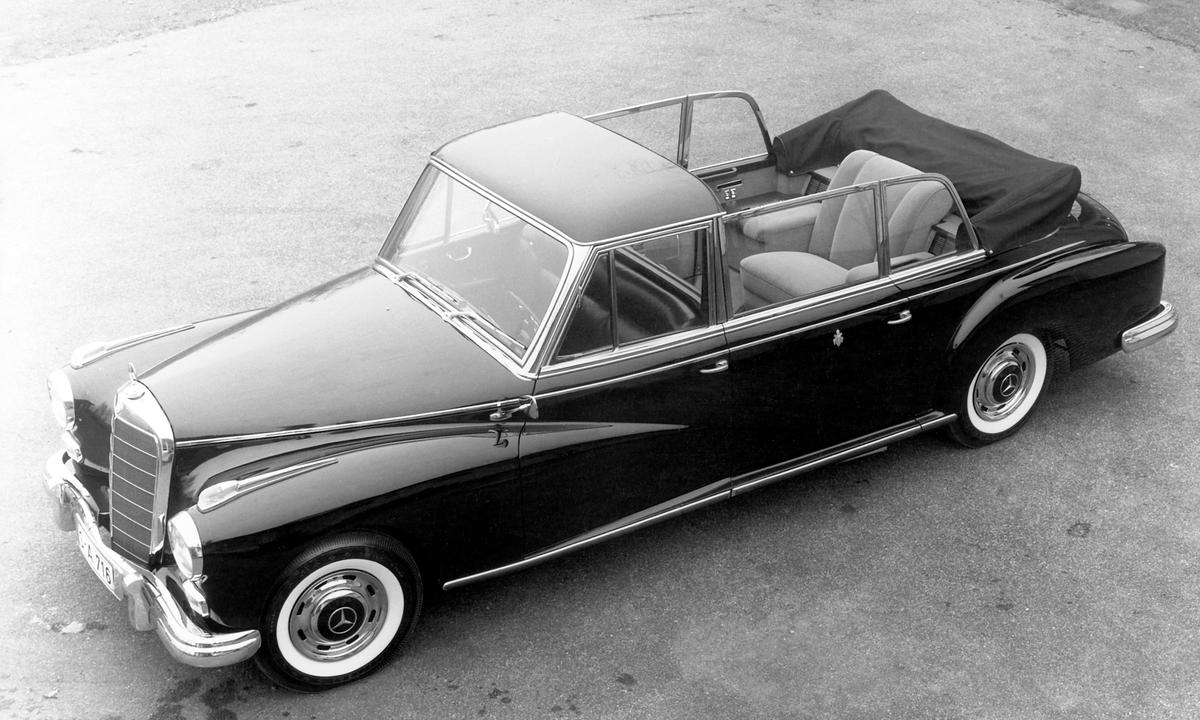
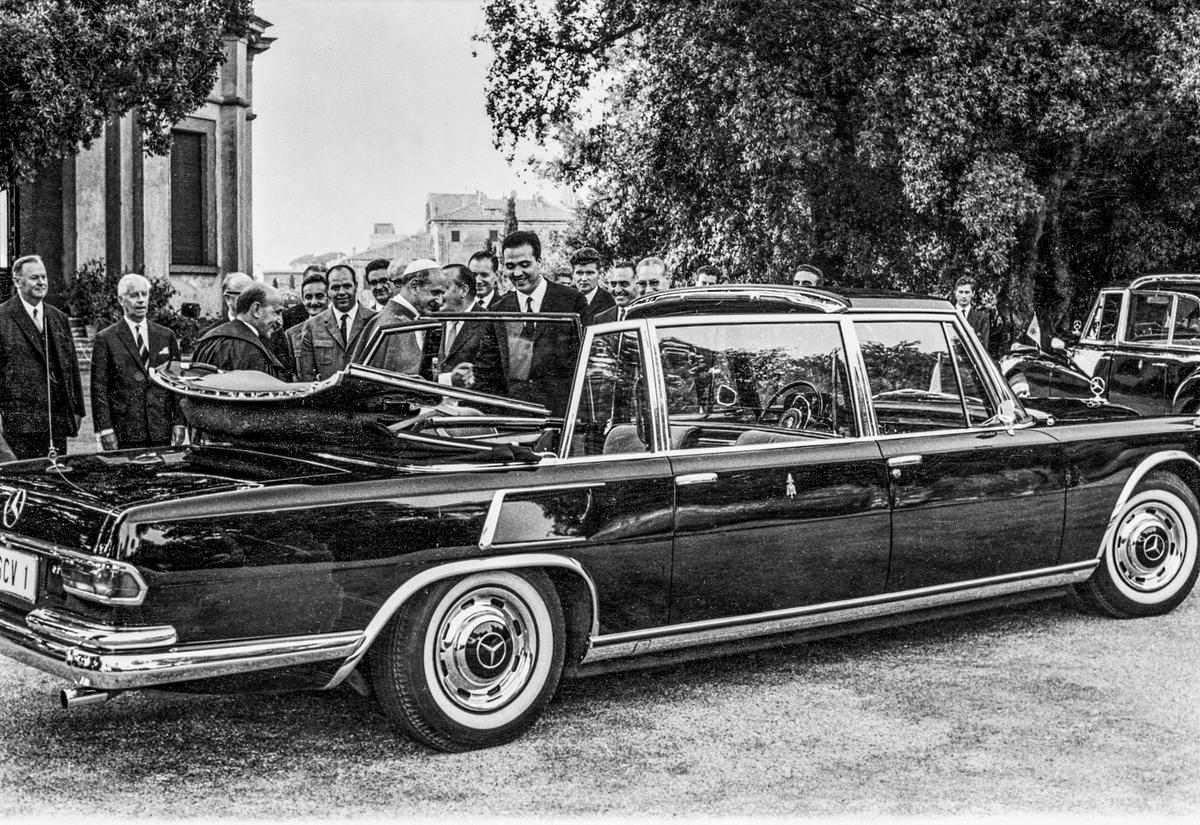
The most majestic: The Mercedes 600 Pullman Landaulet (1965)
This car was intended for Paul VI, the first pope to undertake apostolic journeys in the modern era. The roof of this prestigious limousine-style vehicle could be opened. In this way, the German manufacturer wanted to allow the pope to see the crowds and be seen by them. It was a first step toward the 4x4-style popemobiles we know today.
The first true popemobile: The Toyota Land Cruiser (1976)
This was the first popemobile as we know it today: a white 4x4 with a modified rear section that allowed the pontiff to greet the crowds. Intended for Pope Paul VI, it was designed with the Jubilee of 1975 in mind. However, it was primarily his successor, Pope John Paul II, who used it during his many journeys around the world.
The most tragic: The Fiat Campagnola (1981)
This vehicle is inseparably linked to the assassination attempt on John Paul II in St. Peter’s Square on May 13, 1981. The event permanently changed the way popemobiles were designed, leading to stricter requirements for protecting the pontiff. Following this tragic event, popemobiles would be equipped with bulletproof glass for many years.

The most unusual: The Leyland Constructor 6 (1982)
In 1982, British Leyland was commissioned to supply four vehicles to the Holy See for John Paul II’s visit to Great Britain. The manufacturer converted its Constructor 6, a 24-metric-ton heavy truck, into a popemobile. From an elevated cabin, the Polish pope could safely greet the crowds. It was a first — and a last.
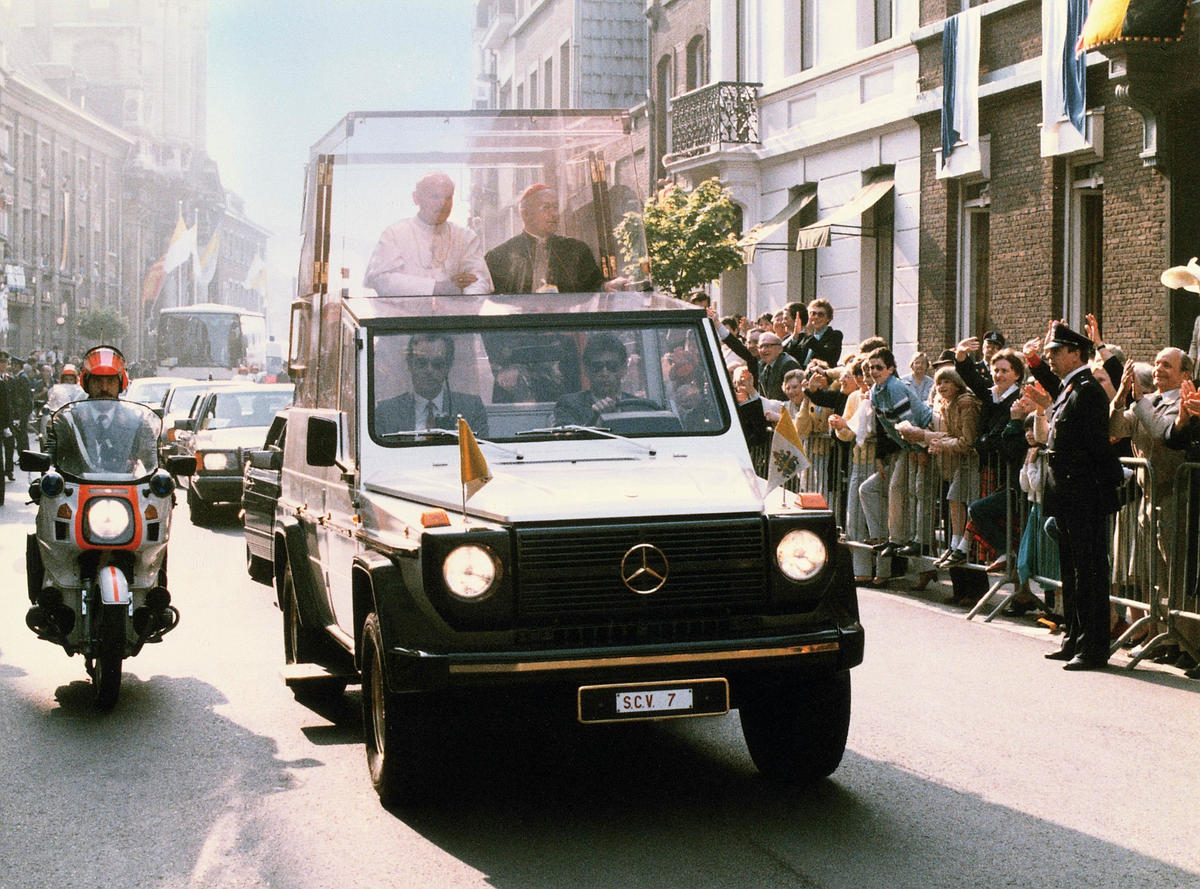
The most protective: The Mercedes 230 GE (1990)
This vehicle was designed in response to the 1981 assassination attempt. Equipped with a bulletproof passenger compartment, it had the advantage of protecting the pontiff not only against armed attacks but also from the rain. For the first time, air conditioning was added to a vehicle that would sometimes be used in countries with extreme weather conditions.
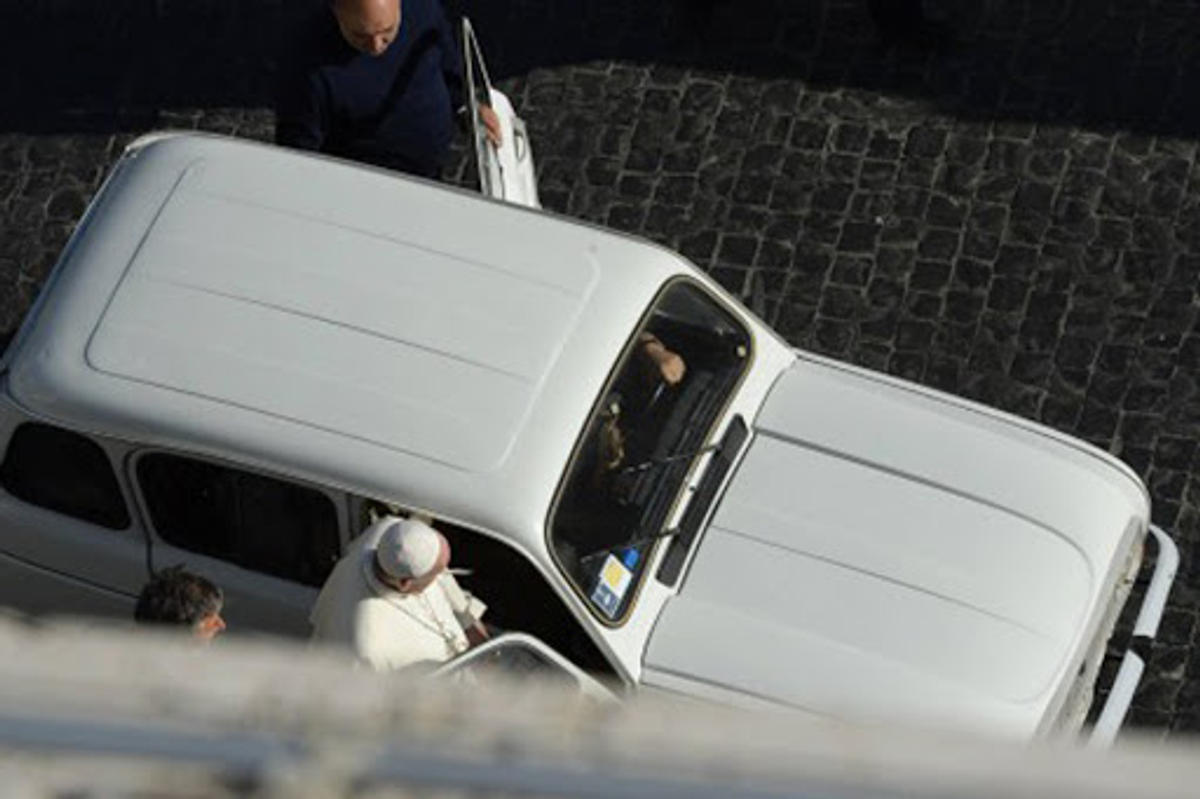
The most modest: The Renault 4L (2013)
Presented to Pope Francis in 2013, this small, inexpensive car was a far cry from the large official sedans. A priest from the Diocese of Verona gave it to him to embody the pontiff’s call for “a Church which is poor and for the poor.”
The two men took a drive together in the French vehicle. The white 1984 model, which had more than 300,000 kilometers on the odometer, brought back memories for Pope Francis, who had owned the same model in his youth in Argentina.
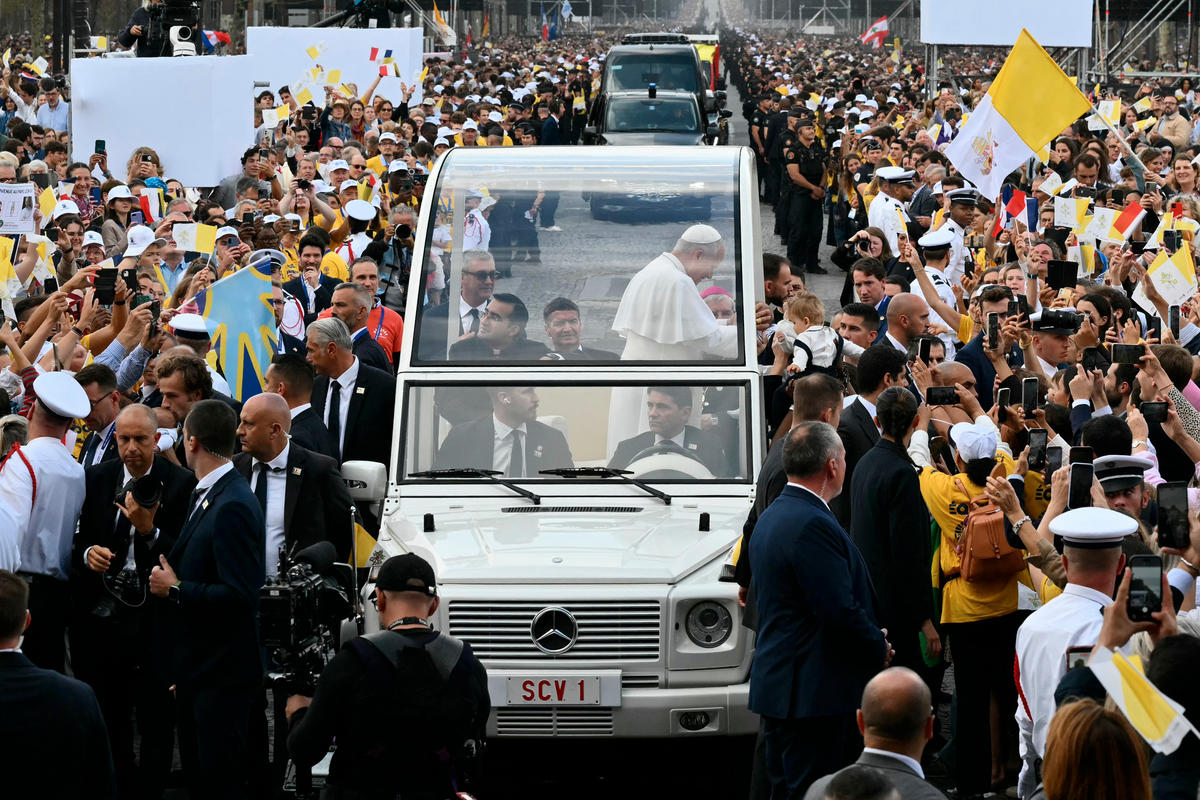
The most high-tech: The electric Mercedes G 580 (2024)
Presented to Francis by the German manufacturer in December 2024, this G-Class was adapted to the pope’s needs by Mercedes engineers. It features four electric motors, one for each wheel, and a specially modified body.
As the first fully electric popemobile, it helped advance the ambitious Conversione Ecologica 2030 program, which aims to equip the Vatican exclusively with electric vehicles. Pope Leo XIV used this model during his visit to France in September 2026.