After Pope Leo XIV’s visit and recent unrest in France, Paris’ archbishop reflects on the Church’s role in fostering peace, reconciliation, and hope.
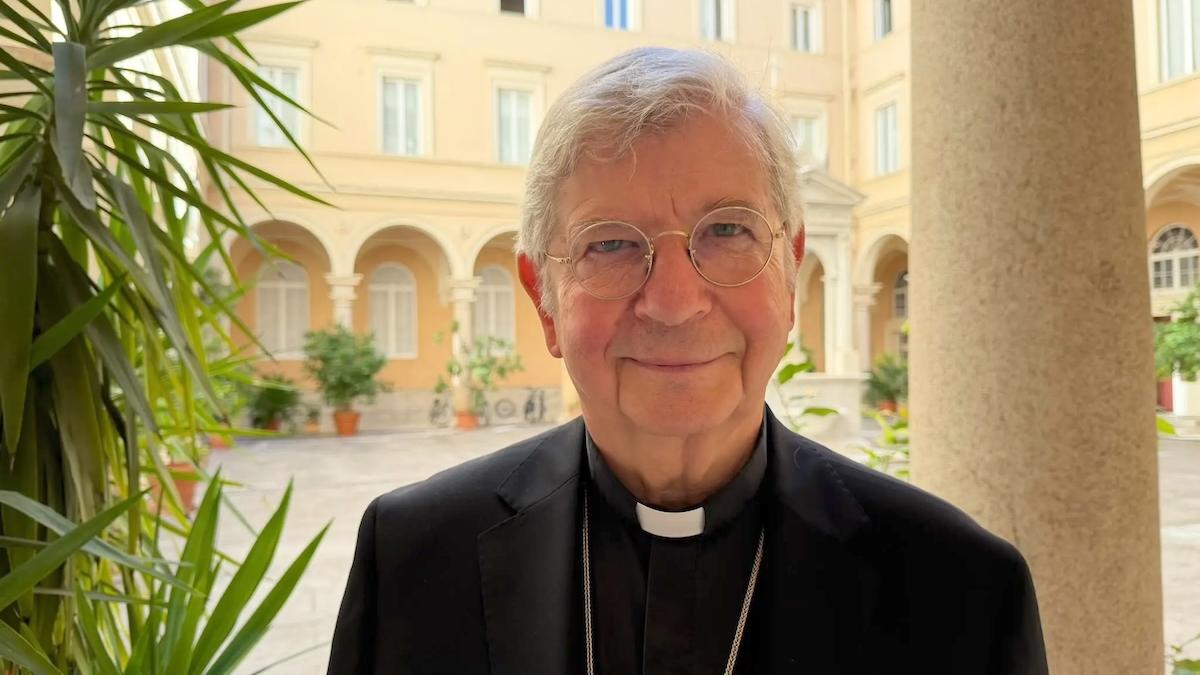
Archbishop Laurent Ulrich of Paris recently visited Rome, where he presented his book Les papes, la guerre, la paix (The Popes, War, and Peace). In an interview with I.MEDIA, he reflects on Pope Leo XIV’s visit to France a month earlier and its impact on Catholics and French society as a whole, amid a serious political and social crisis.
Responding to violence with hope
I.MEDIA: In recent days, Paris and many other French cities have witnessed unprecedented scenes of looting and violence. In light of Leo XIV’s recent visit, how can the Catholic Church bring its message of peace and hope to people who seem deeply dissatisfied?
Archbishop Laurent Ulrich: The images of violence we’ve seen in recent days are extremely painful. Nothing can justify attacks like these on people and property. At the same time, I believe we must take seriously the concerns that people in our society are facing today, especially the many young people who struggle to imagine a future for themselves. We need to listen to those concerns without ever confusing their legitimate expression with the violence of those who come to destroy everything.
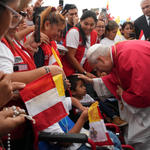
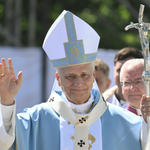
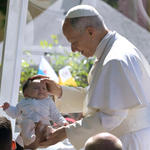
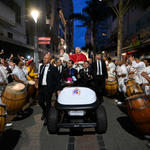
Just a few weeks ago, we welcomed Pope Leo XIV to Paris. We saw enormous crowds, enthusiastic young people, and people of every generation and background coming together in joy. I don’t believe that enthusiasm has disappeared. It showed us that there’s an immense desire for fraternity and hope in our society.
The Church has a particular responsibility here. It doesn’t claim to have all the answers to our country’s problems. But it can help rebuild relationships, welcome those who feel abandoned, support young people, and create opportunities for people to come together where fear and mistrust are growing.
We see this happening in Paris, for example, at Maison Bakhita, which the Pope visited. We also see it every winter in the dozens of parishes involved in the Hiver solidaire (Winter Solidarity) program, where homeless people and volunteers share much more than a roof or a meal: They experience genuine fraternity.
We foster this same spirit in centers of Christian formation, our schools and universities, the Collège des Bernardins, as well as our parishes and associations… Through gestures that are sometimes very modest, all these places show that everyone can help rebuild trust in their own way.
We saw Notre Dame rise from the ashes thanks to the work and commitment of thousands of people. The Holy Father reminded us of the beauty and importance of what that reconstruction represents. It’s also an image of what our society needs today: to rediscover the desire to build something together.
The lasting fruits of the papal visit
Looking back a few weeks later, what fruits of the visit can you already identify?
Archbishop Ulrich: It’s still too early to speak of fruits, because they take time to ripen. But there will certainly be fruits in terms of vocations. Every time a pope has visited France, priestly vocations have emerged, as well as vocations to serve the Church as laypeople or deacons.
I’ve seen this over the years, sometimes after the ordination of a young priest who explains, “My starting point, the moment when everything began for me, was Pope John Paul II’s visit in 1980, World Youth Day in 1997, or Benedict XVI’s visit in 2008.”
So I would be surprised if this visit were an exception, but we won’t know for several years.
An emotional visit to Notre Dame
The Pope appeared deeply moved, particularly at Notre Dame Cathedral in Paris. Do you think he was surprised by the depth of the enthusiasm he encountered?
Archbishop Ulrich: When he told me how much he wanted to see Notre Dame, I certainly didn’t take that to mean he wanted to go sightseeing! He didn’t simply want to see the cathedral. He had already seen it in pictures, and he understood that the restoration must have transformed the building he had known. He had a real sense of that transformation.
What he wanted was to pray in the cathedral. That’s how I understood his intentions. That’s why we organized what I called a family gathering at Notre Dame, bringing together priests, deacons, members of religious orders, consecrated people, and seminarians. It was a beautiful moment.
I think it moved him, and it moved me too. We shared that emotion. I was at the foot of the platform he climbed to stand before the statue of the Virgin and Child, a gift from King Charles X. He had just spent that time with the consecrated people and was about to leave the gathering for the extraordinary evening at the Stade de France. So it was an emotional moment for him, and for us as well.
Accompanying those approaching the end of life
One of the issues on which the Pope was particularly expected to speak during his visit was, of course, end-of-life care. In a statement published just after the law was passed, you said that the situation should prompt Catholics to roll up their sleeves and reach out to people who are suffering. Leo XIV strongly demonstrated this commitment in Lourdes. Do you think this particular concern for vulnerability and suffering is also a defining characteristic of Christians, one that earns them esteem and recognition even from nonbelievers?
Archbishop Ulrich: Yes, there are two aspects to this. The first concerns the presence of Christians alongside their sick or elderly brothers and sisters, especially as they approach the end of their lives.
Today, Christians are called never to hesitate to support those who are approaching death. They must accompany them and assure them that we’re not going to offer them, as the Pope said, “programmed death,” but a peaceful death, in an atmosphere of reconciliation, surrounded by their brothers and sisters and supported by the friendship of those caring for them.
Then there’s the difficult position of healthcare workers. Before the law was passed, healthcare professionals protested to remind people that causing death is not healthcare, and that it isn’t their job. We’ll need to support them too, and help them understand that they have the backing of everyone who expressed opposition to the proposed law.
We’ll need to show them that hastening death is not a path to fraternity. The path to fraternity consists of accompanying people in a way that brings them peace, relieving their physical suffering—which is the role of doctors—but also their psychological and spiritual suffering.
It means accompanying dying people, those approaching death who don’t want it to be hastened, but who want to live this stage of their existence with clarity and awareness, calmly and at peace.
Protecting Catholic healthcare institutions
Healthcare workers in nonprofit institutions, which account for a significant part of Catholic healthcare and related facilities, must be able to carry out their mission under appropriate conditions.
Thanks to the Constitutional Council’s interpretations, which we hope will be properly reflected in the regulations implementing the law, it should be possible to guarantee protection for people who choose to spend their final days in a Catholic palliative care facility that explicitly rejects euthanasia. They’ll be able to rest assured that they’ll receive care until the very end of their lives, until their natural death.
That won’t necessarily be the case for people admitted to hospitals where euthanasia is practiced. Even if they don’t request it, they may feel anxious about it.
I mention this because people in public hospitals with palliative care beds, which will therefore be subject to this new law, are already expressing this fear: “But, are they going to euthanize us?” If they come to our institutions, they can be certain that won’t happen.
I think there’s an additional difficulty for Catholic healthcare workers and directors of public hospitals who don’t want to cause death. What are they going to do? We’ll need to help them resist, enable them to stand firm in their convictions, and continue believing that those convictions are right.
It’s not enough to defend your position when a law is being passed and declare that you won’t perform these acts. You also have to avoid being subjected to constant pressure afterward, pressure that could eventually force you to perform them when the circumstances arise.
These will therefore be difficult times. Catholics, but also others who refuse to perform these acts, will have to resist certain pressures and assert their freedom in the face of what is legal but, for them, not moral.
Recognizing and responding to abuse
The meeting with abuse survivors in Lourdes was another significant moment of the Pope’s visit. Five years ago, the CIASE report caused some misunderstanding here in Rome. Do you feel that the approach taken by the French bishops is now better understood, and that the Pope’s visit was another step toward making these efforts known to other European bishops’ conferences and the rest of the world?
Archbishop Ulrich: I hope so. For a time, we in the Church in France were regarded by certain institutions and part of French public opinion as having done nothing. I believe that accusation has now largely been disproved.
Jean-Marc Sauvé was able to give a lecture on the fifth anniversary of the publication of his report, reminding people that the Church in France had taken its conclusions into account and made courageous decisions to change itself. It also demonstrated its willingness to cooperate with victims.
In other words, the Church in France adopted the victims’ perspective in this matter, rather than taking the position of protecting or concealing those who had committed sexual violence, or, in other cases, engaged in spiritual coercion and abuse of power. That seems clear to me.
On the other hand, we did face negative judgments from some other local Churches around the world. They believed we had embarked on a path that was unjust and dangerous for the Church and its reputation.
Today, I think the Catholic Church as a whole, through the Holy Father and the Roman Curia, has come to recognize that this was the right approach. Why? Because concern for those who are most vulnerable is an essential part of the Church’s identity.
We know very well that victims won’t necessarily be able to return to the state they were in before they were harmed. That’s true. But we must acknowledge the wounds, recognize that harm was done, punish those responsible according to the seriousness of their actions and the violence inflicted, and then provide victims with the help and support they need.
I therefore believe that a change has taken place within the Church itself, and that this approach is now recognized as the right one.
The importance of listening
The Pope demonstrated this through the attention he paid to the testimonies of the victims who met with him. He listened to them for twice as long as planned, because he was so attentive to what they were saying that he lost track of time.
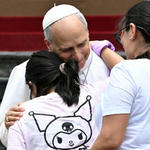
For him, what mattered most was listening and showing kindness, mercy, patience, and compassion. I think it’s extremely important that these encounters took place. We can say that the Pope acted as a true shepherd. He showed the same attentiveness toward other people wounded by life whom he met on Saturday morning in Paris, at Maison Bakhita.
The Pope’s ability to listen so deeply brings peace. It helps restore the dignity of people who have been hurt and, at the very least, shows them that they are loved.
Peace begins with disarming our words
Do you think this visit to France helped convey a message of peace to Europe and the world?
Archbishop Ulrich: Pope Leo XIV tells us that, to achieve peace, we must disarm, including in the words we use. I think this is an extremely powerful teaching, showing that peace is achieved through the commitment of every individual.
If people no longer want war, they must make that known, particularly by disarming the language they use to speak about others: their neighbors, the different groups within the same country, migrants, or the poor.
We must disarm our words and stop using terms that have lost their meaning, because they no longer allow us to express a genuine desire for peace.