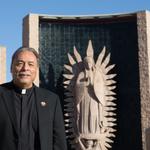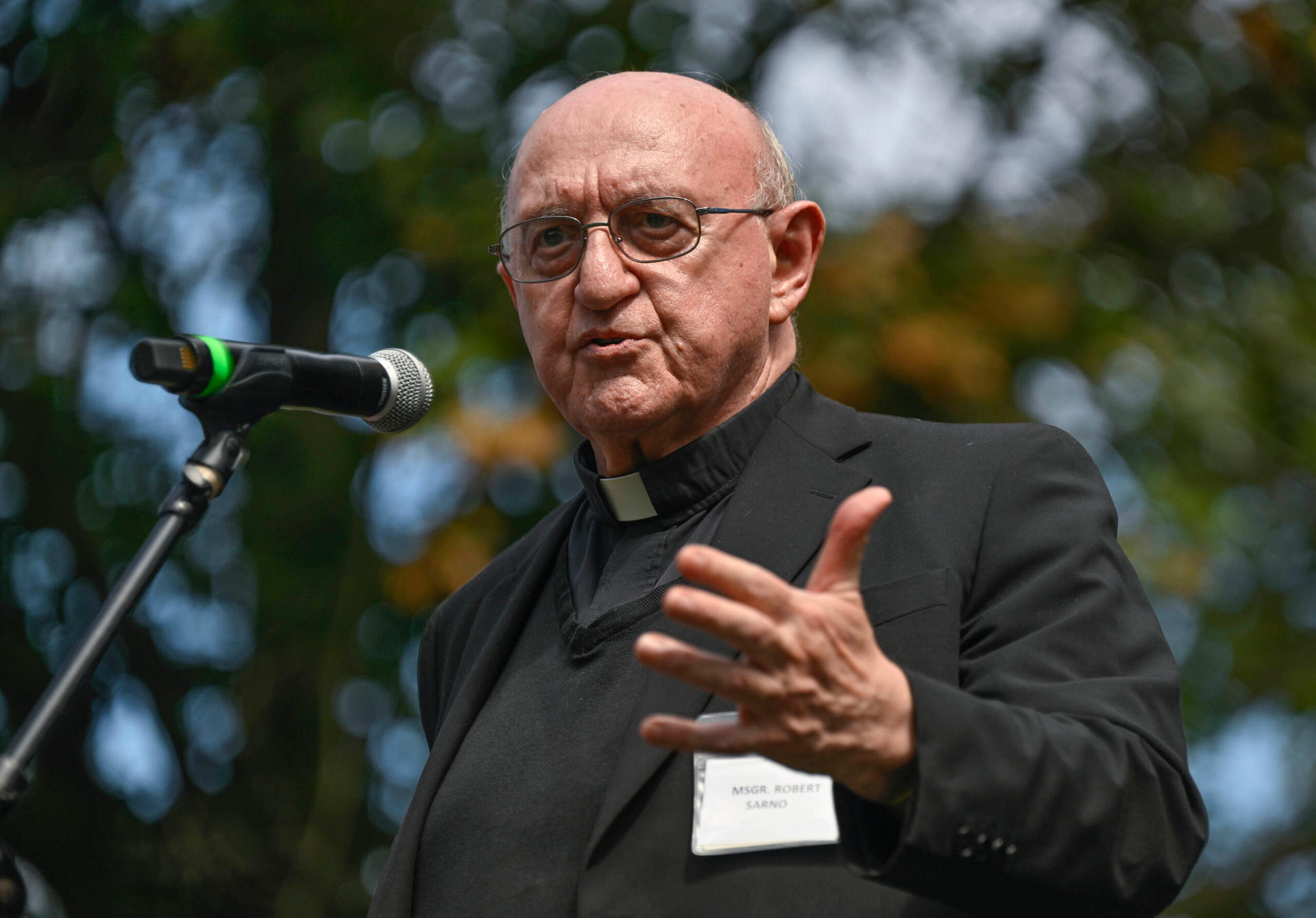
Monsignor Robert Sarno has worked on canonization causes for decades. He has met people who are today recognized as saints, and knows the ins and outs of the canonization causes for many men and women who may be canonized as saints in the future. Recently, he spoke at the Seton Shrine’s second annual Saints on Their Way event, revealing what was titled “a theology of canonization.”
Saints show that we can “make the grade”
A retired priest of the Diocese of Brooklyn and a former official of the Dicastery for the Causes of Saints, Monsignor Sarno says that there are two reasons that we should look to the saints throughout our lives. The first is imitation – they are examples of men and women with many challenges who lived lives of heroic virtue. The second is intercession – the saints bring our petitions to God.
“We are not talking about perfect people,” Sarno emphasized. Padre Pio, he mentioned as an example, was known for sometimes having a temper. But on the whole, the saints are role models of holiness, but a holiness that is as unique as each of them are -- lived out wherever they were, in whatever vocation to which they have been called. “Holiness is doing what you’re supposed to do, with faith, with love, and with constancy.”
Saints didn’t have easy lives and, unlike the Blessed Virgin Mary, they sinned. But, he says, they are “signs to us that you can make the grade even though you are who you are.”
A "new" type of saint
Traditionally, we are familiar with two categorizations of saints: martyrs and people of heroic virtue. Martyrs literally gave their lives for their faith – we have many examples of martyrs throughout Christian history, from the early persecuted Christians up to today.
Then, there are men and women who lived lives of heroic virtue. They lived their vocations with the sort of constancy and love that Monsignor Sarno describes, from St. Therese of Lisieux to St. Pier Giorgio Frassati. (Side note: there is another type of path to sainthood, wherein a saint is recognized by the Church without a formal process. Read about that in article below:)
However, Monsignor Sarno explained, there is also a third pathway to canonization -- lived by those who make an offering of life. This category was officially recognized by Pope Francis in 2017 and identifies men and women who voluntarily gave their entire lives for others, often resulting in a premature death. As possible examples of this group, Monsignor Sarno pointed to Servant of God Joseph Dutton, who spent 44 years in service of the leper colony on Molokai, Hawaii. He also mentioned Fr. Vincent Capodanno, who served as a missionary and a Navy chaplain in Vietnam, putting his life on the line to serve others.
What is God saying through the saints?
Sarno’s thoughts on canonization come from decades of working on causes around the world. He has talked with experts to help verify miracles and he has seen causes go quickly, while others go more slowly.
From this experience, he shared about why we canonize saints in the first place. Canonization, he said, “is not for them, it's for us.” Through their intercession and example, we have the opportunity to pursue holiness in our own lives. He also commented that canonizations of different men and women can reveal what God is saying to the Church.
The saints being canonized today come from many different backgrounds and have many ways of living lives of holiness. The Eucharist, however, was always central to their lives.
Finally, Sarno reminded that while the saints are no longer with us here on earth, they are still present. “We pray to people who are alive in Christ Jesus.”