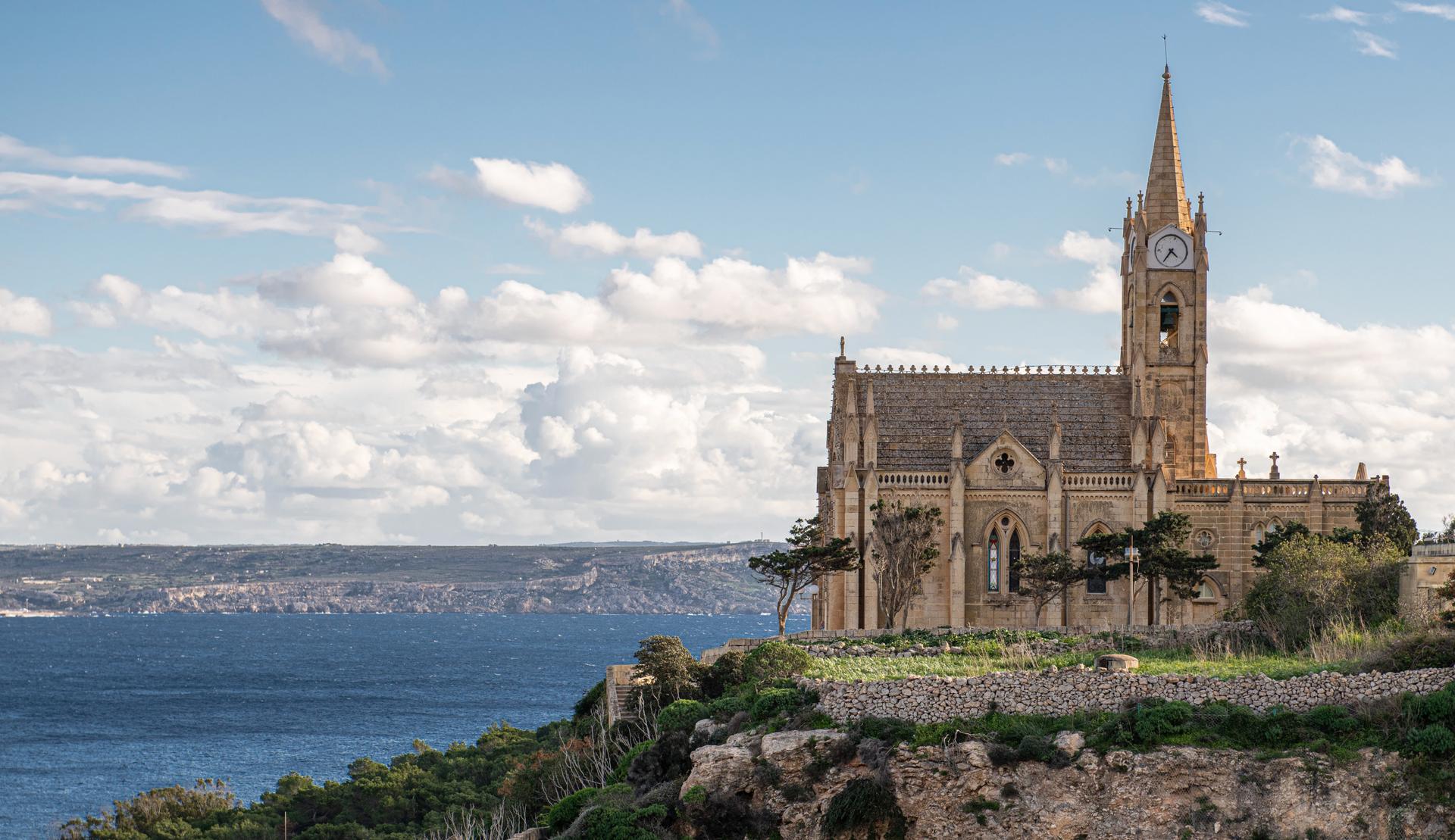
In the previous article, "Malta’s Immaculate Conception: A devotion older than dogma," I gave an overview of the ancient devotion to the Immaculate Conception and the devotion to Our Lady of Lourdes as from the beginning. I also introduced to the readers the Sanctuary of Our Lady of Lourdes in Gozo. As promised, here’s a more detailed narrative of Gozo’s shrine. In the next article, I will delve into other places in Malta captured by the Immaculate Heart of Mary.
Malta already had an exceptionally strong, centuries-old devotion to the Virgin Mary. When the news of the 1858 French apparitions reached the islands, the local population was structurally and spiritually primed to embrace it. The local enthusiasm blossomed rapidly because the messages of prayer, penance, and healing resonated deeply with the faithful.
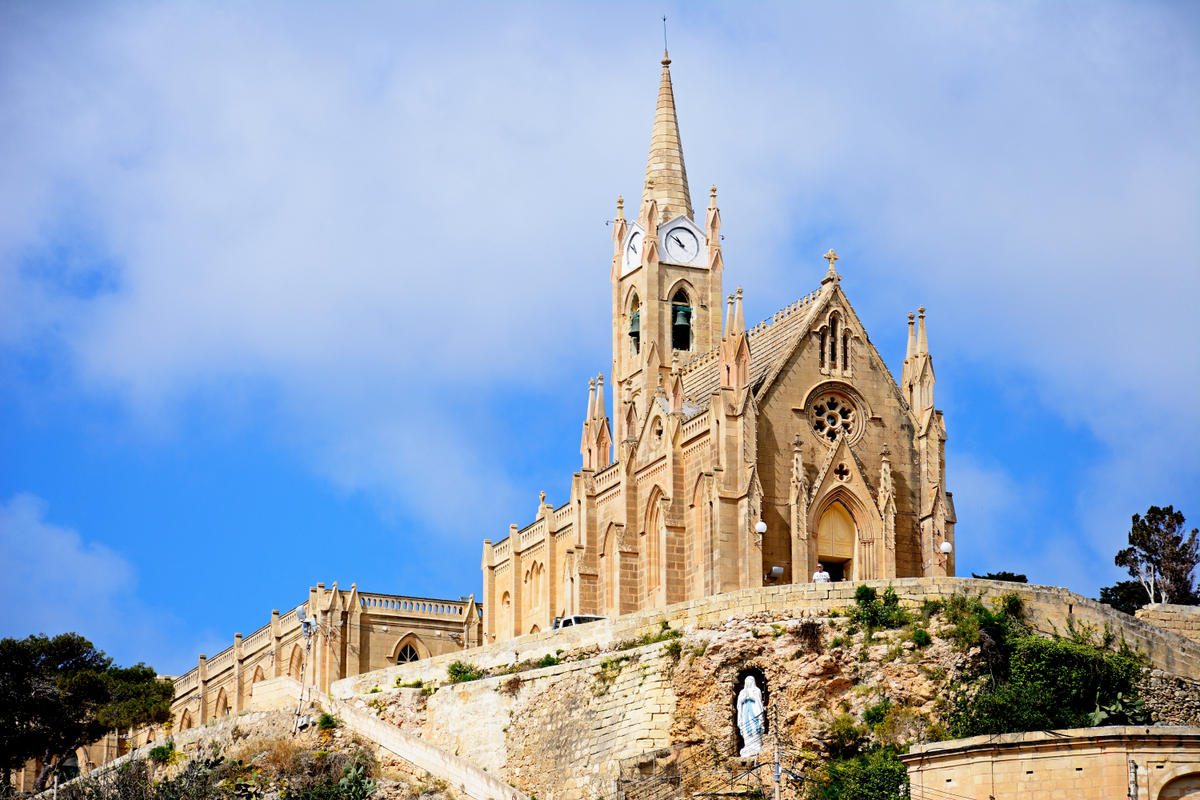
Gozo and its “Little Lourdes”
Tradition has it that Anġlu Grech, a great devotee of Our Lady, had a farm on the same spot where today’s Sanctuary lies. According to this tradition, the Madonna appeared to him while he was watering the cattle in Għajnsielem’s well, where she told him to erect a statue under the title of Loreto in the heart of the village. A church in honour of Our Lady of Loreto was built by 1820, and became a parish church on January 26, 1855. Għajnsielem now has a new parish church built in neo-Gothic style. The foundation stone was laid September 14, 1924.
It happened that a wealthy Gozitan, who was Mgr. Pace’s fellow pilgrim, had a “eureka” moment when he noticed the precipice overlooking the fields of Kortin, while walking up from Mġarr Harbour. Straightaway, he conveyed his spark of genius to the bishop, who seized the idea. Pace noticed that the cliff of Kortin was very similar to that of Massabielle. The cliff also had a grotto. The natural beauty of the place sealed his conviction that this was the site were the sanctuary should be. Kortin makes part of the village Ghajnsielem, so during his first pastoral visit, Pace told the parish priest, Fr. Pietru Pawl Galea, about this idea, and Galea embraced it wholeheartedly. On September 10, 1883, he himself acquired the land for the Sanctuary. He also commissioned, out of his own pocket, the works to open a pathway leading to the chapel. His successors too toiled incessantly for the Sanctuary and the devotion to Our Lady of Lourdes.
It is no exaggeration to say that Bishop Pietru Pace is one of the finest persons to come out of Gozo. He always believed that Mġarr is the Island’s main artery. Therefore, he worked unceasingly for a regular ferry service between Malta and Gozo. He also strived for a new road from the port to Rabat, which is probably one of Gozo’s best infrastructural endeavors. Now, he had only one desire left – erecting a sanctuary of Our Lady of Lourdes on top of Kortin Bluff. He desired that from there, the Immaculate Virgin would safeguard Gozo’s port, the main gate through which all good and evil finds its way to his beloved homeland.
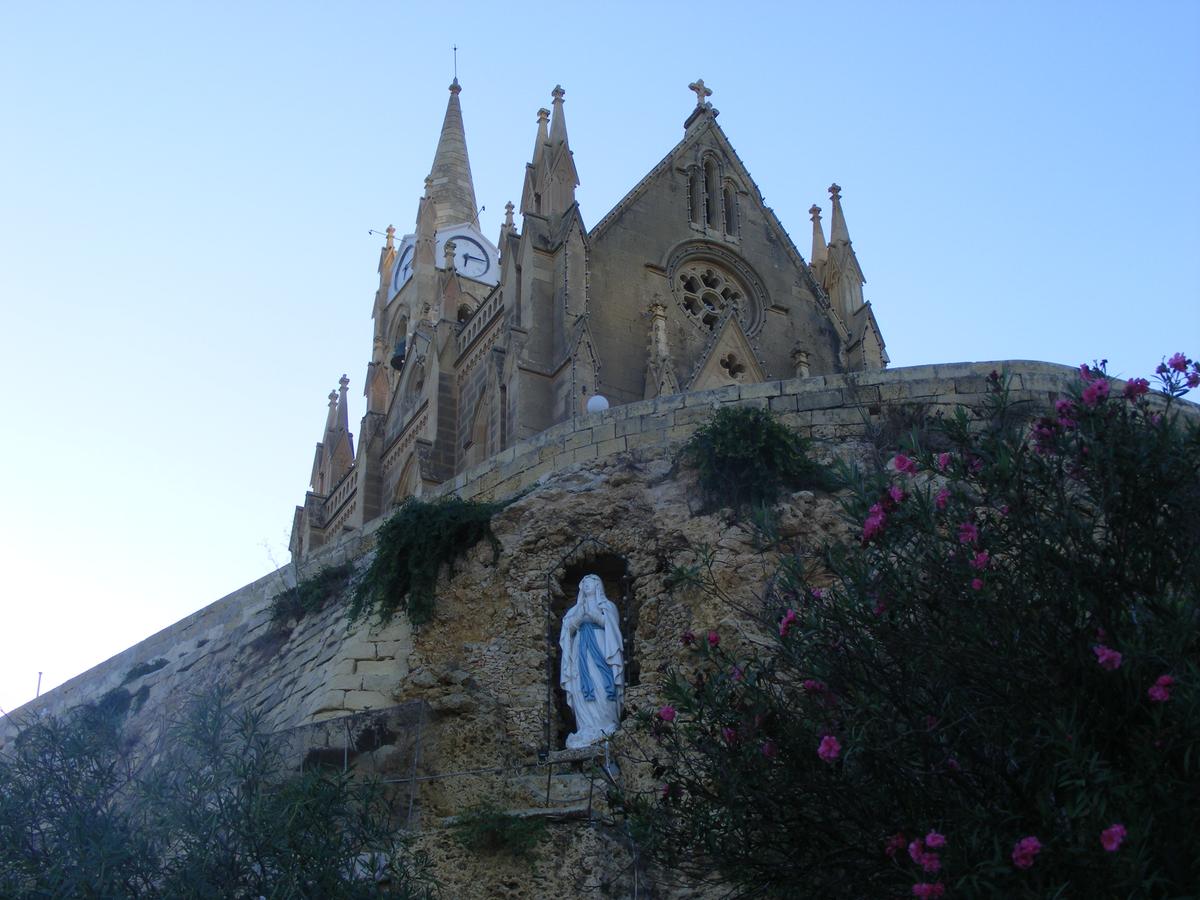
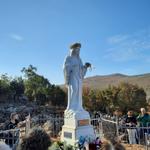
Pope Pius IX issued his decree of approval of the apparitions of Our Lady in Lourdes on February 1, 1876. Just three years later, on March 25, 1979, and nine years before the laying of the first stone of the Gozo sanctuary (June 10, 1888), Bishop Pace ordered that a large statue of Our Lady of Lourdes would be placed in the grotto — this also to attract people towards the site, which would also help in fundraising for the erection of the sanctuary. He solemnly blessed the statute on June 3, 1883, before a huge crowd of pilgrims from all over Gozo.
The Sanctuary of Lourdes
Just a year after Bishop Pietru Pace laid the first stone of the sanctuary, he was appointed Archbishop of Malta. The Gozitans were delighted to see their compatriot advancing so much in his priestly calling, however, the separation broke their heart. Nevertheless, even as Archbishop of Malta he continued to show interest in the Sanctuary of Lourdes, which was completed on May 6, 1893. Construction of the Sanctuary was completed on Fr. Pietru Pawl Galea’s 25th anniversary as parish priest of Għajnsielem. The new bishop of Gozo, Mgr. Fra Giovanni Maria Camilleri, blessed it with great solemnity on August 27 of the same year. The chapel was designed by the architect Chev. Manweli Galizia in neo-Gothic style––like the Basilica of the Immaculate Conception in Lourdes.
In recognition of the work on the Lourdes chapel, Pope Leo XIII gave him the title of Knight of Saint Gregory the Great. The first feast day of Our Lady of Lourdes in the Sanctuary was celebrated on July 15, 1894.
In 1924 Fr. Joseph Galea Rapa was appointed rector of the Sanctuary and remained so until he died in 1976. The works carried out under his watch are a wonderful testimony to his zeal and devotion. He commissioned marvelous interior and exterior embellishment and infrastructural projects. But the pinnacle of his work was the strengthening of the devotions, functions, and celebrations of the Sanctuary, particularly on the anniversaries of the Apparitions of Our Lady of Lourdes. Apart from celebrations related to the Apparitions, he also introduced the feast of St. Bernadette, and on February 6, 1931, he established the devotion to the Miraculous Medal. In August 1933, when Bernadette Soubirous was raised to the altars, the Maltese living in Rome donated an effigy of the saint to the Sanctuary.
After the appeal of the Pope, in 1958, the whole world celebrated the centennial festivities of the Apparitions in spiritual union with the City of Our Lady. The sanctuary of Għajnsielem was no different. Indeed, Fr. Joseph went to all lengths to prepare a full program of feasts throughout this whole Marian year. It was a great success––the Immaculate Conception surely had something to do with it!
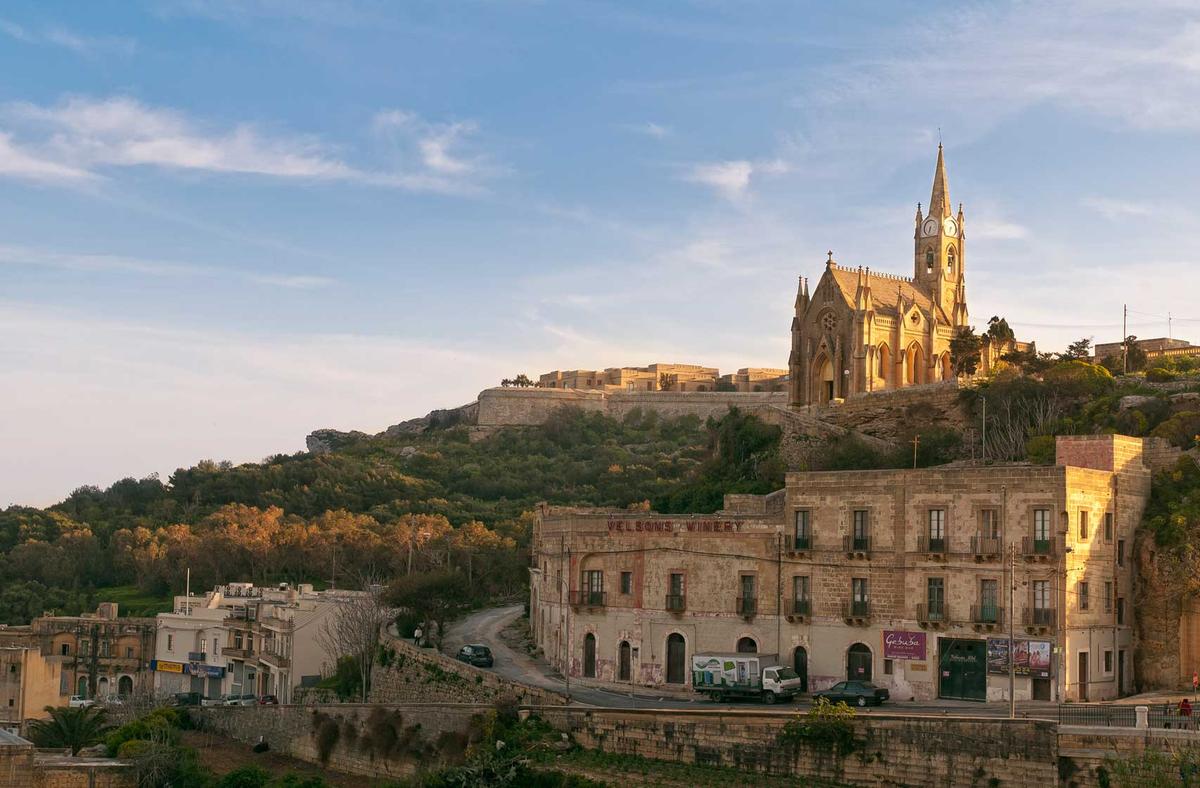
The pilgrimages
If the cliff and grotto of Kortin were like that of Massabielle, the completion of the Sanctuary gave the Gozitans and other pilgrims a “Little Lourdes.” However, the church had no statue. But Archbishop Pace was quite a problem-solver. After a visit he had from Madam Karolina Mamo Bruno, she offered to cover all the expenses for the effigy.
On September 17, 1893, the Gozitans invaded the harbor of Mgarr, and at around four in the afternoon the bells of the parish of Ghajnsielem pealed as the ship Gleneagles appeared. The Holy Rosary was recited, and gentle hymns were sung to the Virgin Mary. The bow of the vessel opened. And there was the beautiful statue of Our Lady of Lourdes, made by the well-known Maltese statuary Karlu Darmanin. As the ship entered the port, the people burst out in tears and clapping, shouting: “Long live Our Lady of Lourdes!” The ship’s whistle and foghorn were at full blast.
That was the first Maltese pilgrimage, organized and led by Archbishop Pace himself, to bring the Queen of Heaven and Earth to her abode. The statue was lowered from the bow, and after a short while, the procession began, initiated by 18 girls dressed in white with a blue sash around their waist. Archbishop Pace walked behind the Heavenly Mother, followed by the pilgrims praying the Rosary, led by 24 altar boys. It was an enchanting spectacle; the only audible sound came from pilgrims’ lips reciting the Rosary. Once the pilgrimage arrived under the grotto, Master Caruana of the Dominicans gave a speech that set hearts on fire. Then the pilgrimage followed a banner made of the finest silk, and climbed towards the Sanctuary where the statue of the Madonna was placed, the one we still venerate to this day.
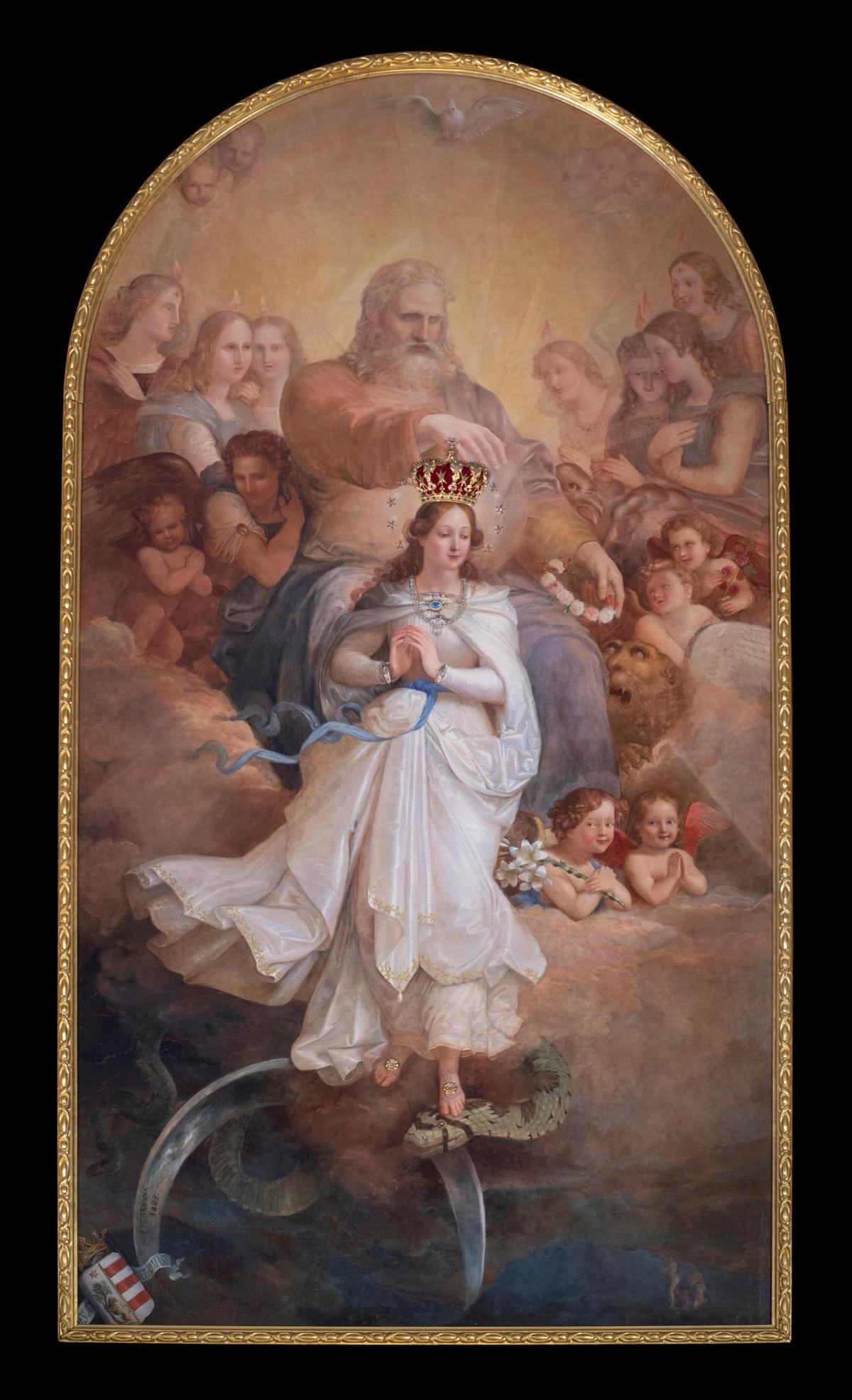
After this first pilgrimage, Bishop Pace led three others, and numerous other pilgrimages came from all over Malta, apart from the huge pilgrimages to visit Our Lady of Pinu, which mostly passed through the Sanctuary of Lourdes.
On November 22, 1899, the Franciscan Friars Minor arrived in Gozo and the Parish of Għajnsielem was the choice for their convent. It is a known fact that the Franciscans have always been intrinsically close to the Immaculate Conception – and this will also be seen in the next article. Actually, once in Għajnsielem, they immediately organized pilgrimages, as they still do. A certain Father Bernardo also strived unceasingly to find benefactors to establish devotions to the Apparition.
This article has been brought to you in collaboration with VisitMalta.