Writer’s Note: Fr. Donald Nesti, CSSp, has been an influential professor of mine in the Master’s of Faith and Culture at the University of St. Thomas-Houston. While I was unable to interview him directly for this piece, I can attest that quotes from the recorded talks I reference are in line with what he presented in class.
Pope Leo XIV began a series of weekly catechesis on the documents of the Second Vatican Council on January 7, 2026, encouraging the faithful to (re)read them, to “rediscover their prophetic and contemporary relevance.”
He began his introduction to Vatican II reflecting,
“Although the time that separates us from this event is not so long, it is equally true that the generation of bishops, theologians, and believers of Vatican II is no longer with us. Therefore, while we hear the call not to let its prophecy fade, and to continue to seek ways and means to implement its insights, it will be important to get to know it again closely, and to do so not through “hearsay” or interpretations that have been given, but by rereading its documents and reflecting on their content. Indeed, it is the Magisterium that still constitutes the guiding star of the Church’s journey today.”
One of the few living witnesses of Vatican II
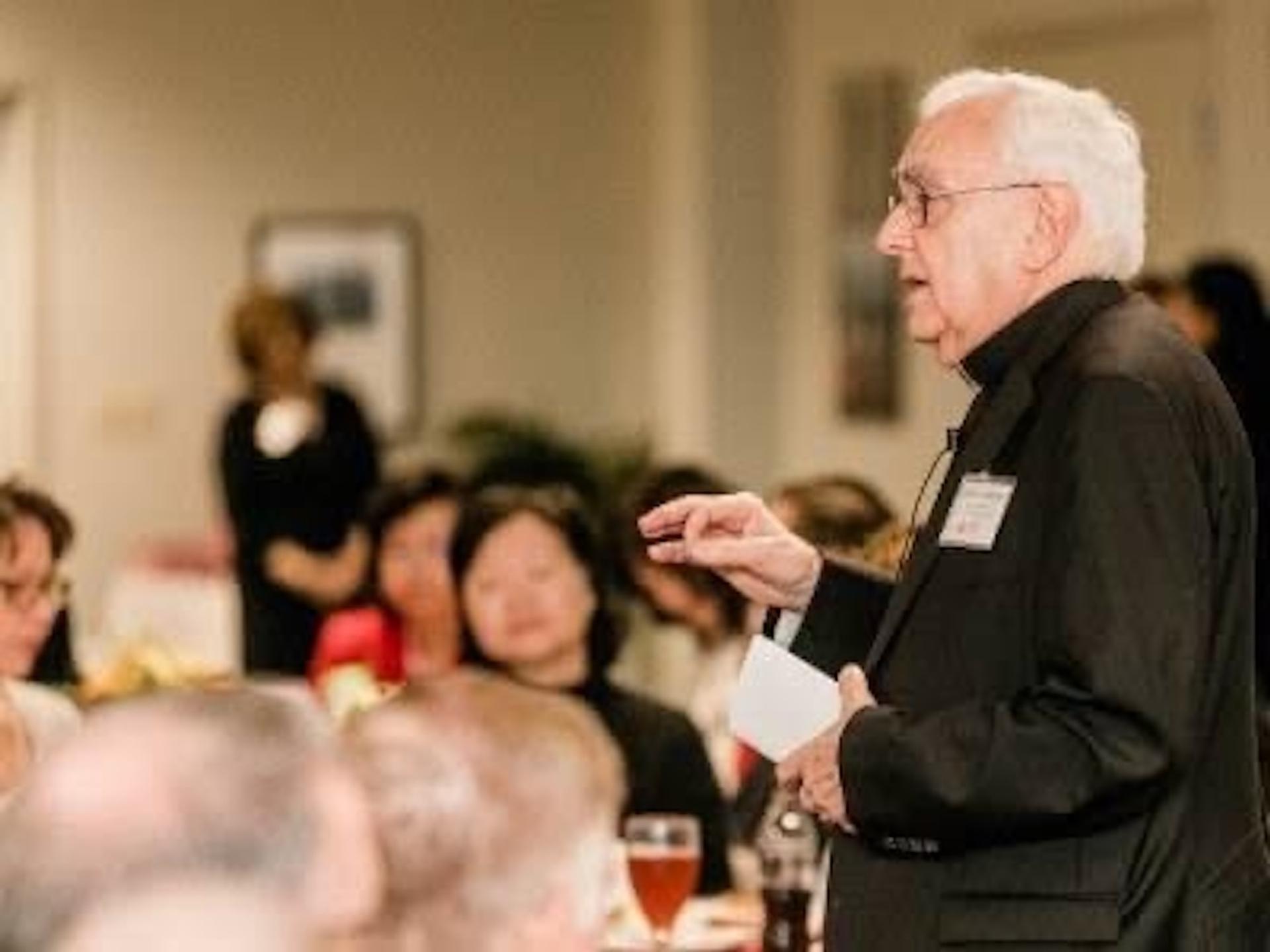
Donald Nesti was born in 1936 and ordained a priest of the Congregation of the Holy Spirit May 30, 1963. He was a student at Rome’s Pontifical Gregorian University during the Vatican II years, and on occasion was personally present among the Council Fathers and their proceedings.
It was the Second Vatican Council that inspired Fr. Nesti’s concept of the Center for Faith and Culture, founded in 1994 at Houston’s University of St. Thomas. As their website states, they follow the Council’s approach to “culture not as an obstacle to faith but as the human space in which God’s love is continually incarnated and communicated.”
The Center’s flagship is a master’s degree in Faith and Culture; but it also offers certificate programs, retreats, symposia, and various initiatives promoting inter-religious and ecumenical dialogue.
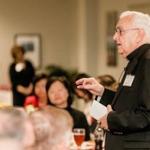
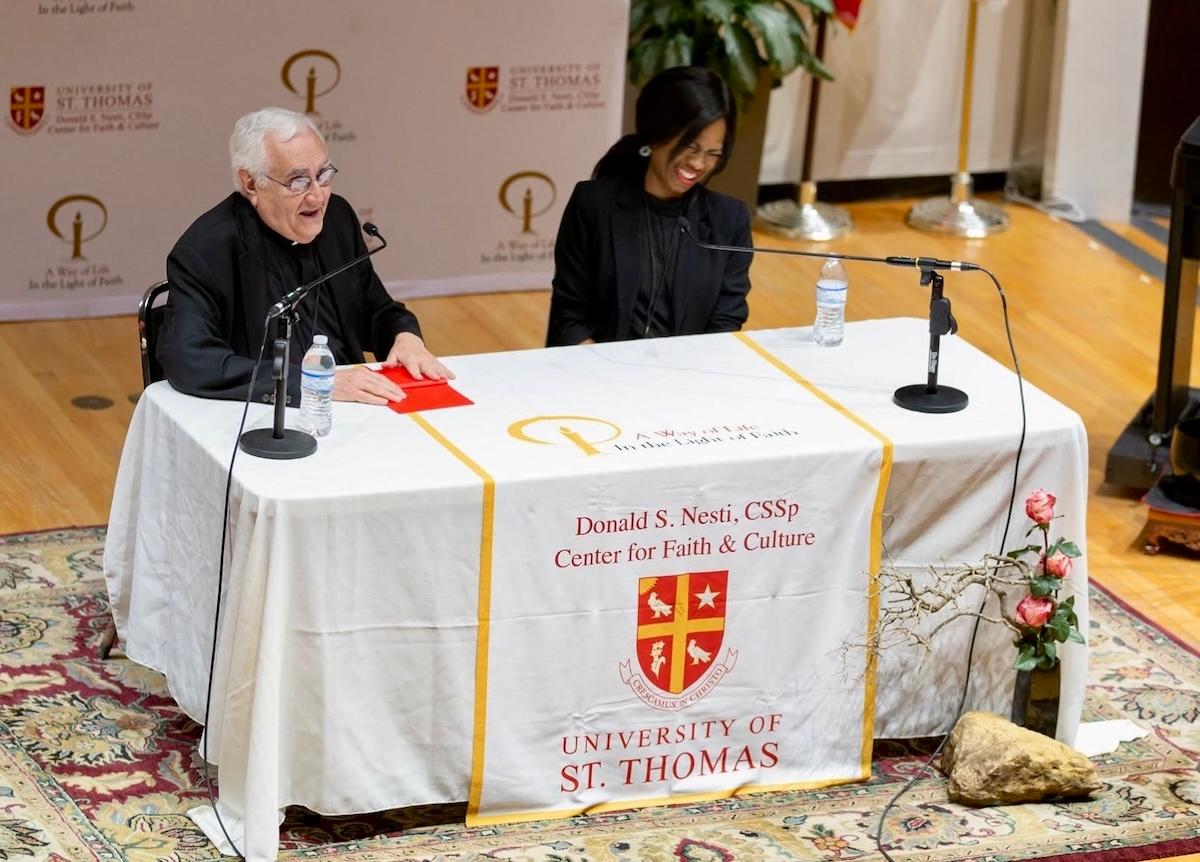
Teaching graduate courses — including one entirely dedicated to Vatican II — into his late-80s, Fr. Nesti has shared his experience and understanding of the Council not only in the classroom but also in other settings. One of these occasions was a video-recorded roundtable event in 2013 at St. Martha Catholic Church in Porter, Texas, with the parish’s then-pastor Msgr. Chester Borski, and Fr. Salvatore DeGeorge, then-Pastor of St. Patrick’s Catholic Church in Houston.
“May they be one…”
During the roundtable discussion, Fr. Nesti shared the two primary goals Pope John XXIII set for the council, “Unity and sanctity… [which] can only issue forth where there is love. If there is no love, there is no unity. And love is the sole reason for sanctity in anybody. All the great saints, great, heroic lovers … knew how to love.”
He asserted that there are three essentials that the Church must retain and protect, “although form and expression might change. ... You can never veer from them because it’s the essence of what the Church is all about: Its dogmatic teaching, its moral teaching, and its liturgy.”
He shared the “tensions that existed in the Council,” acknowledging the balance needed to live between fear and thinking there is nothing to fear.
Fr. Nesti experienced this tension firsthand as Archbishop Marcel Lefebvre was the superior general of the Spiritans at the time. It was his disagreements with the Council Fathers and teachings of the documents that would lead to him leaving his order, founding the Society of St. Pius X, and then being excommunicated in 1988 for ordaining his own bishops without Pope John Paul II’s approval.
“How do you communicate what really went on in this Council?” Fr. Nesti asked, his Italian feistiness apparent. Using a family gathering as a metaphor, he pointed out that tensions are normal. Especially when topics discussed are important, parents talk among themselves, but kids are getting older, “trying to figure out authority, obedience, collaborative participation and wanting to have a voice.” Then, “what about the cousins? What about the extended family over there? How do we keep these others who have gone off over there related?”
“It’s all about relationships. The Vatican Council was all about relationships: how the Church relates within itself? And how this community — this communion which we call Church — relates to all these different aspects of the world? Looking for the basis of the relationship is the key … rather than focusing on what separates, you focus on what binds you together and what can constitute a little bit more unity and sanctity.”
Pope John XXIII called for the council a mere three months into his pontificate. Six months later, in June 1959, his first encyclical “Ad Petram Cathedram” clarified that his intention was to revitalize the Christian faith in the wake of an increasingly secularized world and to recalibrate the Church’s mission to address the modern world’s changing circumstances.
After the multi-year preparation phase, John XXIII called attention to the unchanging needs and questions humanity faced, affirmed that Jesus Christ was the center of history and life, and stated that the greatest concern of the Council was “that the sacred deposit of Christian doctrine should be guarded and taught more efficaciously” to help people “tend always toward heaven” as “pilgrims.”
Getting to know the documents themselves
Vatican II was again the topic of a lecture given by Fr. Nesti in September 2023 at St. Laurence Catholic Church in Sugar Land, Texas.
When he asked how many had read the actual documents themselves, and how many had strong opinions about their understanding of the documents, the second received the more audible response.
Have you read it?
You can follow Pope Leo's simple reflections on small sections of the documents by reading the articles at this link.
Fr. Nesti spoke about the Council’s visionary understanding of “who God is, who the human person is, what the world is, and how all three are related to each other.
“This is unique. No other religion is going to give you this. No other religion that exists tell you that God is love.” He paused, asking if they heard him correctly, "that God is love."
“At my age, when I know that this is the salvific message for the world, and [to see] how we are arguing among ourselves in the Church,” he admitted consternation at how God’s big picture of God’s plan can get lost in our humanity.
“What is the most difficult thing?” he asked. “To live the command of love. That’s why we have the sacrament of Reconciliation — we do it very poorly … What is important is that we see each other face-to-face … and that we know we are meant to support each other in our misery by loving each other and calling each other.”
He addressed Archbishop Lefebvre and the “conservative bloc” who opposed any proposals to develop the Church’s stance on ecumenism, religious liberty, collegiality, and the liturgy. The Spiritan priest offered historical context that Lefebvre was responding to: the post-French Revolutionary world in which the unique “clerical state” of the priesthood was diminished. He said that Lefebvre wanted to conserve and reclaim the Church’s strict hierarchy that existed from the 16th century’s counter-reformational Council of Trent.
Although Fr. Nesti, and fellow priests who accompanied him in Council sessions, identify “implementation” as the most challenging stage of Vatican II, they return time and again to the intentions of the Council Fathers and the overwhelming unanimity in approving the resulting documents, in particular, “Sacrosanctum Concilium” (Constitution on the Sacred Liturgy), which was the first voted on and released in December 1963. Of more than 2,500 votes, only 5 were not in favor.
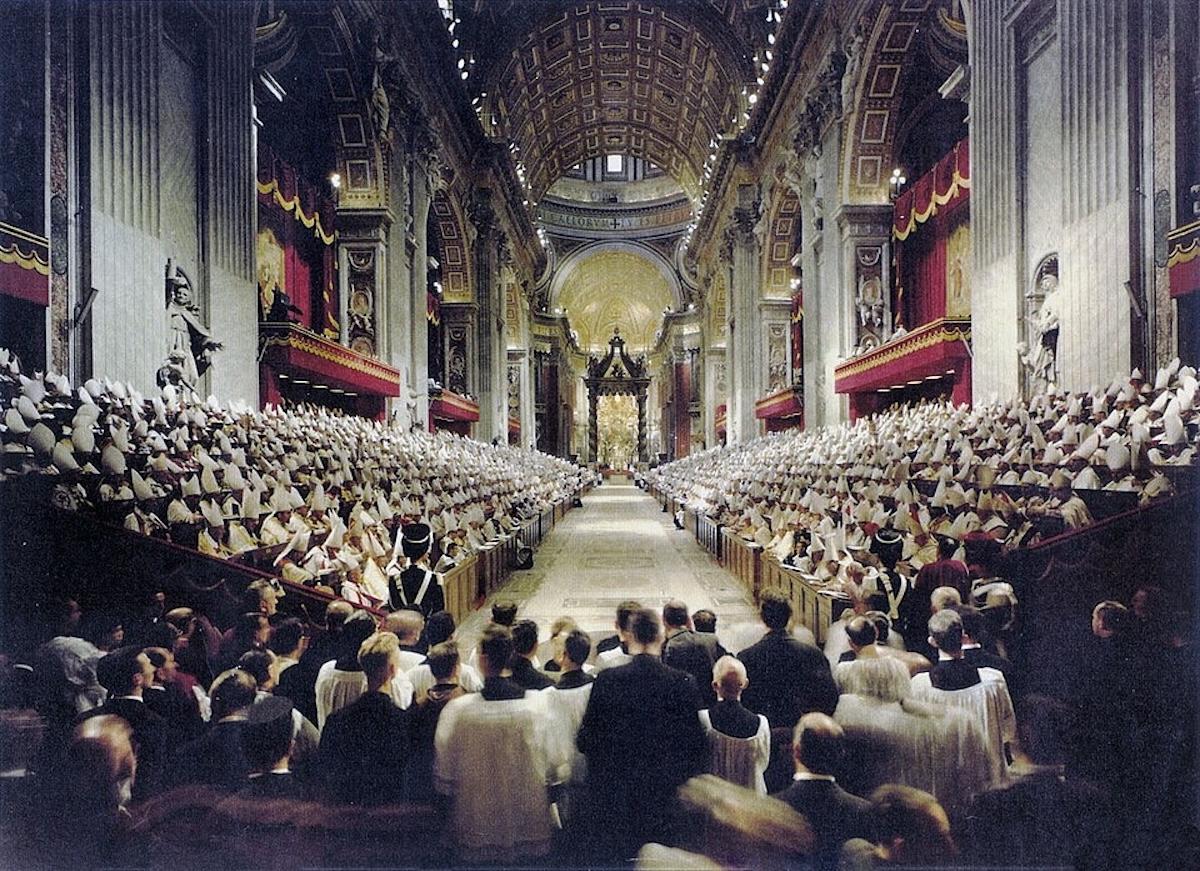
This constitution affirms that “every liturgical celebration, because it is an action of Christ the Priest and of his Body, which is the Church,” is the source and summit of her activity. Calling for use of the vernacular language was only one means to lead “all the faithful” to a “full, conscious, and active participation … which is demanded by the very nature of the liturgy” as the Church’s public act of worship.
Holding tensions together
Fr. Nesti does not deny there have been misinterpretations and abuses in the implementation of Vatican II. He said Saint Pope Paul VI was “a genius” is how he could “hold in tension people who were willing to implement and those unwilling.” Many theologians recognize that any major shift takes three to four generations to really sink in. Fr. Nesti quipped, “If you don’t have any people, you don’t have any problems.”
The process, he pointed out, has been further carried forward by each Successor of Peter since. He said John Paul II’s encyclical approaching the New Millennium, looking back and looking forward, echoes: “The greatest challenge is going to be the spirituality of communion. To make the Church a school of love… The spirituality of communion consists in this: that I look at you, and I look at you.” He repeated this looking to individuals in the audience, “And I know that I am not complete without your gift to me … I wake up every day and pray for the grace to do that …”
When presented with questions and concerns about Vatican II, Fr. Nesti calls the focus back to reading the actual documents.
“Read these things. They are spiritual documents. They will enhance your understanding of the beauty of yourself as a creature of God. They will let you go out yourself to think in terms of ‘how do we become a better people.’ And if there is a message that we have to give to this country, it’s how to be ‘E Pluribus Unum.’ How are we many in one?”
He mused: Are there many places we see that message being promoted? Our task is holiness and unity, he said, lived out in asking “how do we love more, for the good of each other?”
Of the 16 documents — four constitutions, nine decrees and three declarations — the constitutions (on liturgy, the Church, Divine Revelation, and the Church in the modern world), “tell us who we are and what we do.”
He likened it to the allegiance pledged by Americans, an allegiance not just to a flag, but the Constitution.
The significance of the liturgy as the first approved constitution is providential, according to the priest, “Because in the liturgy, which is the principal sign of what the Church is all about, is contained in the sign and symbol of what the Church is meant to be …”
He said that changes including the use of vernacular language and the priest looking at the people instead of the altar point to a relational aspect of humanity as made in the image of God who is one-in-three.
He recalls being in the seminary when that text was released. It was a monumental shift to clarify that priests were not the only ones called to holiness, “that everybody has the call to holiness … everybody going towards God, each with their role.” He commented, with some humor, that previously, “too much couldn’t be expected of diocesan priests.” Religious were held on another level, monks “were really there … but the holy ones, those in the state of perfection were the Carthusians.” (Carthusian monks live mostly in silence focused on prayer and doing penance for the world.)
“I cannot be a priest without the people,” he said. “I am only a priest insofar as I’m living out my role of service to you. We need each other for the complete communion …”
The Constitution “Gaudium et Spes,” on how the Church should relate to the modern world is not a suggestion. He shared his experience that,
“the hardest thing for Catholics to really get into is the social teaching of the Church… [it] flows from love, and the love of Christ. Because the love of Christ has to have concentric circles going out more and more and more to the ends of the earth until we actually take into consideration the needs of all mankind. That’s a big, big change in the way of looking at things.”
This document includes Church teaching on the dignity of the human person, a focus that Fr. Nesti stated was also new. “Never before in the Church has any council given us a complete synthesis of what it believes about the human person …”
“Gaudium et Spes,” he added, contains a beautiful description of the human person, foundational to how we live within the Church and how we as Christians relate to the rest of humankind. This also “goes right into the fundamental institution of all society, marriage, and the family … then, how are we going to relate to various cultures – ways of life that people have developed for themselves.”
In it the Church affirmed manifestations of God’s love in and through these cultures, expanding our vision of the Gospel so that we can help people see the fullness of truth as it is revealed in Christ and particularly in God who is love.
“We need to take out the Windex,” Fr. Nesti said in his characteristically relatable teaching style. Catholics need “spiritual Windex to get a better worldview.” The best place to do that, he reiterated, “is going back to the Second Vatican Council.”
“This document takes the principle of the liturgical document — full, conscious, active participation in the liturgy, in the life of God, in the love of God — and says we have to live full, conscious, active participation in the world…
“If we take this seriously, we’re the ones who have the gift to bring to this culture which seems to be gridlocked – we have the key, which is the love of God, which will open hearts to transcend themselves from their cultural narcissism into an expansiveness which says, Christ intends for all to be one."