First, on whether it's a movie for children. And then, even if there were no story, one could simply soak in the imagery, marveling at the craftsmanship on display.
Wildwood begins with a 12-year-old boy stripping off his clothing, climbing onto the railing of a small balcony on the front of his family mansion, and flinging himself to his death before his frantic mother can break through the bedroom door and stop him. The “boy” is revealed to be a mechanical recreation of the mother’s long dead son, but her grief is still palpable. In the theater in which I was sitting, this startling opening caused a woman in the row behind me to audibly gasp and then lean to her husband and ask in a furtive whisper, “Are you sure this is a children’s movie?” Before there’s time to answer that question, however, Wildwood quickly raises some more.
For instance, after the movie quickly shifts scenes to the McKeel household where 13-year-old Prue is once again being given the unwanted task of watching over her one-year-old brother Mac, why do Prue’s parents insist the boy can never, ever be taken outside? Not only that, why do they keep insisting that Pru herself is never to go near the Impassable Wilderness, the name her father has given to the woods on the outskirts of the city? And finally, when Prue is seemingly as normal as a young teenage girl can get, why do her parents appear to be such neo-hippies that you can practically smell the patchouli coming off the movie screen?
The last question is the first to be answered. Once her parents leave home to run some errands, Prue immediately grabs her bike and, brother in tow, heads into town. We quickly learn the family lives in Portland, Oregon, where being a neo-hippie is part of what the city is renowned for. The other two questions are answered in quick succession as a flock of crows descend on the park where Prue has taken Mac to play and steal the boy away, flying him straight into the Impassable Wilderness.
Prue, accompanied by her annoying sort-of friend Curtis, sets off into the forest to rescue Mac, but the pair are immediately set upon by anthropomorphic coyotes in soldier uniforms. The creatures are in the employ of the Dowager Governess Alexandra, who has kidnapped Mac as part of a plot to resurrect her own son, the boy we saw at the beginning of the movie. To accomplish this will not only require the sacrifice of Mac, but the total devastation of Wildwood, the name given to the Impassable Wilderness by its residents. It will take an army to stop Alexandra, but can Pru and Curtis convince the animals and peoples of Wildwood to put aside their various grievances with one another long enough to form one?
There is a lot that is familiar in the Wildwood’s story. The setup of a teenage girl who doesn’t want to babysit her little brother, only to have the boy whisked off to a magic land where the girl must journey to rescue him is basically a retelling of Jim Henson’s Labyrinth. There are also recognizable elements from the Narnia series, as well as a climactic battle straight out of The Hobbit. Such borrowings aren’t a problem, though, because the movie has enough unique elements to be its own thing. Besides, if we’re being honest, it’s not just the story of Wildwood where the appeal lies, but in how the story is told.
Laika's masterpiece
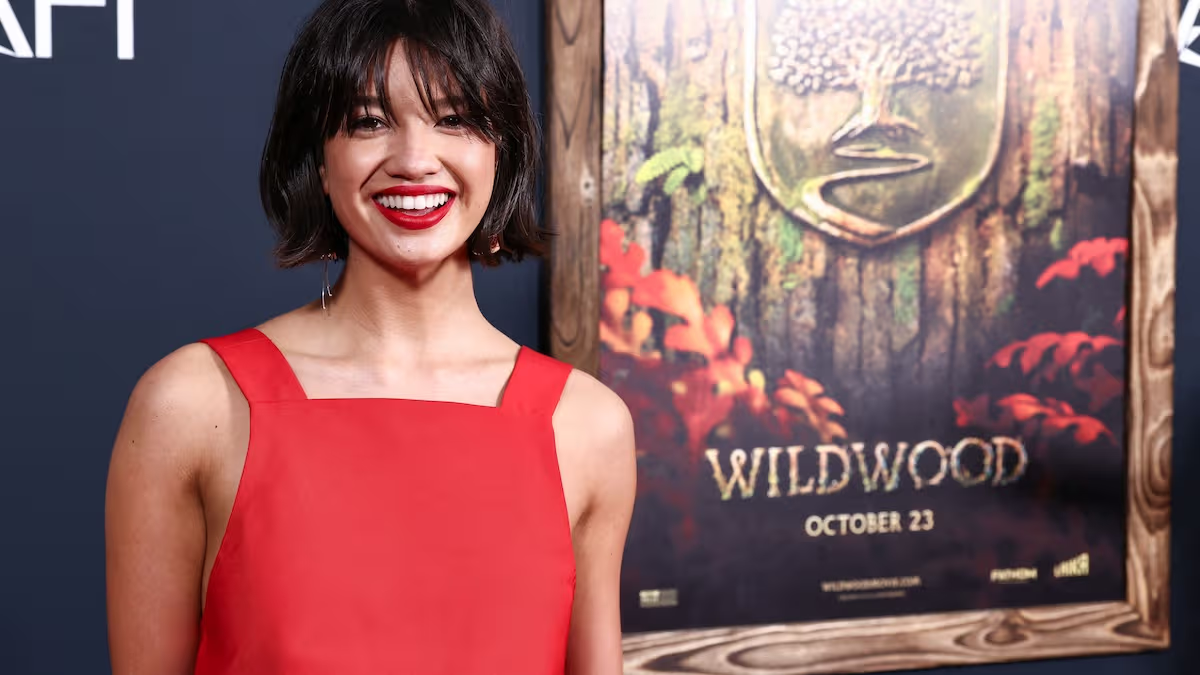
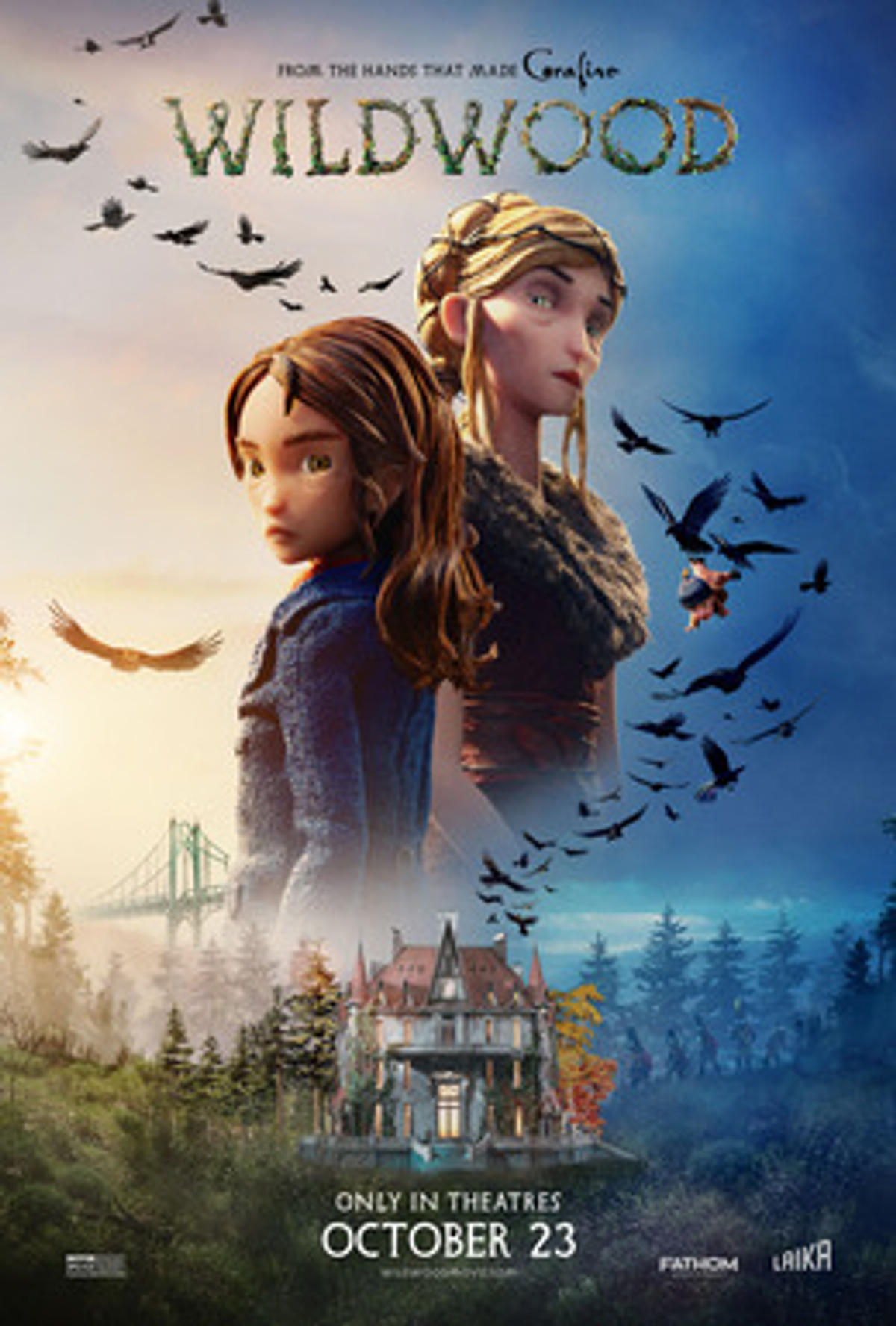
Wildwood is the latest film from Laika, the studio that brought us such films as Coraline, The Corpse Bride, and ParaNorman. Reportedly 16 years in the making, Wildwood is inarguably Laika’s masterwork, a monumental accomplishment in the art of stop-motion animation. The movie is full of battle set pieces that rival (or surpass) many live-action epics, as well as quieter scenes brimming with artistic detail that puts many live-action movies to shame, and it’s all played out in meticulously crafted miniature hand-animated frame by frame. Even if there were no story, one could simply soak in the imagery, marveling at the craftsmanship on display.
There is a story, though, and it’s in that story where the answer to the initial question of “Are you sure this is a children’s movie?” lies. Now, if your idea of a children’s movie is something full of pratfalls, poop jokes, and platitudes like “just believe in yourself,” then no, Wildwood is not a movie for children. However, if you’re of the same mind as someone like G.K. Chesterton, you may feel differently. He famously wrote, “Fairy tales do not give the child his first idea of bogey. What fairy tales give the child is his first clear idea of the possible defeat of bogey. The baby has known the dragon intimately ever since he had an imagination. What the fairy tale provides for him is a St. George to kill the dragon.”
Wildwood is that kind of fairytale. It’s a story in which some characters must face the consequences of all-consuming grief, while others must come to the realization that love requires sacrifice. It’s one in which to defeat the bogey, some characters we come to care about must suffer. Some must even die violently so others may live in peace. As Chesterton was getting at, and Wildwood exemplifies, the morality of a true fairy tale is real and serious, not soft or simplified. The fairy tale shows that peace and happiness are there to obtain, but almost always with conditions and limits, and that even victory can ultimately have a bit of sadness in it.
You can go behind-the-scenes to understand the animation process with a 10-minute video here.