When a high-speed collision near Toledo killed 69 people, the town of Urda turned to the beloved devotional image it almost never moves.
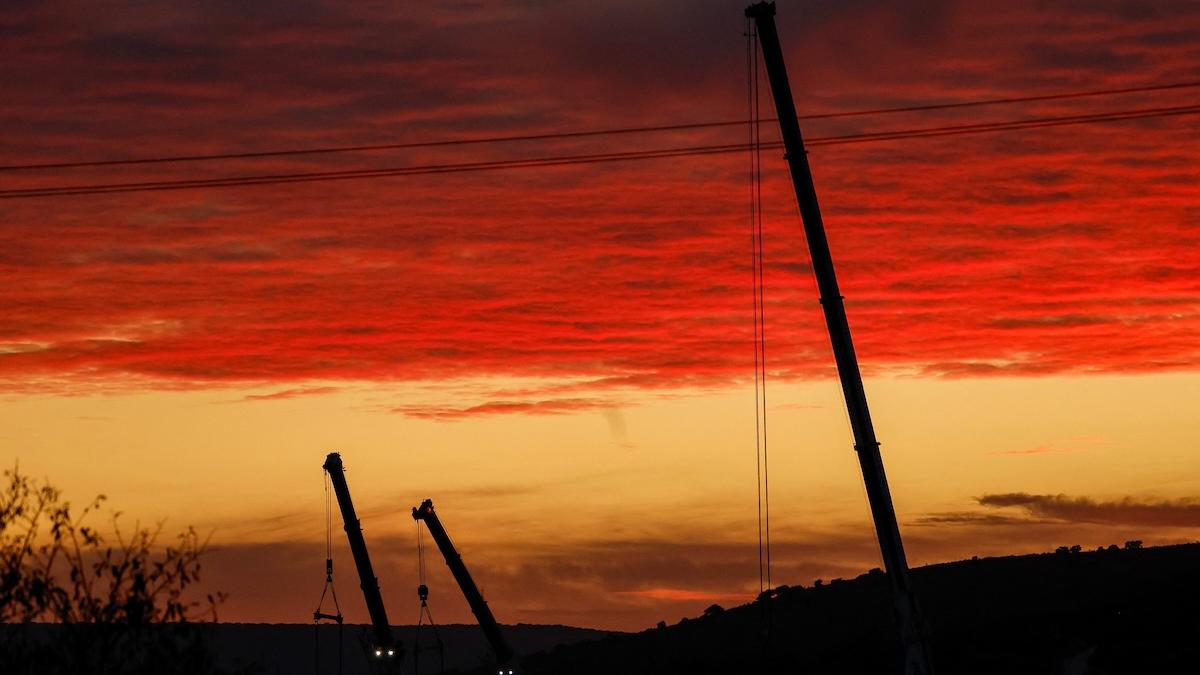
On the morning of October 28, two high-speed trains collided on the line between Los Yébenes and Urda, in the province of Toledo. One was an AVE service; the other, an Iryo train. The impact left at least 69 people dead and more than a hundred injured — one of the deadliest rail disasters Spain has ever seen. Urda, a town of roughly 2,000 inhabitants in the heart of Castilla-La Mancha, found itself suddenly at the center of a national catastrophe.
The response was immediate. Neighbors converged on the site with water and first aid. The local sports center became an emergency coordination point. More than 300 volunteers organized food, transport, psychological care, and translation services for stranded passengers. Pharmacists brought medicines and morphine to the crash site. Priests accompanied the families of the dead. The Spanish bishops’ conference called for prayers for the victims.
69 roses before the Christ
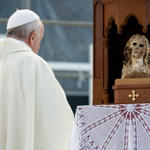
Three days later, on the eve of All Saints, the town did something it almost never does. The Santísimo Cristo de la Vera Cruz — the image that for centuries has watched over Urda from its basilica — was carried in solemn procession to the parish church to preside over the funeral Mass for the victims. Inside the church, a rose was placed before the image for each of the 69 dead.
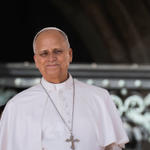
The funeral was celebrated on October 31 at noon, presided by Archbishop Francisco Cerro Chaves of Toledo and Bishop Francisco César García Magán, secretary general of the Spanish Episcopal Conference. García Magán read a message of condolence from Pope Leo XIV. The Archbishop’s homily drew on Psalm 129 — De profundis — and he asked Spanish society not to let the tragedy be forgotten, to “take better care of life,” and to pray for all those responsible for transport safety. At the end of the Mass, Cerro Chaves left his crozier — a gift given to him by the people of Urda — beside the Christ, as a sign of hope for the grieving families. Hundreds of residents attended, along with Castilla-La Mancha president Emiliano García-Page. A further funeral for all the victims is to be held at Toledo Cathedral in the coming days.
The image that almost never moves
The Cristo de la Mancha, as it is also known, is one of the most venerated images in Castilla-La Mancha, and among the oldest. It dates to the late 15th or early 16th century — Urda recently marked the image’s 500th anniversary, which Pope John Paul II designated as a jubilee occasion, making the town a recognized pilgrimage destination. The basilica that houses it, with its single nave divided into four sections and its Baroque interior, is the town’s most emblematic building. A set of bronze doors made by local painter Guerrero Malagón in 1986, their eight panels depicting scenes from Christ’s life, marks the entrance.
Normally, the image leaves the basilica only twice a year: for the traslado procesional that opens the annual Feria del Cristo in late September, and for the Procesión de Gloria that closes it, traveling on a gilded, boat-shaped float crafted in the 19th century. Outside those two occasions, the Christ does not move.
The decision to bring it out for the funeral was, by the town’s own account, without modern precedent. The local council described the image as “a symbol of unity for a people that has lived through very difficult moments.” That language points to something the town has always known: That in moments of communal grief, the sacred image is not decoration but presence — a witness that has outlasted five centuries of the town’s history, and was asked, this week, to outlast one more.