A viral headline is making the rounds. Here is what the research actually says — and what scholars have known for at least a century.
You may have seen the headlines: A newly identified manuscript, 2,000 years old, contains a written account of Jesus rising from the dead. It sounds extraordinary. It is also, in any meaningful sense, untrue.
No new manuscript has been found. No previously unknown document has surfaced. What actually happened is that an independent Spanish researcher named Jesús Fernández-Pedrera Correa published a preprint study — not yet peer-reviewed — comparing four already-known versions of a passage scholars have been arguing over for more than a century. The coverage from a variety of web sites did the rest.
What the Testimonium Flavianum actually is
The passage in question is the Testimonium Flavianum, a section of Jewish Antiquities by Flavius Josephus, the Jewish historian who completed his work around AD 93–94. It describes Jesus, mentions his crucifixion, and includes the line: “He appeared to them alive again on the third day, the divine prophets having foretold these and countless other wonders about him.”
The problem is that Josephus was not a Christian. He was a Jewish historian writing for a Roman audience. And several phrases in the passage — including the declaration that Jesus “was the Christ” and the reference to fulfilled prophecy — read far more like Christian preaching than like a non-Christian historian’s neutral account. Scholars have been flagging this for generations. The mainstream position today, represented by Daniel Schwartz’s authoritative 2025 Brill commentary, is that Josephus wrote something about Jesus, and that Christian scribes subsequently expanded and embellished it.
What the new study actually argues
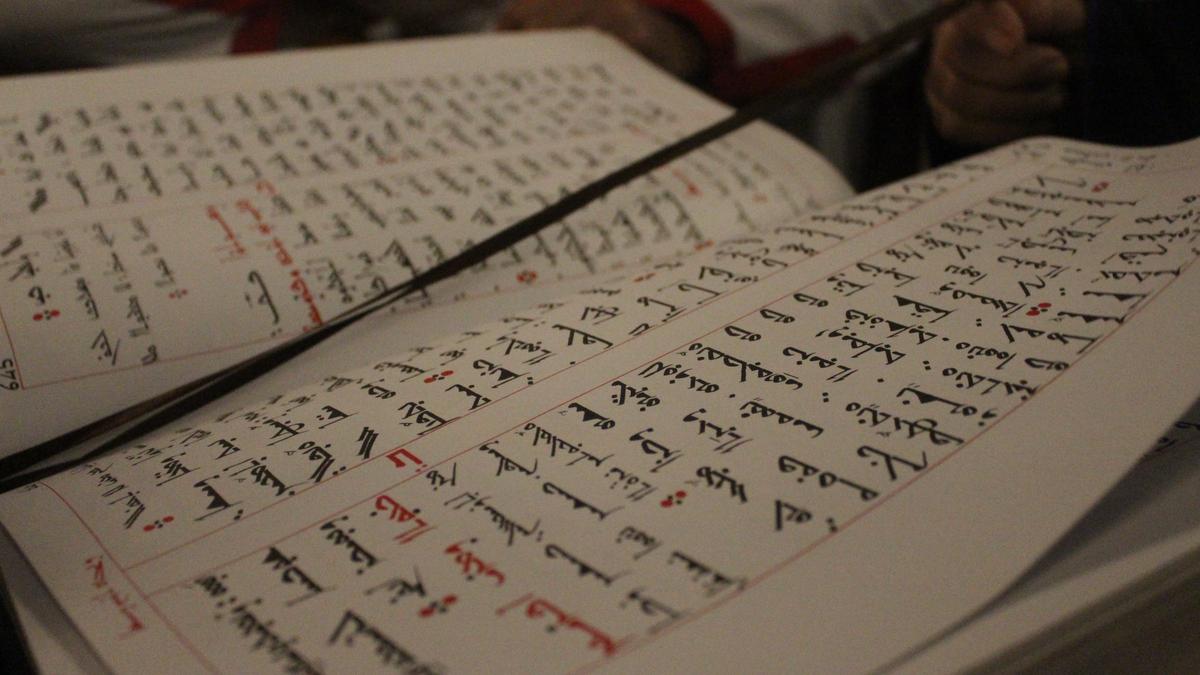
Fernández-Pedrera Correa’s contribution is actually narrower and more careful than the headlines suggest. He compares four versions of the passage: the Greek (the most theologically loaded), a Latin version from the late fourth century, and Arabic and Syriac versions from the 10th and 12th centuries respectively. His focus falls on the Arabic account — preserved by the 10th-century chronicler Agapius — which presents the post-resurrection appearance not as an established fact but as something Jesus’ followers reported seeing.
His argument is that this wording may be closer to what Josephus originally wrote: a historian recording what a religious group claimed, rather than endorsing the claim himself. Later Christian copying, he suggests, may have turned reported testimony into direct assertion. He is careful to call this reconstruction “plausible rather than established.”
This is a legitimate philological argument — but not at all an entirely new one. The Israeli scholar Shlomo Pines made a similar case for the Arabic version back in 1971. What Fernández-Pedrera Correa adds is a more systematic comparison across all four textual traditions.
What scholarship actually says
The broader debate has recently gained renewed energy. T.C. Schmidt’s 2025 Oxford University Press book Josephus and Jesus: New Evidence for the One Called Christ argues, against the trend, that the passage is “substantially authentic” — that Josephus really did write most of it. Schmidt’s case rests on stylometric analysis showing the passage matches Josephus’ writing habits, and on evidence that early Christians seem to have read the Testimonium as neutral or even mildly negative, which would be strange if they had invented it wholesale.
The debate, in short, is genuinely alive and genuinely interesting. Three broad positions exist: that the passage is largely authentic; that it is partially authentic but extensively interpolated; and that Josephus said nothing about Jesus at all and the whole thing is a later insertion. Most working scholars occupy the middle ground.
None of this, however, amounts to a newly discovered manuscript. The texts Fernández-Pedrera Correa studies have been known and studied for decades. What is new is one researcher’s reading of how they relate to each other — a reading that is careful, provisional, and a long way from the viral headline it generated.
The question of what Josephus wrote about Jesus is worth taking seriously. The history of how his text was transmitted, copied, and modified by Christian scribes is a genuine window into how early communities handled the written record of their faith.