

Sometimes Catholics will talk about “apostolic succession.” What does it mean?
A brief introduction to this concept is found in the Compendium of the Catechism of the Catholic Church.
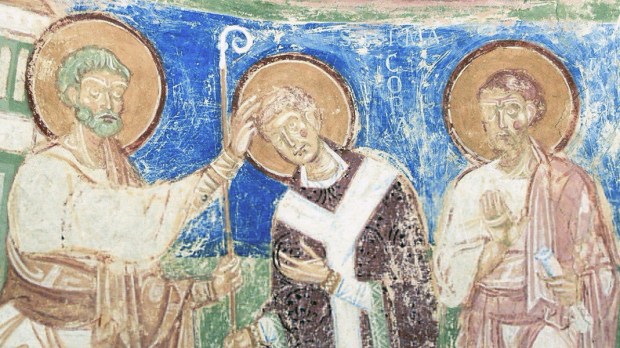
Apostolic succession is the transmission by means of the sacrament of Holy Orders of the mission and power of the Apostles to their successors, the bishops. Thanks to this transmission the Church remains in communion of faith and life with her origin, while through the centuries she carries on her apostolate for the spread of the Kingdom of Christ on earth. (176)
To put it more simply, apostolic succession refers to the belief thattoday’s bishops in the Catholic Church are direct successors of the apostles.
This is displayed primarily through the unbroken line of popes, beginning with St. Peter the Apostle and continuing to our day with Pope Francis. You can see a complete list on the Vatican website that details the names and years of each pope.
By extension, this ministry of the apostles is also given to bishops, who have a similar “lineage,” based on their ordination to the episcopate and connection to the Holy Father. This can be more difficult to track down, but there also exists a website that has tried to trace the “spiritual lineage” of each bishop.
This belief supports the connection of the modern-day Church to the apostolic origins of Christianity, showing how Catholicism has a direct link to Jesus Christ himself.

Read more:
Here are 10 official titles of Pope Francis and their meaning
Read more:
Who are the “Fathers of the Church” and why do they matter?

 And today we celebrate...