

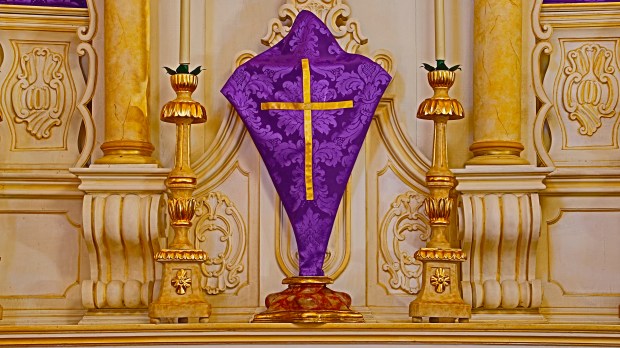
For many centuries, the 5th Sunday of Lent was called “Passion Sunday,” while the Sunday after it was called, “Palm Sunday.”
Currently the Roman Rite denotes Palm Sunday as “Palm Sunday of the Lord’s Passion,” which combines the two observances.
Dom Prosper Gueranger explains in his Liturgical Year the reason why the 5th Sunday of Lent was once called Passion Sunday.
This Sunday is called Passion Sunday because the Church begins on this day to make the Sufferings of our Redeemer her chief thought. It is called also Judica from the first word of the Introit of the Mass and again Neomania that is the Sunday of the new or the Easter moon, because it always falls after the new moon, which regulates the Feast of Easter Day.
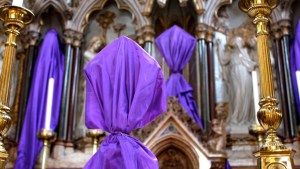
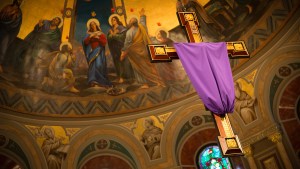
Passion Sunday also marked the beginning of a special sub-season called Passiontide, which extended up until Holy Saturday. During this time the Church’s liturgy became more somber and a sorrowful mood was reflected in the various practices that occurred in the liturgy.
Palm Sunday was the same celebration as it is today, with the procession of palm branches and the reading of the Passion narrative.
The Church simply saw fit to prepare the hearts of the faithful for the Passion of Jesus during the last two weeks of Lent by calling the 5th Sunday of Lent Passion Sunday.
After Vatican II, the Church decided to combine the two Sundays, removing Passion Sunday from the calendar and adding its name to Palm Sunday. This puts a greater emphasis on Palm Sunday and also reinforces the Passion narrative that is proclaimed on that day.

 And today we celebrate...